 listicle
K9 Security for Warehouses: Benefits & Best Practices
Table of Contents
- Why K9 Security Works for Warehouse Protection
- How K9 Teams Deter Theft and Trespassing
- Warehouse Perimeter Security With Canine Detection
- K9 Security for Logistics Facilities: Rapid Response and Coverage
- K9 Security Best Practices for Warehouse Operations
- K9 Teams vs. Cameras, Alarms, and Unaccompanied Guards
- Implementation and Safety Considerations
- Frequently Asked Questions
Last Updated: October 10, 2026
Why K9 Security Works for Warehouse Protection
K9 security warehouses combine the sensory advantages of trained detection dogs with the expertise of professional handlers to create a security layer that deters theft, detects intrusions, and protects high-value assets.
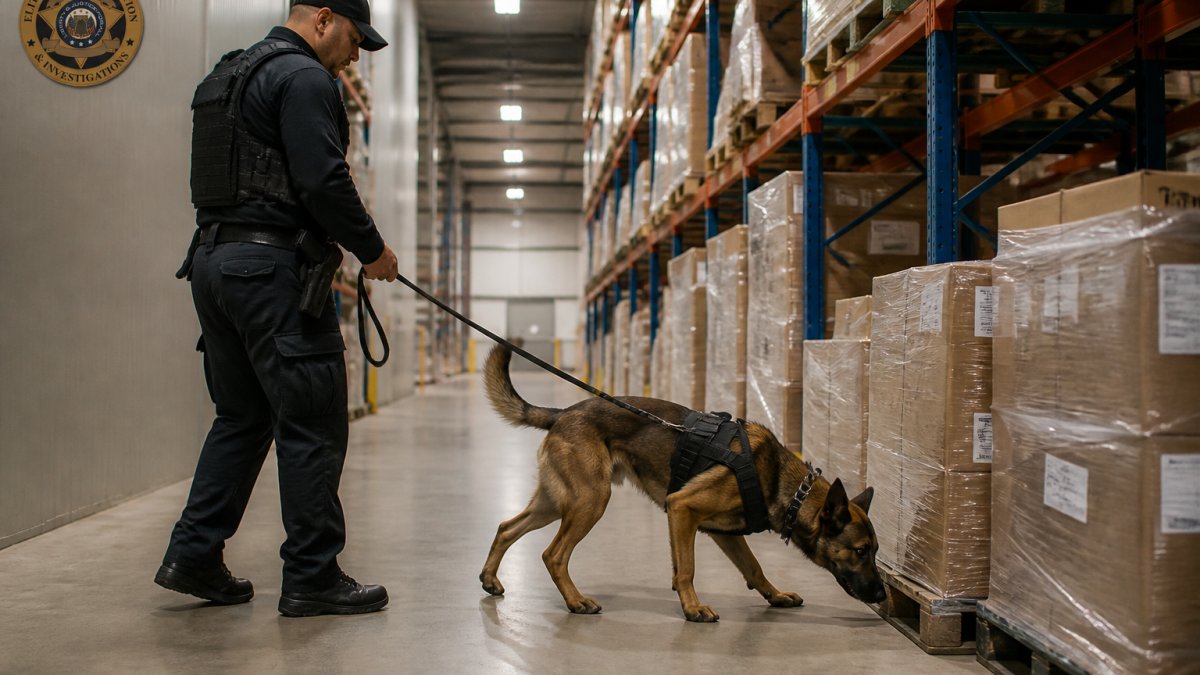
The effectiveness comes from what dogs do naturally: they detect threats humans miss. A trained security dog can identify unauthorized intruders, sense suspicious behavior, and pursue suspects with an agility that unaccompanied guards cannot match.
Elite Police Protection provides K9 security teams for distribution centers and industrial estates. The visible presence of a trained dog-handler team stops theft before it starts. Potential intruders see a canine unit and move on to easier targets.
How K9 Teams Deter Theft and Trespassing
Visible deterrence works. A uniformed K9 handler with a trained security dog signals that a facility takes protection seriously. Criminals assess risk before attempting theft or trespassing.
Canine detection adds a layer of unpredictability that static systems lack. A camera covers the same sightlines every day. A K9 team covers different routes, patrols at varied times, and responds to unexpected triggers.
The handler's training matters as much as the dog's. Professional K9 handlers trained in law enforcement bring conflict resolution skills and tactical awareness. They can assess situations, de-escalate confrontations, and make split-second decisions that prevent incidents from escalating.
Warehouse Perimeter Security With Canine Detection
Perimeter patrol is where canine security excels. A trained K9 can cover ground faster than a walking guard, detect intruders before they reach your facility, and alert handlers to unauthorized access attempts.
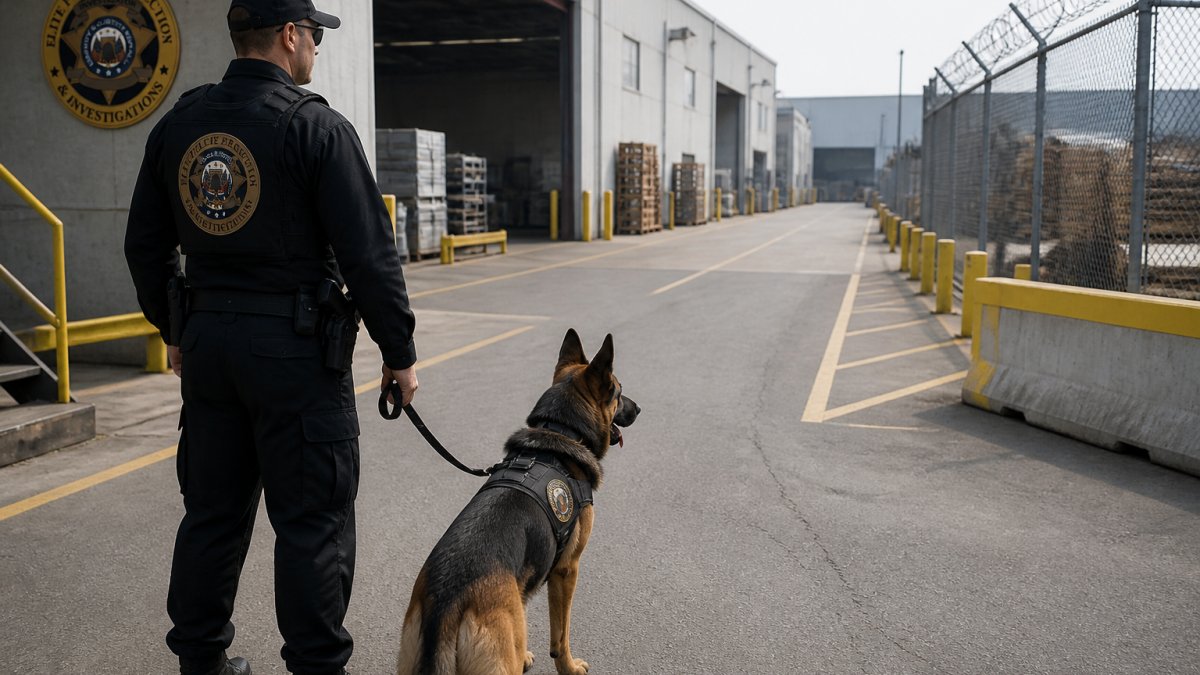
K9 security warehouses with large outdoor areas, loading docks, storage yards, and fence lines benefit from continuous threat detection provided by K9 units. The handler monitors the dog's behavior and responds immediately to alerts.
Perimeter security with canine teams is particularly effective at night, when visual surveillance becomes less reliable. A dog's sensory abilities don't diminish in darkness. Handlers use night-vision equipment and maintain the same detection capability around the clock.
K9 Security for Logistics Facilities: Rapid Response and Coverage
K9 security for logistics facilities provides coverage that scales with facility size. A single K9 team can patrol large areas more effectively than multiple unaccompanied guards. The dog's speed and agility allow handlers to respond to incidents faster than traditional security approaches.
Rapid response matters in logistics. Theft often happens in minutes. A K9 team on patrol can intercept suspects before they leave the property.
Coverage consistency is another advantage. K9 handlers work scheduled patrols, ensuring that high-risk areas receive regular attention. Unlike cameras that require monitoring, a K9 team actively searches for threats and responds in real time.
K9 Security Best Practices for Warehouse Operations
Effective K9 security requires deployment planning tailored to your facility's unique layout, operations, and threat profile. A one-size-fits-all approach wastes resources and leaves vulnerabilities.
Conduct a warehouse-specific risk assessment. Before deploying a K9 team, map your facility's physical layout, identify high-risk zones, and evaluate your operational patterns. High-risk areas typically include:
- Loading docks and receiving areas, where inventory enters and exits, creating narrow theft windows and high perpetrator activity
- Perimeter fence lines and access gates, especially unmanned or poorly lit sections where trespassers attempt entry
- Storage yards and outdoor staging areas, where pallets, equipment, or materials sit exposed during shift changes
- Blind spots between buildings, areas cameras cannot monitor and guards rarely patrol
- Shift-change periods, when staffing transitions create coverage gaps and confusion
A professional K9 security provider should conduct this assessment on-site, not remotely.
Establish patrol routes and coverage schedules. K9 teams should follow planned routes that change regularly to maintain unpredictability. Effective routes include:
- Perimeter sweeps at irregular intervals (not the same time each shift)
- Focused patrols of high-risk zones during vulnerable periods (loading dock operations, overnight hours)
- Random interior patrols of storage areas and receiving sections
- Handler presence at access points during shift changes
The handler should document patrol routes, times, and observations. This creates accountability and helps you measure coverage over time.
Integrate K9 patrols with your existing security systems. K9 teams are most effective when coordinated with alarm systems, surveillance cameras, and access controls. Handlers should:
- Respond to alarm triggers immediately, arriving before perpetrators can act
- Patrol areas that cameras cannot monitor effectively (blind spots, perimeter edges, interior storage)
- Work alongside access-control staff to verify credentials and deter unauthorized entry
- Communicate with your security operations center (if you have one) to coordinate responses
Handler qualifications and training. Your K9 team should consist of handlers with documented law enforcement or military backgrounds, formal K9 certification from recognized organizations, and specific experience in warehouse and logistics security. Handlers should be trained in:
- Conflict de-escalation and use-of-force protocols
- Evidence preservation and incident documentation
- Warehouse-specific threat assessment
- Liability management and incident reporting
- Night operations and low-light detection
Facility preparation and handler support. Ensure your warehouse provides:
- Clear, unobstructed patrol routes free of hazards
- Shelter and rest areas for handlers and dogs (especially during extended shifts)
- Access to water and appropriate breaks
- Communication systems (radio or phone) for handlers to report incidents
- Defined protocols for staff interaction with K9 teams
K9 Teams vs. Cameras, Alarms, and Unaccompanied Guards
Each security approach has distinct strengths and limitations. Understanding these differences helps you build a comprehensive security strategy.
Cameras provide continuous documentation but require active monitoring. They excel at evidence collection after an incident occurs.
Alarms alert you to breaches but don't prevent them. An alarm triggers after a perimeter is breached, giving intruders minutes to act.
Unaccompanied guards provide human presence but lack the detection capabilities of trained dogs. A single guard covers limited ground and has human sensory limitations.
The most effective approach combines all layers. Cameras document incidents. Alarms detect breaches. K9 teams provide active deterrence and rapid response.
| Security Method | Deterrence | Detection Speed | Coverage Area | Real-Time Response |
|---|---|---|---|---|
| K9 Teams | High | Minutes | Large | Active |
| Cameras | Moderate | Post-incident | Fixed sightlines | Passive |
| Alarms | Low | At breach | Entry points | Alert only |
| Unaccompanied Guards | Moderate | Slow | Limited | Delayed |
Implementation and Safety Considerations
Deploying K9 security requires careful planning, clear protocols, and ongoing measurement to ensure the investment delivers results.
Establish liability and insurance requirements. Before signing a contract, verify that your K9 security provider carries appropriate liability insurance covering handler actions, dog behavior, and property damage. Ask for proof of coverage and confirm that the policy covers:
- Handler negligence or misconduct
- Dog-related injuries to staff or visitors
- Damage to facility property during patrols or incident response
- Third-party claims arising from K9 team actions
Your facility's insurance provider should review the K9 security agreement to ensure it does not create coverage gaps or conflicts.
Define handler qualifications and accountability. Require that all K9 handlers meet documented standards:
- Current law enforcement certification or military K9 handler background
- Formal K9 training certification from a recognized organization
- Background check and drug screening
- Liability training and incident-response certification
- Experience in warehouse or logistics security (preferred)
Establish a clear chain of command and incident protocol.
Coordinate with your facility team. Staff should understand:
- When K9 patrols occur and which areas they cover
- How to identify and interact with handlers (uniforms, credentials, communication methods)
- What to report to handlers (suspicious activity, unauthorized access, equipment issues)
- Incident protocols and emergency contacts
- Restrictions on petting or distracting the dog during patrols
Conduct a brief orientation for all staff before the K9 team begins work. Clear communication prevents confusion and improves incident response.
Measure performance and return on investment. K9 security is only valuable if it delivers measurable results. Track these key performance indicators (KPIs) from day one:
- Incident detection rate, Number of suspicious activities, unauthorized access attempts, or intrusions detected by the K9 team per month. Compare this to the baseline before K9 deployment.
- Response time, Average time from alert to handler arrival at the incident location. Target: under 5 minutes for perimeter breaches, under 2 minutes for interior alerts.
- Patrol coverage, Percentage of high-risk areas covered by K9 patrols per shift. Track patrol routes and times to ensure consistency.
- Theft and loss reduction, Compare inventory shrinkage, theft incidents, and security losses before and after K9 deployment. Even a 10-15% reduction in theft often justifies the cost.
- Deterrence effect, Monitor trespassing attempts, unauthorized access incidents, and break-in attempts. A visible reduction suggests the K9 presence is working.
- False alarm response, Track how many alarm triggers the K9 team investigates and how many result in verified incidents. High false-alarm rates indicate system tuning is needed.
- Handler availability, Monitor whether the K9 team meets scheduled patrol times and availability commitments. Missed patrols reduce effectiveness.
Request monthly reports from your K9 security provider that document these metrics. Compare performance against your baseline and against industry benchmarks for similar facilities.
Calculate total cost of ownership. K9 security can be a cost-effective solution, and you should quantify the benefit:
- K9 team cost, Monthly or annual fee for handler and dog (typically $3,000-$6,000 per month depending on facility size and shift coverage)
- Avoided losses, Estimated value of theft prevented, based on your KPI tracking
- Reduced insurance premiums, Some insurers offer discounts for active K9 security; confirm with your carrier
- Operational efficiency, One K9 team often covers the ground of 2-3 unaccompanied guards, reducing total security payroll
Plan for handler and dog welfare. K9 teams work best when properly cared for. Your facility should provide:
- Climate-controlled shelter or rest area for handlers and dogs
- Access to water and appropriate breaks (handlers should not work more than 10 hours continuously)
- Safe, secure areas where dogs can rest between patrols
- First-aid supplies and emergency veterinary contact information
- Clear protocols for extreme weather (heat above 85°F or cold below 20°F may require modified patrol schedules)
A well-cared-for K9 team performs better and remains deployed longer, maximizing your investment.
Frequently Asked Questions
What are the main benefits of K9 security for warehouses?
K9 security provides continuous perimeter patrol, rapid intruder detection through superior sensory abilities, visible crime deterrence, and faster response times than guards alone. Canine teams cover large warehouse areas efficiently, detect unauthorized access and suspicious activity, and protect high-value inventory and assets. The presence of a security dog significantly reduces theft, trespassing, and criminal activity while providing 24/7 protection that adapts to your facility's specific risks.
How does warehouse perimeter security improve with K9 teams?
K9 security for warehouses enhances perimeter patrol by combining a handler's tactical awareness with the dog's sensory detection abilities. Canine teams identify intruders and threats faster than cameras or motion sensors alone, cover expansive outdoor and industrial grounds, and respond immediately to suspicious activity. Their presence creates a visible security layer that deters unauthorized access, trespassing, and theft before incidents occur, making perimeter security more proactive and effective.
Are K9 security teams cost-effective compared to hiring additional guards?
K9 security for logistics facilities can offer cost efficiency. A single dog-handler team can cover the ground and detection capabilities of multiple unarmed guards. Pricing depends on facility size, threat level, and operational hours; contact Elite Police Protection for a customized quote based on your warehouse's specific needs.
What should warehouse managers look for in a K9 security provider?
Choose a provider with off-duty or retired law enforcement professionals as handlers, proven K9 training for warehouse and logistics environments, and real-time reporting systems. Verify they offer 24/7 availability, advanced monitoring with client portal access, and liability insurance. Assess their risk assessment capabilities to develop a deployment plan tailored to your facility's layout, inventory value, and threat profile. Ensure handlers understand both canine welfare and warehouse operations, and confirm they can maintain consistent staffing across multiple locations if needed.