 how-to
How to Hire Professional K9 Security Services
Table of Contents
- Understanding K9 Security Services and Their Role
- Key Benefits of Professional K9 Security for Your Facility
- How to Hire Professional K9 Security Services: Step-by-Step Process
- Understanding the Cost of Private K9 Security Services
- K9 Security Service Contract Templates and Essential Terms
- Legal Liability for K9 Security Operations and Compliance
- Industries and Facilities That Benefit Most from K9 Security
- Common Mistakes to Avoid When Hiring K9 Security
Last Updated: August 26, 2026
Understanding K9 Security Services and Their Role
Professional K9 security services deploy highly trained canine units alongside certified handlers to provide threat detection, perimeter security, and asset protection across commercial and institutional facilities. These teams combine the dog's natural detection capabilities with a handler's law enforcement or military expertise to create a security layer that's both visible and operationally effective.
Modern K9 security units conduct explosive detection, narcotics screening, weapons identification, and behavioral threat assessment. A trained K9 and handler work as an integrated unit, with the dog's sensory capabilities amplified by the handler's tactical awareness and professional judgment.
What separates professional K9 security from generic guard services is the dual capability: the handler brings law enforcement experience and decision-making authority, while the K9 provides threat detection that no technology can replicate.
Key Benefits of Professional K9 Security for Your Facility
K9 security delivers measurable advantages for facilities managing high-risk environments or high-value assets. The psychological deterrent of a visibly trained canine team signals serious security commitment to both legitimate visitors and potential threats.
Detection capability is the primary operational benefit. A trained K9 can screen a vehicle in minutes, scan a facility perimeter in hours, or identify concealed threats that would require extensive technical scanning (peer-reviewed research). This speed reduces operational friction without shutting down access points or delaying operations.
Threat mitigation improves because handlers bring professional judgment that complements the dog's detection. If a K9 alerts to a suspicious item, the handler assesses context, determines actual risk level, and coordinates appropriate response, preventing false alarms while catching genuine threats.
The visible presence of a professional K9 team affects facility culture and reduces opportunistic incidents like theft or unauthorized access. Real-time incident response capability distinguishes K9 security from static guard services, if an incident occurs, the handler can deploy the dog for suspect tracking, area clearing, or threat assessment immediately.
How to Hire Professional K9 Security Services: Step-by-Step Process
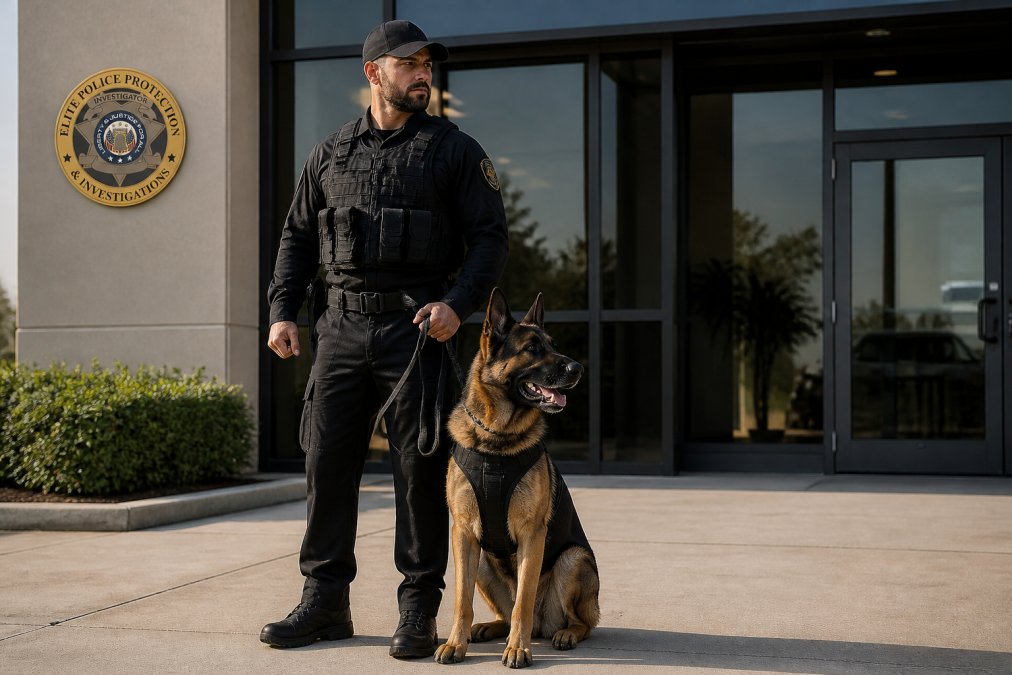
Hiring professional K9 security requires methodical evaluation of handler credentials, training standards, and operational protocols to ensure they match your facility's risk profile and compliance requirements.
Step 1: Assess Your Security Needs and Risk Profile
Define what threats your facility actually faces. A warehouse distribution center has different threat vectors than a corporate office or healthcare facility. Document your specific concerns: unauthorized access, theft, contraband detection, or active threat response capability.
Evaluate your facility's physical layout and operational constraints. Can a K9 unit access all areas? Are there restricted zones where dogs can't work? How will K9 operations integrate with existing security infrastructure? Determine whether you need permanent K9 presence or event-based deployment, as this affects pricing and handler scheduling.
Document your compliance requirements. Certain industries, healthcare, federal facilities, schools, have specific regulations around security personnel, background checks, and incident reporting. Your K9 provider must demonstrate understanding of these requirements before engagement.
Step 2: Evaluate Handler Credentials and Experience
The handler's background matters more than the dog's pedigree. Request verification that handlers are current or former law enforcement, military, or certified security professionals with documented K9 handling experience. Many providers employ off-duty or retired police officers specifically because they bring established judgment and authority.
Ask about handler training hours and certifications. Professional handlers should have completed recognized K9 certification programs covering detection work, patrol operations, and behavioral assessment. The National Association of Police Canine Units maintains standards that legitimate providers follow.
Request handler background checks and reference verification directly. You're inviting individuals onto your property with authority to make security decisions. Standard employment vetting applies: criminal history review, employment verification, and professional references from previous clients.
Step 3: Verify K9 Security Handler Certification Requirements
Professional K9 handlers should hold certifications from recognized organizations such as the International Association of Canine Professionals, National Association of Police Canine Units, or equivalent law enforcement K9 handler certifications (iacp.org).
Verify that certification is current and specific to the services being provided. A handler certified for narcotics detection may not be certified for explosive detection or patrol work. Ask providers to document their K9 training standards: how are dogs selected, what's the training timeline, and what behavioral assessment occurs before deployment?
Request verification that handlers maintain ongoing training and recertification. Annual recertification or equivalent continuing education should be documented. Ask about handler liability insurance and whether they carry professional indemnity coverage.
Step 4: Request Service Demonstrations and References
Ask for operational demonstrations showing how the handler and dog work together, conduct threat assessment, and respond to scenarios relevant to your facility.
Request references from similar facilities and speak directly with facility managers about handler reliability, dog behavior in their environment, and how the provider responds to operational issues. Verify that references are legitimate by confirming they're actual clients and calling facilities directly rather than using contact information provided by the K9 provider.
Ask references specifically about handler professionalism, response times, and how the provider handles situations where the K9 alerts but no actual threat exists.
Step 5: Review Contract Terms and Insurance Coverage
Contract terms should clearly specify handler qualifications, K9 certifications, service scope, response protocols, and liability frameworks. Standard contracts address deployment schedules, incident reporting requirements, and communication protocols.
Verify that the contract specifies insurance coverage amounts and that the provider maintains current certificates of insurance with your facility named as an additional insured. Review contract language around incident response, handler authority, and professional liability standards.
Understanding the Cost of Private K9 Security Services
K9 security pricing varies based on deployment model, handler experience level, and geographic location. Most professional providers quote based on specific requirements during consultation.
Pricing factors include handler qualifications, K9 certifications, deployment frequency, facility size, and whether services include threat assessment or consultation. A permanent daily presence costs substantially more than event-based deployment. Specialized detection services typically command higher rates than general patrol.
When evaluating cost, consider value delivered rather than hourly rates alone. A handler with law enforcement background and multiple certifications provides significantly higher operational capability and liability protection than a basic security guard. Request detailed pricing breakdowns specifying what's included: handler qualifications, K9 certifications, equipment, insurance coverage, and response protocols.
K9 Security Service Contract Templates and Essential Terms
Professional K9 security contracts should include specific language addressing deployment, liability, and operational protocols. Essential contract sections include:
Service Scope: Clearly define what services are provided, patrol, detection, threat assessment, incident response, along with deployment schedule, facility access, and operational constraints.
Handler Qualifications: Document handler certifications, background verification completion, and ongoing training requirements. Include provisions for handler replacement if performance issues arise.
K9 Certifications: List specific certifications the K9 holds and services those certifications cover. Include behavioral assessment standards and protocols for addressing behavioral issues.
Insurance and Liability: Specify insurance coverage amounts, policy requirements, and that your facility is named as additional insured. Define liability allocation for handler actions versus K9 behavior.
Incident Reporting: Require detailed incident documentation and timely reporting protocols.
Termination Provisions: Include notice requirements, early termination conditions, and transition procedures if services end.
Professional Conduct Standards: Define expectations for handler behavior, uniform standards, communication protocols, and complaint procedures.
Legal Liability for K9 Security Operations and Compliance
K9 security operations create specific legal considerations that facility managers must understand. Handler actions and K9 behavior can create liability exposure if not properly managed and documented.
Handler conduct liability falls on both the K9 provider and potentially your facility as the client. Contracts should clearly allocate liability and require handlers to maintain professional conduct standards. K9 behavior liability typically falls on the handler and K9 provider, but your facility may be implicated if you're perceived as responsible for the K9's presence.
Incident documentation is critical for liability protection. Require handlers to document all alerts, incidents, and interactions. Compliance with local regulations varies by jurisdiction, some areas restrict K9 deployment in certain settings or require specific certifications. Verify that your K9 provider understands applicable regulations for your facility type and location.
Maintain copies of handler certifications, insurance certificates, incident reports, and service records. This documentation supports your defense if liability questions arise later.
Industries and Facilities That Benefit Most from K9 Security
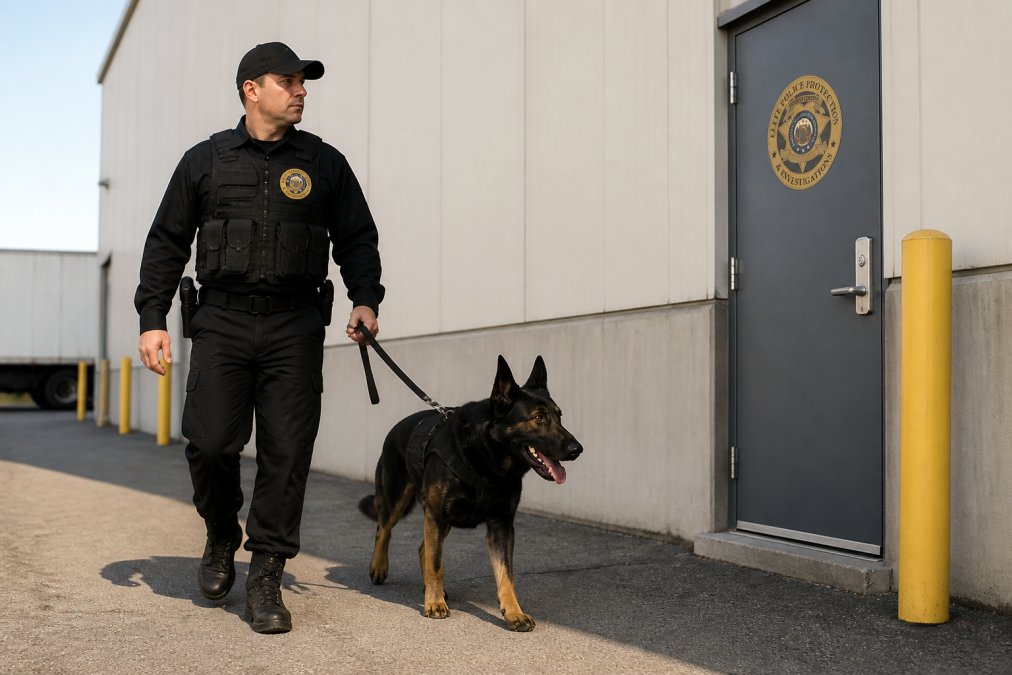
K9 security deployment makes sense across multiple facility types where threat detection, deterrence, or specialized asset protection justifies the investment.
Distribution Centers and Warehouses benefit from K9 patrol and narcotics detection for high-value inventory and access control. Corporate Campuses use K9 services for executive protection and threat assessment. Healthcare Facilities deploy K9 units for perimeter security and contraband detection. Retail Centers employ K9 security for loss prevention and event security. Bars and Entertainment Venues use K9 services for event security and threat assessment. Government Facilities require K9 services for force protection and perimeter security. Schools increasingly employ K9 services for facility security, though regulatory requirements vary by jurisdiction. Special Events benefit from K9 screening and threat detection.
The common thread is that K9 security provides detection, deterrence, and professional threat assessment capabilities that justify investment for facilities managing serious security concerns, high-value assets, or regulatory compliance requirements.
Common Mistakes to Avoid When Hiring K9 Security
The most costly hiring mistake is prioritizing cost over handler qualifications. A cheaper K9 provider often means less experienced handlers, inadequate certifications, or insufficient insurance coverage, creating liability exposure that far exceeds the savings.
Failing to verify handler credentials independently is critical. Don't rely solely on the provider's representations. Verify certifications directly with issuing organizations and call references to validate actual experience.
Neglecting insurance verification exposes your facility to catastrophic liability. Always require proof of current insurance with your facility named as additional insured. Signing contracts without legal review is risky, have counsel review K9 security contracts to ensure liability allocation and incident protocols protect your facility's interests.
Deploying K9 services without clear operational protocols creates confusion during incidents. Define in advance what authority the handler has and how escalation decisions are made. Verify that your facility layout and operational constraints allow effective K9 deployment before hiring.
Assuming all K9 providers maintain equivalent standards is incorrect. Treat provider selection as a rigorous evaluation process, not a commodity purchase. The handler represents your facility's security posture, so professionalism and consistent judgment are essential.
Hiring professional K9 security requires careful evaluation of handler credentials, certifications, and operational protocols. Elite Police Protection specializes in deploying highly trained K9 teams with off-duty and retired law enforcement handlers who bring professional judgment and advanced security capabilities to your facility. With comprehensive insurance coverage, real-time incident response protocols, and customized threat assessment, Elite Police Protection provides K9 security that integrates seamlessly into your facility's existing security framework. Get started with Elite Police Protection and access professional K9 security with handler expertise and 24/7 availability tailored to your specific facility needs.
Frequently Asked Questions
Q: What certifications should professional K9 security handlers hold?
Professional K9 handlers should hold certifications from recognized organizations such as the International Association of Canine Professionals or the National Association of Police Canine Units, or equivalent law enforcement K9 handler certifications. Many handlers bring law enforcement or military backgrounds with additional training in threat detection, handler safety, and canine behavior. Verify that handlers have completed task-specific training (explosive detection, narcotics detection, or patrol) and maintain current certifications through ongoing education and recertification programs.
Q: How much does it cost to hire professional K9 security services?
Pricing for K9 security services depends on multiple factors, including the type of detection needed (explosives, narcotics, patrol), deployment duration, handler experience, facility size, and geographic location. Single-event deployments typically cost differently than ongoing contract work. For accurate pricing tailored to your specific security needs, contact Elite Police Protection directly for a customized quote based on your risk assessment and operational requirements.
Q: What's the difference between K9 security services and standard security guard services?
K9 security teams provide threat detection and deterrence capabilities that standard guards cannot match. Trained detection dogs can identify explosives, narcotics, and weapons in seconds across large areas. K9 units offer both visible deterrence through their presence and proactive threat mitigation. Handlers bring specialized training in canine behavior and incident response. Standard guards provide observation and access control, while K9 teams add a specialized detection and force protection layer to your security operations.
Q: What legal requirements apply to using K9 security on private property?
K9 security operations on private property must comply with state and local animal control laws, liability regulations, and handler licensing requirements. Handlers should be properly trained and insured. Your service provider must maintain appropriate general liability and canine liability insurance. Ensure written contracts clearly define liability responsibilities, incident response procedures, and compliance with local ordinances. Consult with your legal team and insurance provider to verify all requirements are met before deployment.
This article was written using GrandRanker