 listicle
Private Security for Retail Shopping Centers
Table of Contents
- Quick Comparison: Private Security for Retail Shopping Centers
- Shopping Center Security Guards: Armed, Unarmed, and Hybrid Coverage
- Building a Shopping Center Security Plan That Matches Your Property
- Parking Lot Security for Shopping Centers: Patrols, Lighting, and Coverage
- Retail Loss Prevention: Deterrence, Monitoring, and Incident Response
- What Private Security Costs and What Drives the Price
- How to Evaluate and Select a Security Provider
- Conclusion
- Frequently Asked Questions
Last Updated: October 9, 2026
Quick Comparison: Private Security for Retail Shopping Centers
Retail property managers choose between coverage models, each trading cost against visibility, deterrence, and response speed. Private security for retail shopping centers places trained, licensed officers, patrols, and monitoring systems across a property to deter crime, reduce theft, and protect shoppers, staff, and tenants.
Below, we compare the core options side by side so you can match coverage to your property's risk, layout, and hours.
| Coverage Type | Best For | Typical Strength | Main Trade-Off |
|---|---|---|---|
| Unarmed uniformed guards | Malls, strip centers, stores | Visible deterrence, customer safety | Limited response to armed threats |
| Armed officers | High-risk or high-value retail | Strong deterrence, rapid response | Higher cost, stricter requirements |
| Hybrid coverage | Mixed-risk properties | Flexible by zone and shift | More complex scheduling |
| Mobile patrol | Parking lots, common areas | Broad coverage per dollar | Less continuous presence |
| Surveillance monitoring | Multi-location portfolios | Real-time detection, evidence | No physical intervention |
Get that mix right and your security spend works harder than a bigger budget ever could.
Shopping Center Security Guards: Armed, Unarmed, and Hybrid Coverage
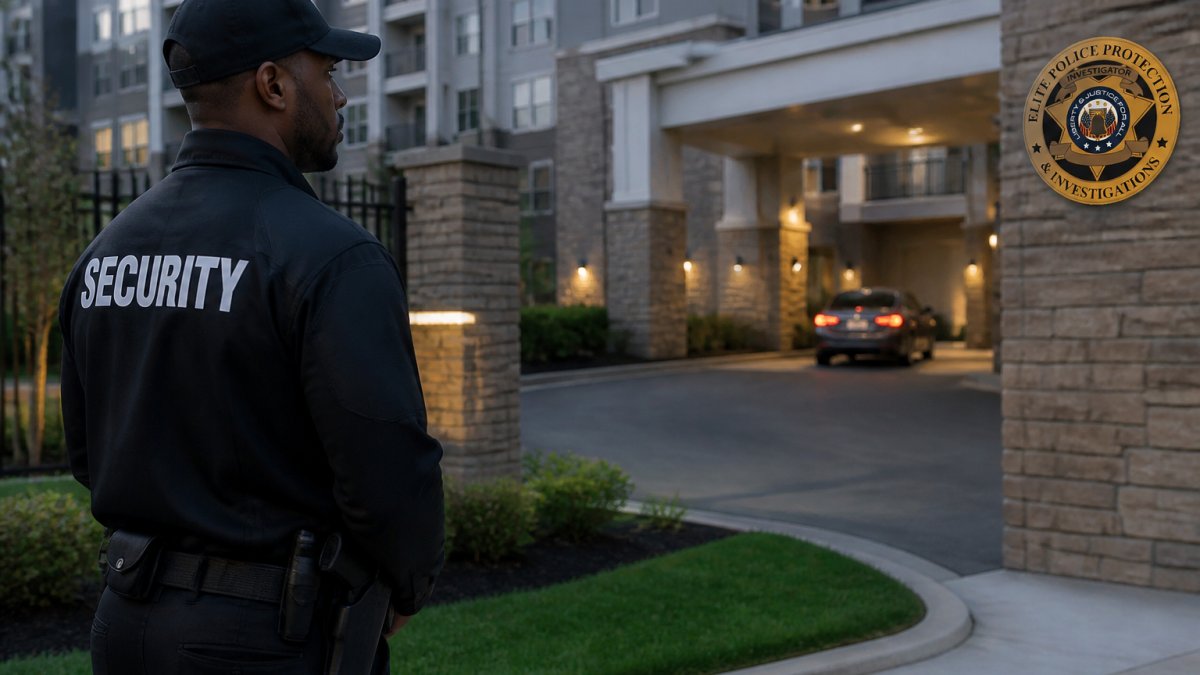
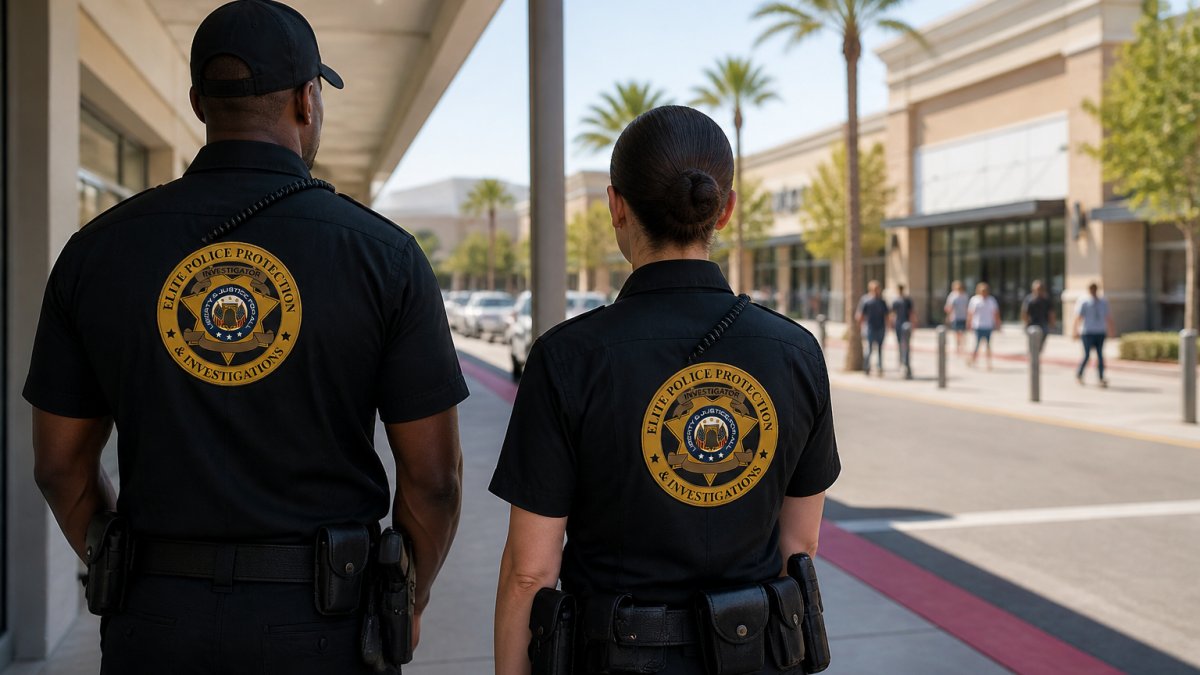
Unarmed officers handle most retail environments, managing crowds, watching for suspicious activity, documenting incidents, and de-escalating conflicts.
Armed officers suit higher-risk settings: properties with a history of violent incidents, late-night anchors, or high-value inventory.
Hybrid coverage blends both. You might staff armed officers at key entrances during peak hours and unarmed officers on the floor the rest of the day.
Armed vs. Unarmed: Which Fits Your Property
The deciding factor is threat level, not budget alone. Weapons, organized theft, or repeated late-night trouble justify armed coverage; shoplifting, disputes, and trespassing are handled for less by unarmed officers with strong de-escalation training.
ASIS International security management resources offers guidance on matching guard qualifications to risk. When in doubt, start unarmed and reassess after 90 days of incident data.
Building a Shopping Center Security Plan That Matches Your Property
A shopping center security plan maps staffing, patrol routes, monitoring, and emergency procedures to your property's layout and hours. Generic plans fail because no two retail properties share the same risk profile, and a plan that ignores your operating hours is a plan for a property you do not have.
Step 1: Match coverage to property type
The three common retail formats need different plans.
- Enclosed mall. Controlled entrances, interior common areas, food courts, and structured parking. Coverage concentrates on entrance screening, interior foot patrol, and peak-hour lot patrol; access control and cameras do more work because the interior is enclosed.
- Open-air strip center. Multiple street-facing entrances, shared lot, and individual storefronts. Coverage leans on mobile and foot patrol of the lot and walkways, since there is no single choke point; tenant coordination matters more because each storefront is its own risk point.
- Standalone big-box or anchor store. One building, one primary lot, high transaction volume. Coverage is often a single post plus lot patrol, with loss prevention focused on the sales floor and receiving area.
Step 2: Staff by layout, not by headcount
Layout drives deployment. A few rules hold across formats:
- Anchor stores and high-traffic entrances get the most visible presence.
- Loading docks and back corridors get patrol attention during delivery hours, when doors are open and inventory is exposed.
- Food courts and play areas need officers trained in customer interaction, not just enforcement.
- Parking rows farthest from entrances get the most patrol time, because that is where vehicle break-ins and isolated incidents cluster.
Step 3: Match coverage hours to operating reality
Your center's hours and your risk hours are not the same. Incidents often cluster in a narrow window, the last hour before close, the first hour after opening, or when tenants are closing and the lot is emptying.
Build a simple coverage grid: list each post, the hours it is covered, and the officer type assigned. Then overlay your incident log by time of day.
Step 4: Write the emergency procedures
A security plan is also an emergency plan. Document officer actions for medical emergencies, fire alarms, severe weather, violent incidents, and evacuations. Assign roles, identify rally points, and confirm coordination with local police, fire, and EMS, a plan covering only deterrence and patrol leaves your team improvising when it matters most.
Step 5: Set review cadence
Review the plan quarterly against incident data and tenant feedback, and after any significant event. If a post goes a full quarter without a documented incident or patrol log, either the post is unnecessary or reporting is not happening, both worth knowing.
Parking Lot Security for Shopping Centers: Patrols, Lighting, and Coverage
Parking lot security for shopping centers is where most properties underinvest and where most customer incidents occur. Large, patchily lit lots are hard to monitor continuously, inviting vehicle break-ins, theft, and worse.
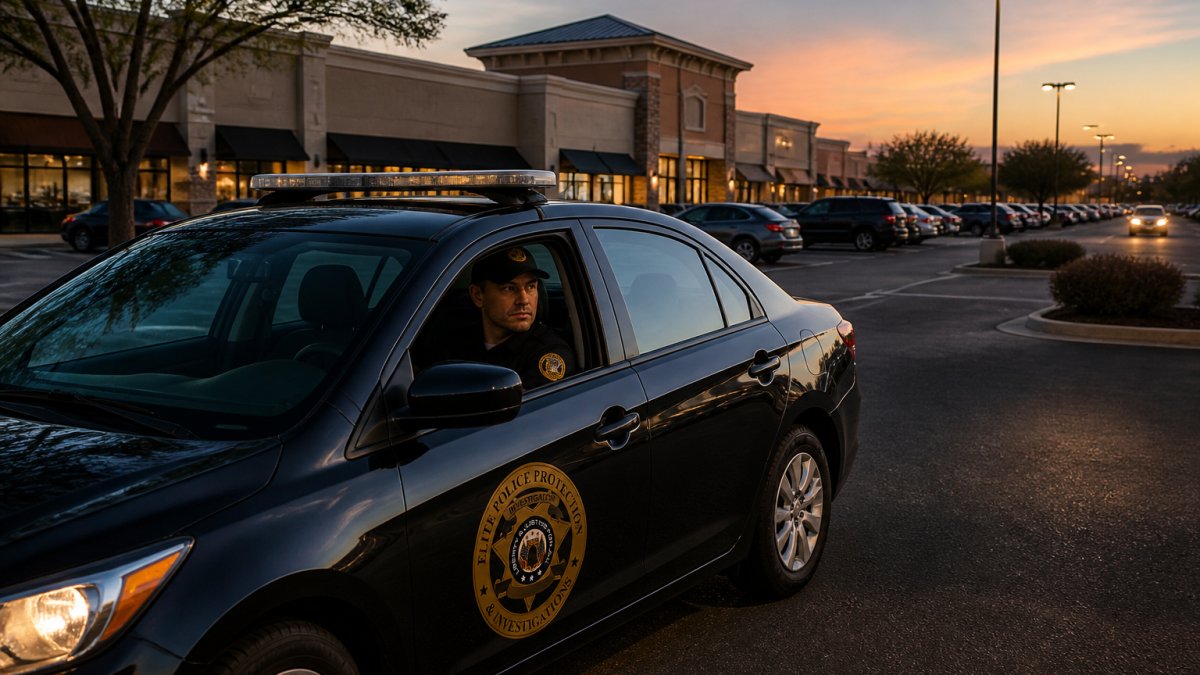
Three elements carry most of the weight:
- Patrols. Mobile patrol and foot patrol put a visible presence in the lot. Random timing beats fixed routes, since predictable patrols are easy to work around.
- Lighting. Well-lit lots reduce both crime and the perception of danger. Fix dark corners before adding staff.
- Coverage design. Map patrol routes to the lot's actual traffic flow, not a straight line from the office.
National Institute of Justice crime prevention research has documented how environmental design and lighting affect crime in public spaces. Use that research to justify lighting upgrades to ownership.
Retail Loss Prevention: Deterrence, Monitoring, and Incident Response
Retail loss prevention reduces theft, fraud, and shrinkage while protecting staff and customers. It combines visible deterrence, surveillance monitoring, and a clear incident response process.
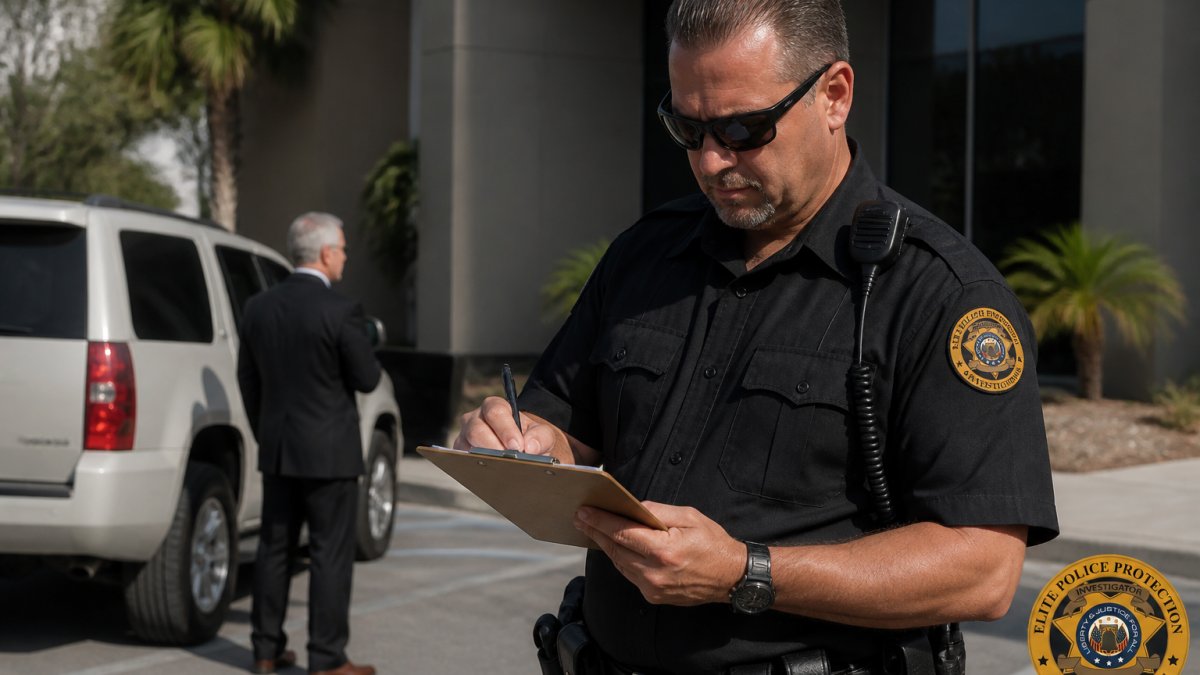
Visible deterrence does more than most people expect, a uniformed officer near the entrance changes behavior before anyone acts. Surveillance monitoring, including AI-powered cameras, adds detection and evidence. Incident response ties it together: officers follow a documented process, write accurate reports, and preserve evidence properly.
Coordinate with tenants too. Store staff often spot suspicious activity first, and a simple reporting channel between tenants and security improves response times.
What Private Security Costs and What Drives the Price
You do not need a rate card to plan; you need the mechanics that move the number and the staffing models behind it.
The billing models you will be quoted
Retail security is billed one of four ways. Knowing which model a provider uses tells you where the risk sits.
- Hourly guard rate. The most common model: a flat hourly rate per officer, with the provider absorbing scheduling, supervision, and payroll overhead. Rates vary by market, officer type, and shift.
- Shift or post rate. A fixed price per post per shift (for example, a 12-hour overnight post). Simpler to budget, but you lose flexibility if your coverage needs change mid-contract.
- Retainer plus variable hours. A base monthly fee covers a minimum number of patrol or guard hours, with overages billed hourly. Common for mobile patrol and hybrid coverage.
- Project or event rate. Used for seasonal surges, holiday weekends, grand openings, or a temporary threat response.
What actually drives the hourly number
When a provider quotes a rate, it is pricing several inputs. Ask which ones apply to you.
- Wage floor and burden. Base wage is only part of the cost; payroll taxes, workers' compensation, liability insurance, and benefits load on top. Higher minimum wages or strong unions raise the floor for everyone.
- Armed vs. unarmed. Armed officers need extra licensing, firearms qualification, and higher insurance limits, so they carry a premium. Off-duty sworn law enforcement costs more again, you pay for their existing training and authority.
- Shift timing. Overnight, weekend, and holiday shifts cost more than standard weekday daytime hours. If most of your incidents happen after 10 p.m., expect your effective rate to reflect that.
- Supervision ratio. Regular field-supervisor visits cost more, but that supervision is usually the difference between a post that is actually staffed and one that is not.
How to build a realistic budget
Budget by post, not headcount. Decide how many posts you need, the hours each is covered, and the officer type each requires. Multiply posts by hours by the blended rate for a monthly labor estimate, then add technology and supervision. That structure makes an out-of-line bid obvious.
We do not publish flat rates, because a number that fits one property misleads another. But a provider that cannot explain its own pricing inputs, wage floor, burden, supervision ratio, technology fees, is guessing, and you will pay for that guess. U.S. Small Business Administration guidance on hiring contractors offers a useful framework for vetting service agreements before you sign.
Questions that expose a padded quote
- What is the officer's base wage, and what is loaded on top of it?
- Is supervision included, or billed separately?
- What happens to the rate if we reduce hours mid-contract?
- Are technology and reporting fees fixed or per-officer?
A provider that answers these directly is easier to trust with your budget than one that deflects to a sales call.
How to Evaluate and Select a Security Provider
Choosing a provider comes down to four tests: licensing, training, supervision, and reporting. Passing all four is worth a premium; failing any is a liability.
Ask these questions before signing:
- Are all officers licensed and screened to state requirements?
- What training do officers complete, and how often is it refreshed?
- How is officer attendance tracked, and what happens when someone no-shows?
- What does incident reporting look like, and can we access reports in real time?
This is where Elite Police Protection stands apart. Our officers are off-duty, retired, or prior law enforcement professionals, staffed armed or unarmed and in uniform or business attire as your property needs.
The staffing concern is real. Property managers burned by no-shows want proof, not promises, and client-facing monitoring data answers that better than any sales pitch.
Conclusion
Retail properties face a hard choice: staff enough coverage to deter crime, or accept the losses that come with gaps. Most cannot afford to overstaff, making coverage matched to risk the only sustainable path. Elite Police Protection builds that match with off-duty and retired law enforcement officers, 24/7 availability, armed and unarmed coverage, K9 teams, and a monitoring portal showing exactly what your security spend is doing.
Frequently Asked Questions
What security services do retail shopping centers need?
Most retail shopping centers need a mix of visible guard coverage, mobile patrols for common areas and parking lots, access control, and incident reporting. A shopping center security plan should also address retail loss prevention, suspicious-activity monitoring, and emergency response coordination with tenants and property managers. The right combination depends on property size, operating hours, tenant mix, and local risk factors.
How much does private security cost per week?
Pricing depends on the number of guards, coverage hours, armed or unarmed status, and whether patrols cover parking areas. Weekly costs vary widely by property size and schedule, so there is no single rate. For a current quote tailored to your shopping center, visit Elite Police Protection's website and request pricing based on your specific coverage needs.
Should retail shopping centers hire armed or unarmed security guards?
Armed guards suit higher-risk properties with a history of violent incidents, while unarmed officers handle most deterrence, customer assistance, and loss prevention tasks. Many shopping centers use a hybrid model: unarmed officers for daily coverage and armed personnel for peak hours or high-risk zones. A risk assessment should guide the decision before you commit to either option.
How can shopping centers improve parking lot security?
Start with lighting and camera coverage, then add visible patrols during peak shopping hours. Parking lot security for shopping centers works best when guards vary their routes and document activity through a reporting system. Coordinating with local law enforcement on traffic flow and emergency access also reduces response times and deters vehicle break-ins.
What should property managers look for in a shopping center security company?
Look for licensed, trained personnel, clear incident reporting, and a provider that conducts a risk assessment before deployment. Ask about insurance coverage, guard monitoring systems, and how the company handles no-shows or call-offs. A provider with law enforcement experience often brings stronger situational awareness and de-escalation skills to retail environments.