
 ultimate-guide
Security Guard Staffing for Events: 2026 Planning Guide
Table of Contents
- How Many Security Guards Do You Need for an Event?
- Security Staffing Ratios for Events: The Numbers That Hold Up
- Hiring Armed vs Unarmed Guards for Your Event
- Off-Duty Police for Event Security: When They Make Sense
- Crowd Management, Access Control, and Gatekeeping
- What Event Security Guards Cost: Pricing Models and Hourly Rates
- Licensing, Certification, and Compliance Standards
- Technology, Reporting, and Liability Documentation
- Frequently Asked Questions
Last Updated: September 18, 2026
How Many Security Guards Do You Need for an Event?
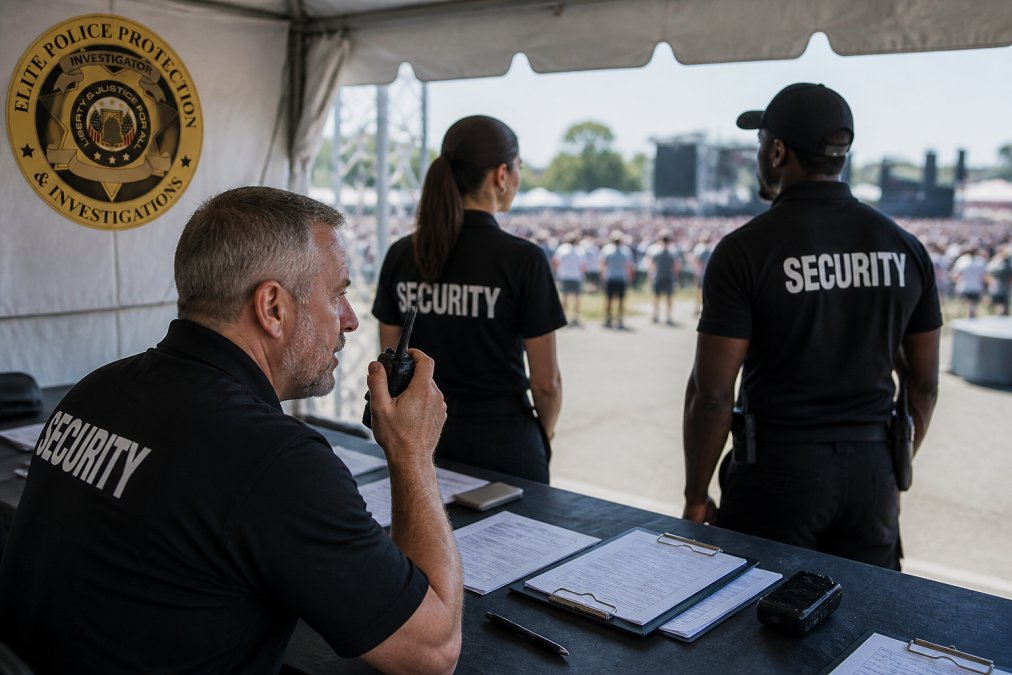
Security guard staffing for events starts with one number: expected attendance. A common starting point is one unarmed guard per 50 to 100 guests for a standard private function, tightening as crowd size, alcohol service, and public visibility increase. This guide breaks down the ratios, cost structures, and compliance rules that determine how many officers you need.
Get the headcount wrong and you pay for it: too few guards and one altercation can overwhelm your team; too many and you burn budget on unneeded coverage.
Staffing Ratios by Venue Capacity
Ratios scale with capacity, not just turnout, because your venue's layout sets how fast a crowd moves and how quickly a guard can reach a problem.
| Venue Capacity | Typical Guard Count | Primary Focus |
|---|---|---|
| Under 250 guests | 2-4 unarmed guards | Entry screening, ushering |
| 250-500 guests | 4-8 guards, 1 supervisor | Access control, crowd flow |
| 500-1,000 guests | 8-15 guards, 2 supervisors | Perimeter security, response teams |
| 1,000+ guests | 15+ guards, command post | Full incident command structure |
These are planning baselines, not formulas. A 400-person wedding with an open bar needs a different posture than a corporate luncheon of the same size. Factor in alcohol, VIP attendance, and public access before finalizing numbers.
Security Staffing Ratios for Events: The Numbers That Hold Up
Security staffing ratios for events are the guard-to-guest benchmarks that set minimum coverage, and they shift with risk profile rather than attendance alone. A seated corporate dinner runs leaner than a standing concert of identical size because density and movement patterns differ.
Most experienced providers work from three variables:
- Density. Standing-room events pack more people per square foot than seated ones, which slows guard movement and raises the risk of crowd crush.
- Alcohol. Cash bars and open bars extend the window for disputes, so many planners add officers near bar areas.
- Sightlines. A single guard can monitor a clear, open floor more effectively than a space broken up by walls or columns.
A common mistake is staffing to expected attendance instead of peak attendance. If your RSVP list says 600 but 750 show up, your plan must absorb that gap without pulling guards off entry points.
Hiring Armed vs Unarmed Guards for Your Event
Hiring armed vs unarmed guards is the biggest decision in your staffing plan, and the answer depends on threat level, not budget. Unarmed officers handle most events: access control, ushering, crowd flow, and de-escalation. Armed officers suit events with credible elevated risk.
Choose armed coverage when:
- The event involves public figures, executives, or anyone with a known threat profile
- You are handling high-value assets, cash, or controlled inventory on site
- The venue sits in an area with elevated crime exposure
- Your risk assessment flags a specific, documented threat
Choose unarmed coverage when:
- The event is private, invitation-only, and low-profile
- Guests are families, employees, or community members
- The primary need is screening, direction, and visible deterrence
Armed officers carry higher liability and need more training and insurance. Many venues also restrict firearms, which can rule out armed coverage entirely. Match the posture to the venue's rules before you commit.
Off-Duty Police for Event Security: When They Make Sense
Off-duty police for event security makes sense when you need sworn authority, rapid legal intervention, or a deterrent civilian guards cannot provide. Off-duty officers carry arrest powers and command presence that change crowd behavior.
They tend to be the right call for:
- Large public gatherings where crowd control could escalate
- Events with protest or disruption risk
- Traffic and road closures around a venue
- High-profile functions needing immediate law enforcement response
The trade-off is cost and availability: off-duty officers bill higher than civilian guards, and scheduling depends on department approval. For most private events, a mix works best: unarmed guards on entry and ushering, with one or two off-duty officers on standby for escalation.
Crowd Management, Access Control, and Gatekeeping
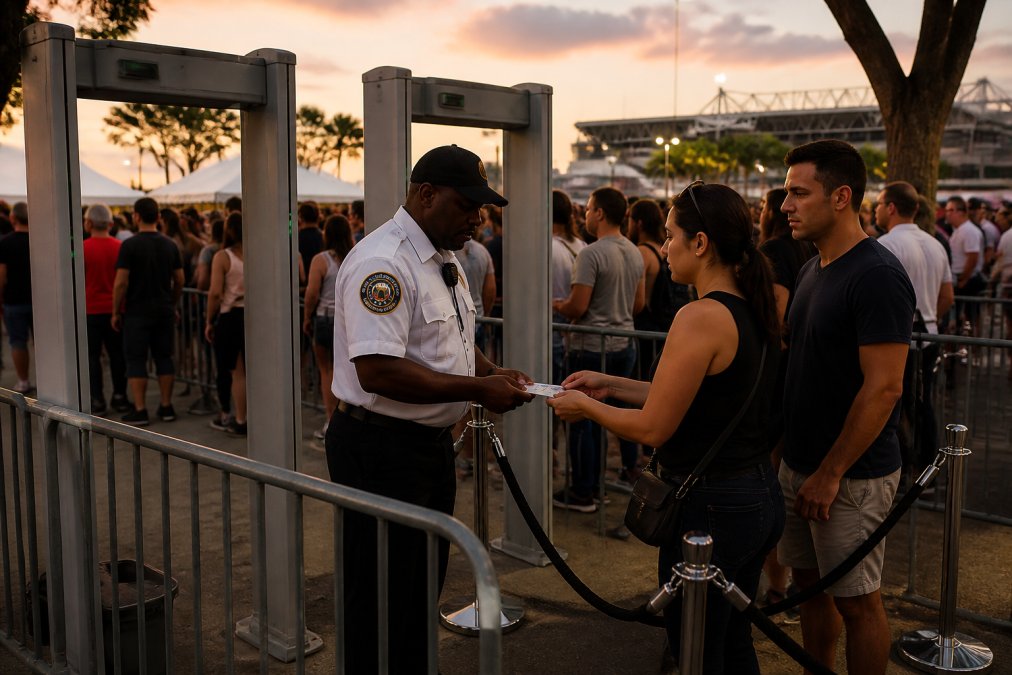
Crowd management, access control, and gatekeeping are where most security plans succeed or collapse. They determine how quickly guests enter, how smoothly they move, and whether unauthorized people get past your perimeter.
What Event Security Guards Cost: Pricing Models and Hourly Rates
Event security pricing depends on guard classification, duration, staffing volume, and risk profile, quoted through two models. Hourly rates apply to short, one-off assignments; flat-fee or package pricing applies to recurring and multi-day functions, usually bundling supervision, equipment, and reporting.
| Guard Classification | Typical Hourly Billing Range | Notes |
|---|---|---|
| Unarmed security officer | $25-$45 per hour | Lowest liability profile; most events use this tier |
| Armed security officer | $40-$75 per hour | Requires firearms permit and higher insurance limits |
| Off-duty police officer | $65-$120 per hour | Billed through the officer's department or an approved vendor |
| Supervisor / field commander | $45-$85 per hour | One per 4-8 guards is a common planning ratio |
Four factors drive your total cost:
- Guard classification. Unarmed guards bill lowest, armed guards higher, and off-duty police highest. The spread between tiers is often two to three times, so classification is the single biggest lever on your invoice.
- Event length. Most providers enforce a minimum shift, commonly four hours, even for shorter events. A two-hour reception still bills at the four-hour minimum, plus any setup and post-event reporting time.
- Staffing volume. Larger teams add supervisory and command-post costs on top of per-guard rates. Once you cross roughly eight guards, expect a dedicated supervisor line item.
- Timing and risk. Weekend, overnight, and holiday assignments often carry premium rates. Events with elevated threat profiles may also require armed coverage, which compounds the premium.
Licensing, Certification, and Compliance Standards
Licensing and certification requirements vary by state and guard type, but the structure is consistent enough to plan around. Civilian officers generally need a state-issued license, completed security guard training, and a clean background check. Armed guards face stricter requirements, typically adding firearms training and a separate permit.
- The Private Security Officer Employment Authorization Act, which allows employers to request FBI criminal history checks on security officers through state identification bureaus, subject to state participation. This is the mechanism behind the background screening most providers advertise.
- The Fair Labor Standards Act, which governs overtime, minimum wage, and recordkeeping for the guards on your assignment. It is also why multi-day events carry overtime pass-through costs.
A practical compliance checklist for any event:
- Confirm every guard's state license or permit is current and matches the classification you hired.
- Verify the provider's general liability and workers' compensation coverage, and request a certificate of insurance naming your organization.
- Confirm the venue's occupancy limit and egress plan against NFPA 101 and local fire code.
- Document any off-duty police arrangement, including department approval and insurance coverage.
- Check whether your state alcohol board imposes security requirements on licensed events.
Technology, Reporting, and Liability Documentation
Technology has changed how event security is managed and documented. Guard monitoring systems let clients track officer check-ins, patrol routes, and incident logs in real time through a client portal, turning a verbal account of the night into a verifiable record.
| Documentation Type | What It Captures | Why It Matters |
|---|---|---|
| Incident reports | Time, location, action taken | Supports liability defense |
| Patrol logs | Guard check-ins and routes | Proves coverage was delivered |
| Use-of-force records | Every escalation decision | Protects against claims |
Frequently Asked Questions
How many security guards do you need for an event?
Start with one guard per 50 to 100 guests for a standard private event, then adjust for alcohol service, venue layout, and crowd energy. A 500-person gala with open bars typically needs 6 to 10 guards, while a 500-person seated corporate dinner may need only 3 to 4. Venues with multiple entrances, VIP areas, or after-hours activity push staffing higher. Build your count from the venue's capacity and risk profile, not a flat per-head rule.
What is the difference between armed and unarmed security for events?
Hiring armed vs unarmed guards comes down to threat level and atmosphere. Armed officers carry firearms and are suited to high-value asset protection, cash handling, or events with known threats. Unarmed guards handle access control, crowd flow, and guest services without escalating the mood of the room. Most corporate and private events run unarmed, with armed coverage reserved for VIP protection or venues with a documented risk history. Mixing both is common for large events.
How does off-duty law enforcement enhance event security?
Off-duty police for event security bring sworn authority, immediate arrest powers, and coordination with local dispatch that private guards cannot match. They typically arrive in full uniform or plainclothes and can handle incidents without waiting for a patrol unit. Use them at entrances, VIP zones, or any event where a visible law enforcement presence deters trouble. They cost more per hour, so deploy them where their authority matters most rather than across the entire venue.
What qualifications should you look for in event security personnel?
Look for state licensing, current security certification, and documented training in crowd management, emergency evacuation, and incident reporting. Guards should pass background checks and arrive briefed on your event's specific layout and protocols. For armed roles, confirm firearms permits and range qualifications. Ask whether the provider assigns the same officers across your events, since familiarity with your venue cuts response time and reduces the chance of being sent whoever is available that night.