 ultimate-guide
Private Security Guard Training Requirements Explained
Table of Contents
- What Are Private Security Guard Training Requirements?
- Security Guard Training Requirements by State
- Security Guard Training Hours and Initial Certification
- Armed Security Guard Training Requirements
- Security Guard Background Check Requirements
- Minimum Age, Eligibility, and Applicant Qualifications
- On-the-Job Training and Continuing Education
- Timeline from Enrollment to First Security Shift
- Frequently Asked Questions
Last Updated: October 12, 2026
What Are Private Security Guard Training Requirements?
Security guard training requirements form the foundation of professional private security work. These requirements establish minimum standards for knowledge, skills, and certifications that guards must meet before they can legally work in most jurisdictions.
Understanding these requirements matters because they directly affect hiring timelines, operational readiness, and legal compliance. When you hire security personnel, you're responsible for ensuring they meet all applicable training and licensing standards.
The landscape of security guard training requirements has become more complex over the past decade.
Security Guard Training Requirements by State
Training requirements differ substantially across states, making it essential to understand the specific rules where your operations take place. No single national standard governs private security guard training; instead, each state establishes its own minimum requirements through legislation and regulatory bodies.
How Requirements Vary by Jurisdiction
Some states impose rigorous pre-assignment training mandates, requiring guards to complete classroom instruction and pass examinations before they can work a single shift. Other states take a lighter regulatory approach, allowing employers greater flexibility in how and when training occurs.
The differences extend to training hours, course content, instructor qualifications, and renewal cycles. California, for example, requires 8 hours of training before assignment for unarmed guards, plus 4 additional hours within 30 days of hire.
Beyond state-level rules, individual employers sometimes impose additional training beyond legal minimums.
Verifying Current Requirements with Official Regulators
The safest approach to confirming current requirements is consulting the official regulatory body in each state where you operate.
To verify requirements, identify your state's regulatory agency, often called the Department of Public Safety, Attorney General's office, or a dedicated Private Security Bureau. These agencies publish official rules, approved training provider lists, and application procedures.
When you contact a regulator, ask specifically about: minimum training hours before assignment, required course content, approved training providers, examination requirements, fingerprinting procedures, background check standards, and renewal timelines.
Security Guard Training Hours and Initial Certification
Training hour requirements form a critical part of the regulatory framework. Most states establish minimum hours that guards must complete before or shortly after beginning work.
Pre-Assignment Training and Course Completion
Pre-assignment training occurs before a guard works their first shift. This approach ensures guards arrive on the job with foundational knowledge and have already demonstrated competency through course completion and examination.
States with pre-assignment training requirements typically specify both the number of hours and the required curriculum.
The advantage of pre-assignment training is that guards begin work fully prepared. They understand their legal authority, know how to handle common situations, and have received instruction on the specific employer's policies and procedures.
Training Delivery Options and Duration
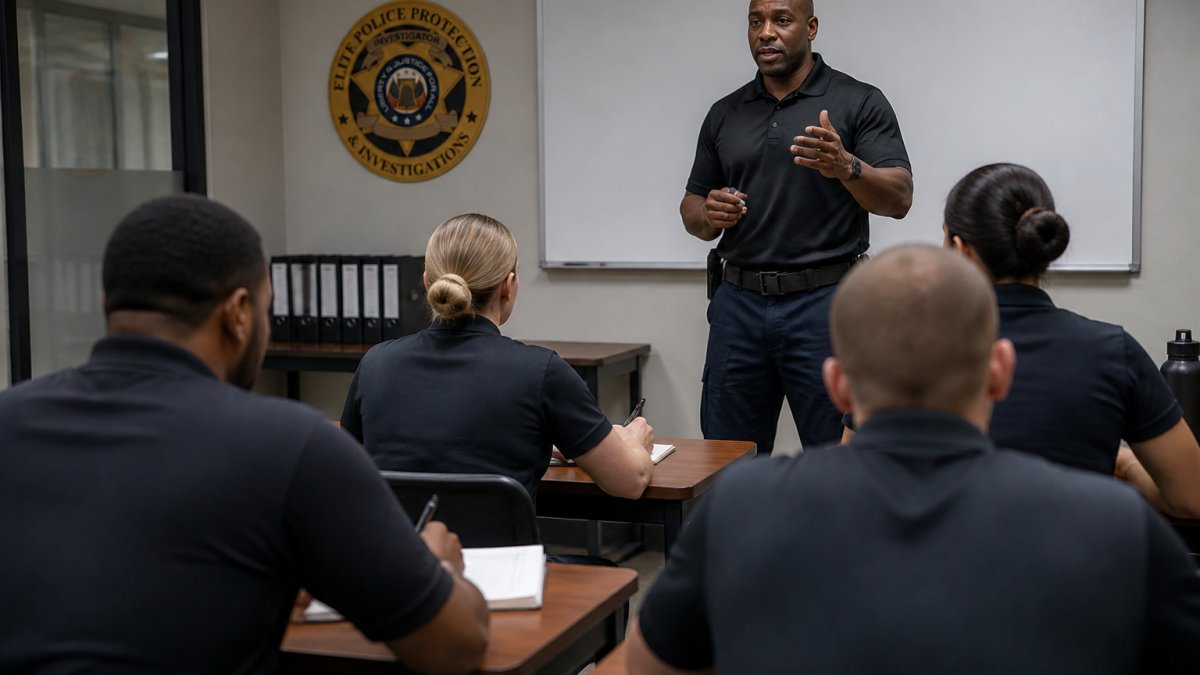
Training delivery methods vary by state and provider. Some states require in-person classroom instruction, while others allow online components or hybrid models combining classroom and digital learning.
Training duration depends on the state and guard type. Unarmed guard training typically ranges from 8 to 40 hours, depending on jurisdiction.
Approved training providers, often licensed security companies, community colleges, or specialized training academies, deliver these courses. Choosing an accredited provider ensures the training meets regulatory standards and that course completion is recognized by licensing authorities.
Armed Security Guard Training Requirements
Armed security work involves additional legal responsibilities and risk. Consequently, armed guard training requirements exceed unarmed standards substantially.
Firearms Training and Certification Standards
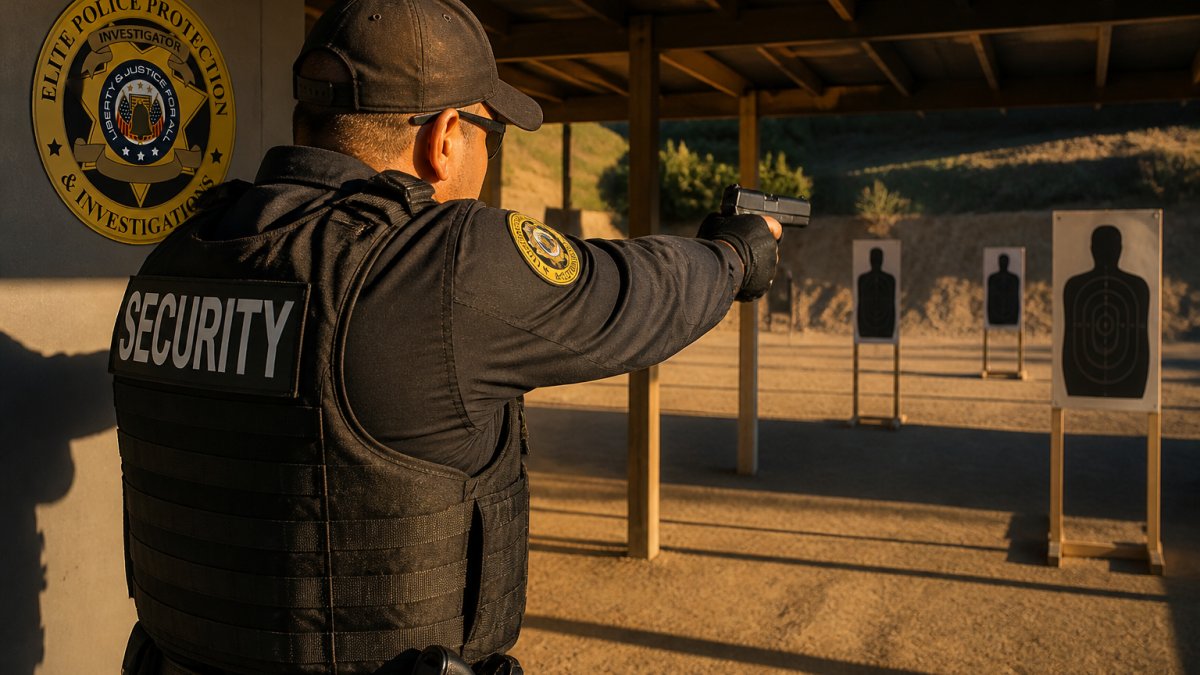
Armed guards must demonstrate competency with firearms, understanding both the mechanical operation of weapons and the legal framework governing their use.
Most states require armed guards to achieve a minimum accuracy standard, often hitting a specified percentage of shots within a target area at designated distances.
The legal component is equally critical.
Additional Qualifications Beyond Unarmed Training
Armed guards often need qualifications beyond basic firearms certification. Many employers and some states require armed guards to complete additional training in conflict de-escalation, tactical movement, and scenario-based decision-making.
Some states mandate that armed guards hold valid unarmed security guard licenses before obtaining armed certification. This ensures they understand foundational security principles before adding firearms responsibility. Advanced training may cover hostage awareness, active threat response, and high-risk situation management.
Continuing education requirements for armed guards typically exceed those for unarmed personnel. Many states require armed guards to recertify firearms proficiency annually or biennially, ensuring their skills remain current.
Security Guard Background Check Requirements
Background screening protects employers and the public by identifying individuals unsuitable for security work. These checks typically precede training and licensing.
Fingerprinting and Criminal History Screening
Most states require security guard applicants to submit fingerprints for criminal history checks. These fingerprints are compared against state and federal criminal databases to identify prior convictions, arrests, or pending charges.
The background check process typically involves submitting fingerprints to the state police or FBI for processing. Results identify any criminal history, which licensing authorities then evaluate to determine suitability for security work.
Beyond criminal history, background checks often include verification of identity, employment history, and references. Some states conduct additional screening for disqualifying factors such as restraining orders, mental health adjudications, or substance abuse convictions.
What Disqualifies You from Security Guard Work
Certain criminal convictions automatically disqualify individuals from security guard licensing. Most states prohibit licensing for anyone convicted of felonies involving violence, theft, fraud, or dishonesty.
Many states also disqualify individuals with convictions for drug offenses, particularly distribution or trafficking. Domestic violence convictions, even misdemeanor-level charges, often trigger disqualification.
Beyond criminal convictions, other factors can trigger disqualification: active restraining orders, outstanding warrants, loss of professional licenses, or documented patterns of dishonesty. Some states disqualify individuals with certain mental health adjudications or substance abuse treatment histories.
| Disqualifying Factor | Typical Impact | Variation by State |
|---|---|---|
| Felony conviction (violent crime) | Permanent disqualification | Most states; some allow waiver after 10+ years |
| Drug distribution conviction | Permanent disqualification | Universal across states |
| Domestic violence conviction | Automatic disqualification | Most states; some include misdemeanors |
| Active restraining order | Disqualifies during order period | All states; order must be lifted first |
| Outstanding warrant | Blocks licensing | All states; warrant must be resolved |
| Dishonesty-related conviction | Permanent or long-term disqualification | Most states; some allow waiver after time |
Minimum Age, Eligibility, and Applicant Qualifications
Security guard positions typically require applicants to meet basic age and legal status thresholds. These requirements ensure guards have the maturity and legal standing to carry out security responsibilities.
Most states require security guards to be at least 18 years old. Some states impose higher age requirements, 21 or older, particularly for armed positions.
Educational requirements vary by state and employer. Some states require high school completion or GED equivalency, while others impose no formal education standard.
Language proficiency matters in practice. Guards must communicate clearly with supervisors, other security personnel, and the public.
On-the-Job Training and Continuing Education
Training doesn't end with initial certification. Ongoing skill development, legal updates, and compliance training form part of professional security work.
Post-Hire Training and Skill Development
After initial certification, guards typically receive employer-specific training covering company policies, client-site procedures, communication protocols, and emergency response plans.
Effective employers provide scenario-based training where guards practice responding to common situations, handling difficult individuals, managing emergencies, documenting incidents, and communicating with law enforcement. This practical training reduces errors and improves response quality.
Many employers also provide training on new technologies, access control systems, surveillance equipment, communication devices, and incident reporting software. As security technology evolves, guards need instruction to use new tools effectively.
License Renewal and Ongoing Requirements
Security guard licenses require periodic renewal, typically every 1 to 3 years depending on the state. Renewal usually involves submitting updated background information, confirming continued eligibility, and sometimes completing additional training hours.
Continuing education requirements exist in many states. Guards may be required to complete 4 to 8 hours of training annually or per renewal cycle.
Some states require guards to maintain CPR and first aid certifications as part of their security license. These certifications must be renewed periodically, usually every 2 years.
Timeline from Enrollment to First Security Shift
Understanding the timeline from deciding to pursue security work to working the first shift helps set realistic expectations.
The process typically begins with application submission and background check initiation.
Once background clearance is obtained, the applicant enrolls in required training.
After course completion, the applicant takes the licensing examination.
When you partner with Elite Police Protection, our security officers are pre-vetted, fully trained, and compliant with all applicable regulations.
Hiring qualified security personnel requires understanding training requirements, background standards, and regulatory timelines in your specific jurisdiction.
Frequently Asked Questions
What certifications do I need for private security?
Certifications vary by state and role. Most states require a security guard license through their state police or private security bureau. Armed guards need firearms certifications in addition to basic security training. CPR and emergency first aid certifications are often required. Completing an approved training course and passing a written exam are standard prerequisites. Check your state's specific licensing authority for exact requirements, as they differ significantly by jurisdiction.
How many hours of training does a security guard need?
Security guard training hours range from 8 to 40+ hours depending on your state and role. Some states require only basic pre-assignment training, while others mandate 40 hours or more. Armed security guard training typically requires additional hours beyond unarmed certification. Initial training usually covers legal issues, use of force, emergency response, and incident reporting. After initial training, many states require continuing education hours annually for license renewal.
What disqualifies you from being a security guard?
Criminal history is the primary disqualifier. Most states prohibit individuals with felony convictions or certain misdemeanors from obtaining a security license. Domestic violence convictions, restraining orders, and substance abuse charges can also disqualify applicants. Background checks and fingerprinting reveal these issues. Some states also disqualify those with mental health commitments or active restraining orders. Each state sets its own standards, so review your state's specific eligibility requirements through its private security bureau.
Do armed security guards need additional training?
Yes, armed security guards require significantly more training than unarmed guards. In addition to basic security training, armed guards must complete firearms training, pass a weapons qualification exam, and often obtain state-specific armed guard certifications. Training covers legal use of force, firearm safety, incident response, and civil liability. Some states require 16-40 additional hours beyond unarmed training. Armed guard credentials must typically be renewed annually with recertification of firearms proficiency.
How can I verify a security guard's license and training?
Contact your state's licensing authority, usually the state police or private security bureau, to verify a guard's active license and training completion. Request the guard's training certificate and license number. Confirm the guard completed an approved training course through a recognized training provider. Ask for proof of current CPR and emergency first aid certifications. Verify background check completion and fingerprinting records. Reputable security firms maintain current documentation and can provide copies upon request.
What does security guard training actually cover?
Core security guard training covers legal issues, civil liability, use of force, emergency response, fire emergency procedures, crowd control, and incident reporting. Training includes written communication skills, emergency medical response basics, and conflict resolution. Armed guard training adds firearms safety, weapon handling, and legal justification for use of force. On-the-job training reinforces these concepts in real-world scenarios. Advanced training may include executive protection, K9 handling, or specialized security duties depending on the role and employer requirements.
What's the practical timeline from enrollment to my first security shift?
Timeline varies by state and employer. Typically, enrollment to first shift takes 2-6 weeks. Initial steps include application submission (1-2 weeks), background check and fingerprinting processing (1-3 weeks), and approved training course completion (1-2 weeks depending on hours required). Some states allow on-the-job training while awaiting final license approval. Armed guard positions take longer due to additional firearms training and certification. Employers may accelerate timelines for urgent staffing needs, but full compliance with state requirements cannot be rushed.
What's the difference between unarmed and armed guard training requirements?
Unarmed guards complete basic security training covering legal duties, emergency response, and conflict de-escalation. Armed guards complete all unarmed training plus firearms-specific instruction, weapon handling, legal use of force, and qualification exams. Armed training typically adds 16-40 hours and requires passing weapons proficiency tests. Armed certifications require annual renewal with recertification of firearms skills. Civil liability training is more extensive for armed guards. Armed positions may also require prior law enforcement experience or higher educational standards depending on the state and employer.