 how-to
How to Verify Security Guard Training: A Step-by-Step Guide
Table of Contents
- Why Verifying Security Guard Training Matters
- Understanding Security Guard License Types and Requirements
- How to Search for a Security Guard License Lookup
- State Security Guard Training Requirements Explained
- Mandatory Security Guard Training Hours by State
- Troubleshooting Common Search Errors and Verification Issues
- Employer Verification Workflow: What to Request and How to Document
- Conclusion
Last Updated: August 30, 2026
Why Verifying Security Guard Training Matters
Before hiring any security professional, you need to confirm their credentials are legitimate. A guard's training certification isn't just paperwork, it's proof they've met state-mandated requirements for handling conflict, managing emergencies, and protecting people and property. Verification protects your organization from liability, ensures compliance with regulations, and guarantees you're getting someone actually qualified for the role.
The stakes are real. Hiring an unlicensed or undertrained guard exposes your property to security gaps, legal liability, and potential negligence claims. This guide walks you through how to verify security guard training yourself, whether you're evaluating a candidate, auditing current staff, or ensuring a service provider meets your standards.
Understanding Security Guard License Types and Requirements
Security guard licensing varies significantly by state, and the type of guard determines which training is required. An armed guard protecting a bank faces different certification requirements than an unarmed guard at a retail location. Understanding these distinctions is critical before you even start searching for verification records.
Armed guards must complete additional firearms training, background checks, and often psychological evaluations beyond standard security guard certification. Some states require separate permits for carrying specific weapons like batons or pepper spray. Unarmed guards typically need baseline training in conflict de-escalation, emergency response, and customer service, but the hours required vary widely.
Most states issue a security guard card or license that displays the guard's registration number, expiration date, and any restrictions or endorsements. This card is the physical proof of certification. Some states maintain online databases where you can search by name or registration number; others require phone inquiries or in-person requests.
The regulatory agency responsible for security guard licensing differs by state. Some states place oversight with the Department of Consumer Affairs, others with the State Police, and some delegate to local county authorities. Knowing which agency governs your state is the first step in verification.
How to Search for a Security Guard License Lookup
The process for finding security guard license information depends on your state's regulatory structure. Most states offer at least one of three methods: an online searchable database, a phone line for inquiries, or an in-person request process.
Step 1: Identify Your State's Regulatory Agency
Start by determining which agency oversees security guard licensing in your state. Search "[Your State] security guard license regulatory agency" or visit your state's official government website. Common agencies include the Department of Consumer Affairs, Department of Public Safety, State Police Board, or local county sheriff's office. Write down the agency name, phone number, and website.
Step 2: Check for an Online Database
Many states now offer online portals where you can search for active security guard licenses. Visit the regulatory agency's website and look for a "License Lookup," "Credential Verification," or "Database Search" section. If available, you can typically search by:
- Guard's full name
- Registration or license number
- License type (armed, unarmed, etc.)
The online search usually returns the guard's license status (active, expired, suspended), expiration date, and any disciplinary actions on record.
Step 3: Contact the Agency Directly
If your state doesn't maintain an online database, call the regulatory agency directly. Have the guard's full name, date of birth, and any known registration number ready. The agency staff can confirm whether the individual holds a valid license, when it expires, and whether any disciplinary actions are recorded against them. Request documentation or a written confirmation if you need it for your records.
Step 4: Request Written Verification
For employment or compliance purposes, ask the regulatory agency for written verification. Many agencies provide official letters confirming a guard's license status, which you can keep in your hiring file. This creates a documented record that you performed due diligence in verifying credentials.
State Security Guard Training Requirements Explained
Each state sets its own minimum training standards for security guards, creating a fragmented landscape across the country. Understanding what your state requires helps you evaluate whether a candidate has actually completed the necessary preparation.
Most states require security guards to complete foundational training in legal authority, use of force, emergency response procedures, and customer interaction. Some states mandate specific topics like bloodborne pathogen awareness or sexual harassment prevention. Armed guards face additional requirements: firearm safety certification, shooting range qualification, and often psychological evaluation.
The training can be delivered through approved security guard schools, community colleges, or in-house employer programs, depending on state rules. Some states recognize training from other states; others require retraining when a guard relocates. This is why cross-state reciprocity matters: a guard licensed in one state may not be automatically qualified in another.
Disciplinary records are part of the public verification process. If a guard has been cited for unlicensed activity, violations of conduct standards, or criminal charges, those actions typically appear in the state database. Your verification search should reveal whether a candidate has a clean record or any history of enforcement action.
Mandatory Security Guard Training Hours by State
Training hour requirements range from as few as 8 hours in some states to 40+ hours in others. The variation reflects different state philosophies about security guard competency and public safety standards.
States with lower minimums (8-16 hours) typically focus on basic legal knowledge, emergency procedures, and conflict de-escalation. These states may assume employers will provide additional on-the-job training. States with higher requirements (30-40+ hours) mandate comprehensive instruction covering legal authority, use of force, first aid, and detailed emergency protocols.
Armed guard training universally requires more hours than unarmed certification. Firearm-specific instruction alone often demands 20-40 hours, including classroom instruction, range time, and qualification testing. Some states require annual refresher training for armed guards to maintain their permit.
When verifying a guard's training, confirm not just that they completed training, but that they completed the minimum hours required by your state. A guard certified in a low-requirement state may lack training depth compared to your state's standards, and if you're hiring someone from another state, verify whether your state recognizes their out-of-state credential or requires retraining.
The verification process should reveal the specific training program completed, the hours logged, and the date of certification. If a guard claims 40 hours of training but your state requires 30 hours, that's fine, they exceed the minimum. If they claim 20 hours and your state requires 30, they're not qualified.
Troubleshooting Common Search Errors and Verification Issues
Even with clear steps, verification searches sometimes return confusing results or fail entirely. Here's how to handle the most common problems.
The Guard's Name Doesn't Appear in the Database
This could mean several things: the guard isn't licensed (red flag), the license has expired (verify expiration date), the guard is using a different legal name than expected, or the database is outdated. Call the regulatory agency directly to confirm. If the guard truly isn't in the system, they may be operating without a valid license, which is illegal in most states.
The License Shows as Expired
An expired license means the guard is no longer authorized to work. Some guards may not realize their license lapsed, but that's their responsibility. Do not hire or retain an expired guard. Confirm the expiration date with the agency and ask whether the guard has applied for renewal.
The Database Shows Disciplinary Action or Suspension
A disciplinary record doesn't automatically disqualify a guard, but it requires investigation. Request details about the violation. Was it a paperwork issue, a conduct violation, or something serious? A single minor violation years ago may be less concerning than a recent pattern of problems. Make this determination based on your risk tolerance and the nature of the violation.
You Can't Find the Right Regulatory Agency
Some states have fragmented licensing systems where different agencies oversee different types of guards (armed vs. unarmed, private vs. contract). Search "[Your State] security guard licensing" on the official state government website, not a general search engine. Government websites are authoritative; private sites may be outdated or inaccurate.
The Online Database Is Slow or Down
State databases occasionally experience technical issues. Try again later, or call the agency directly. Don't assume a guard is licensed just because you can't access the database, persistence in verification is part of due diligence.
Employer Verification Workflow: What to Request and How to Document
Creating a systematic verification process ensures consistency and protects your organization. Here's how to build a workflow that works for hiring, audits, and compliance.
Step 1: Establish a Verification Checklist
Before hiring any security guard, your HR or security team should verify:
- Active license status in your state
- Correct license type (armed, unarmed, or specialized)
- No expired or suspended status
- Clean disciplinary record (or documented review of any violations)
- Completion of mandatory training hours for your state
- Firearm permit (if armed guard role)
- Background check clearance (if your state requires it)
Create a simple checklist form that documents each verification step, the date checked, the source (online database, phone call, written confirmation), and the result. File this with the employee's hiring records.

Step 2: Request Documentation from the Guard
Ask the guard to provide:
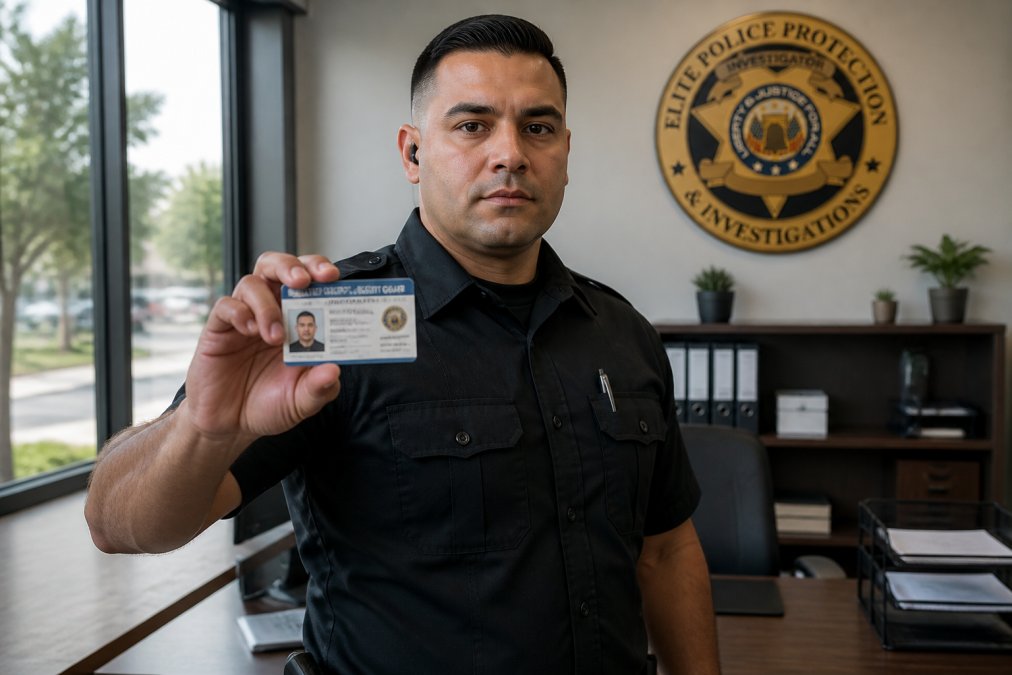
- A copy of their current security guard license or card
- Proof of training completion (certificate or transcript)
- Any firearm permits or endorsements (if applicable)
- Consent to background check verification
These documents give you a starting point and show the guard's willingness to cooperate. Compare their documents against the official state database to confirm accuracy.
Step 3: Document Your Verification Results
Keep written records showing:
- Date of verification
- Method used (online search, phone call, written request)
- Results (license status, expiration date, any notes)
- Who performed the verification
- Signature or initials of the verifier
This documentation proves you performed due diligence if a question ever arises about a guard's qualifications.
Step 4: Set Up Recurring Audits
Don't verify once and assume the guard remains qualified forever. Set calendar reminders to re-verify licenses before expiration dates. Many employers check quarterly or semi-annually. If you use a security service provider, request they provide verification records for all assigned guards and conduct your own spot-checks to confirm.
Step 5: Document Disciplinary Actions
If your verification reveals a disciplinary action against a guard, document your decision-making process. Did you investigate further? Did you determine the violation was minor or serious? Did you decide to hire or retain the guard anyway, and why? This creates a clear record of your hiring judgment.
Working with Security Service Providers
If you contract with a security company like Elite Police Protection, request written verification that all assigned guards meet your state's training requirements and have clean records. Don't assume the company has done this, ask for documentation. A reputable provider will have verification systems in place and be transparent about their guards' qualifications.
Elite Police Protection maintains comprehensive credentialing for all team members, including verification of training, background clearance, and ongoing compliance monitoring. When you partner with a professional security service, you're adding an extra layer of verification, but you should still spot-check and maintain your own records.
Conclusion
Verifying security guard training is a non-negotiable part of hiring and compliance. The process is straightforward: identify your state's regulatory agency, search their database or call directly, document the results, and audit periodically. A 10-minute verification call prevents liability, ensures you're getting qualified personnel, and demonstrates due diligence to regulators and insurers.
When you need security professionals who've already cleared these hurdles, Elite Police Protection provides uniformed guards, armed officers, and specialized personnel with full credential verification, background clearance, and ongoing compliance monitoring. Apply Now to learn how we can secure your property with fully vetted, highly trained professionals.
Frequently Asked Questions
Q: How do I verify a security guard's license status?
Most states maintain online databases where you can search by the guard's name or registration number. Visit your state's regulatory agency website (typically the Department of Consumer Affairs or equivalent) and use their security guard license lookup tool. You'll need the guard's full name or license number. Results typically show current certification status, training completion dates, and any disciplinary actions. If the database isn't available online, contact the regulatory agency directly with the guard's information.
Q: What are the mandatory security guard training hours required?
Mandatory security guard training hours vary significantly by state. Most states require between 8 and 40 hours of initial training before a guard can work, with some requiring 24-hour pre-assignment training as a standard minimum. Armed guards typically need additional firearms training and certification. Many states also mandate annual refresher training of 4-8 hours. Check your specific state's security guard training requirements through the regulatory agency, as requirements differ for armed versus unarmed guards and may vary by employer type.
Q: What documents should I request to confirm a guard's training history?
Request the guard's state-issued guard card or professional license showing current certification status. Ask for proof of completion from approved training providers, including course certificates with dates and hours completed. For armed guards, verify firearm permits and weapons training certification separately. Request documentation of background checks and any required fingerprinting. Have the guard provide written authorization to verify their license through the state database. Keep copies of all documentation for your records and compliance verification.
Q: Can I verify security guard credentials before hiring?
Yes. Before hiring, conduct a security guard license lookup through your state's regulatory database, request certified copies of training completion documents, and verify background check status with the provider. Contact the training provider directly to confirm course completion. Ask for references from previous employers and verify them. Request proof of any required permits (firearms, baton, etc.). Many regulatory agencies allow employers to request verification directly. Performing these checks before hiring protects your organization from liability and ensures compliance with state regulations.
This article was written using GrandRanker