
 blog
blog
Alternatives to K9 Security Services: 7 Options for 2026
Table of Contents
- Why Businesses Look Beyond K9 Security Services
- Off-Duty Law Enforcement Services: A Direct Alternative
- Benefits of Uniformed Security Guards for Site Protection
- Electronic Screening and Surveillance: Technology vs. Canine Units
- Security Risk Assessment Best Practices Before Choosing an Alternative
- Cost-Benefit Analysis: K9 Security vs. Guard Services vs. Technology
- Liability and Insurance: What Property Managers Must Compare
- Conclusion: Matching the Right Alternative to Your Site
- Frequently Asked Questions
Last Updated: October 1, 2026
Why Businesses Look Beyond K9 Security Services
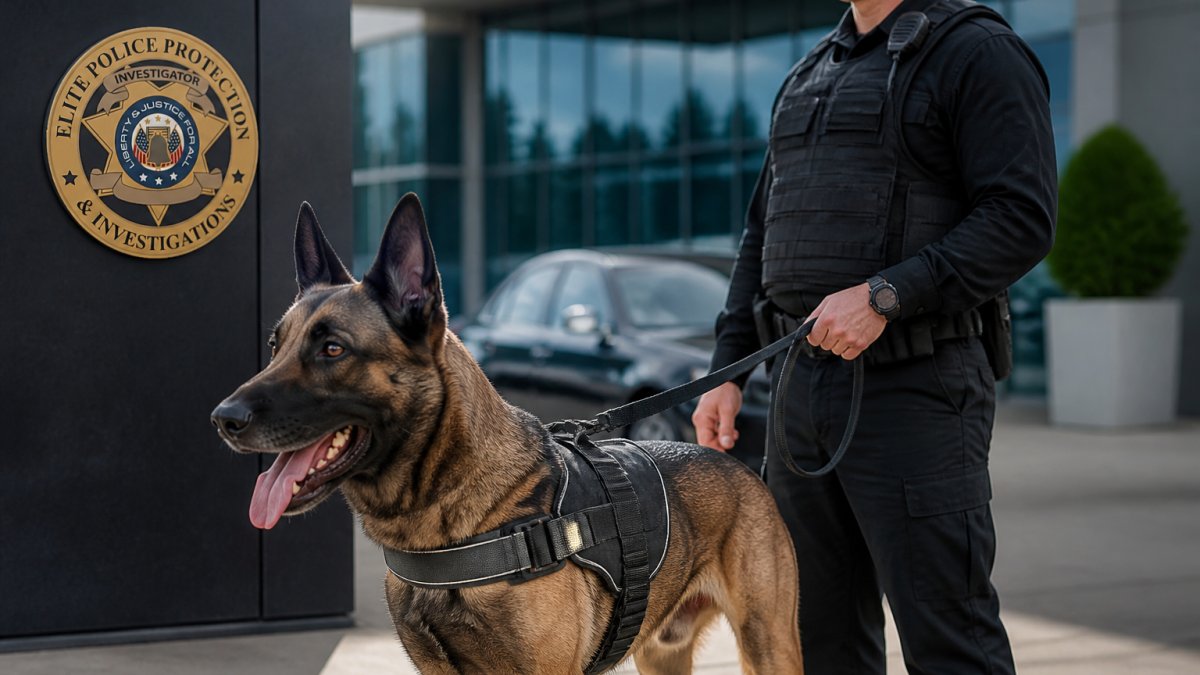
When a property manager starts comparing alternatives to K9 security services, it usually isn't because dogs failed. It's because the site changed. A single K9 team covers one scent profile, one handler's shift, and one patrol window at a time. Add a second entrance, a night crew, or a weekend event, and the math stops working.
Canine units excel at explosive detection, narcotics detection, and visible deterrence, but they're poor at access control, camera coverage, incident documentation, and 24/7 presence across multiple buildings. Most commercial sites need a blend, not a replacement.
Below, we break down seven alternatives, what each costs in operational terms, and where each one wins.
Off-Duty Law Enforcement Services: A Direct Alternative
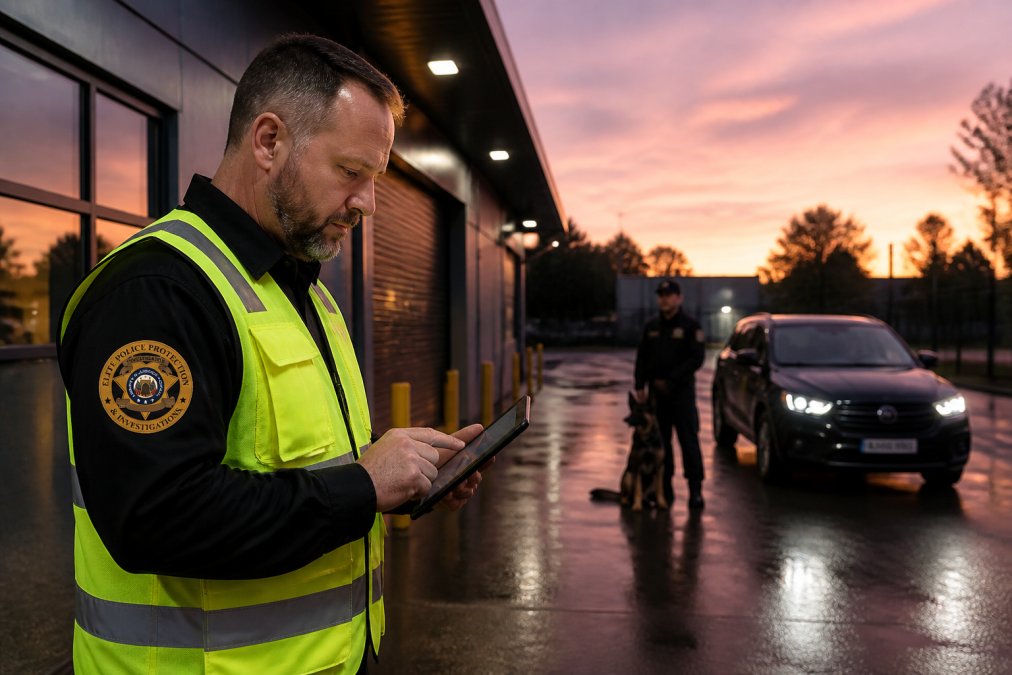
Off-duty law enforcement services place active or recently retired officers on your site in a security capacity. These sworn personnel work approved secondary employment, arriving with the training, report-writing habits, and courtroom familiarity a standard guard often lacks.
The practical difference shows up in three places. Presence: a marked officer in a patrol vehicle changes behavior before anything happens. Authority: officers know the legal boundaries of detention, search, and use of force, reducing the chance your company absorbs a civil claim. Documentation: reports written to law enforcement standards hold up better in court and with insurers.
Where it falls short: availability. Officers work around department schedules, so a site needing 40 hours a week may need two or three people rotating. It also costs more per hour than a standard unarmed guard. For bars, retail centers, and construction sites with active theft problems, that premium usually pays for itself.
Benefits of Uniformed Security Guards for Site Protection
The benefits of uniformed security guards come down to consistency and coverage. A guard post runs the same hours every day, staffed by people whose only job is your property.
That consistency matters more than most buyers expect. A visible uniformed presence at an entrance, lobby desk, or loading dock deters casual theft and gives employees a defined person to report to. Guards also handle the unglamorous work that keeps a site defensible: logging visitors, checking doors, walking patrol routes, and writing reports your insurer can use.
Armed and unarmed options exist, and the right choice depends on your risk profile. A behavioral health facility usually wants unarmed officers trained in de-escalation. A warehouse with repeated after-hours break-ins may need armed coverage. Business-attired officers suit corporate lobbies and executive protection details where a uniform draws unwanted attention.
The limitation is judgment. A well-run guard program depends on who you hire and how you supervise them. Ask any provider how they verify attendance and how you'll see the data.
Electronic Screening and Surveillance: Technology vs. Canine Units
Electronic screening and surveillance covers cameras, access control, motion sensors, alarm systems, and weapons detection. These systems never call in sick and record everything.
So why doesn't everyone drop canine units and guards entirely? Because technology detects and records; it doesn't intervene. A camera captures a break-in but doesn't stop one, and a motion sensor's alert still requires a human to respond, response time is where electronic-only deployments fail.
The stronger model pairs the two. Cameras and access control shrink the area a guard or K9 team has to cover, and the human element handles the response the system can't. A common mistake is buying cameras first and staffing second. That order produces footage of incidents rather than fewer incidents.
Also worth noting: electronic screening at entrances, such as weapons detection, handles high-throughput venues better than a K9 team can.
| Option | Best For | Main Limitation |
|---|---|---|
| Off-duty law enforcement | Bars, retail, active theft | Limited availability |
| Uniformed guards | Lobbies, warehouses, campuses | Depends on supervision |
| Electronic screening | High-traffic entrances, events | Detects, doesn't respond |
| K9 detection teams | Sweeps, narcotics, explosives | Shift length, single purpose |
Security Risk Assessment Best Practices Before Choosing an Alternative
Security risk assessment best practices start with the site, not the vendor. Before you price anything, walk the property and answer four questions: what are you protecting, who wants it, how would they get it, and what happens if they do.
A workable assessment follows a fixed sequence:
- Map every entry point, including service doors and loading docks
- List your assets by value and replaceability
- Review the last twelve months of incident reports
- Identify gaps between what you have and what each gap costs you
- Score each risk by likelihood and impact
- Match controls to the highest scores first
Cost-Benefit Analysis: K9 Security vs. Guard Services vs. Technology
| Cost Category | K9 Team | Guard Post | Off-Duty Officer | Electronic System |
|---|---|---|---|---|
| Recurring labor (annualized) | Highest per hour | Moderate | High | None |
| One-time equipment | Low | Low | Low | High |
| Recurring technology | Low | Low | Low | Moderate |
| Coverage hours per week | Limited by shift length | Full post hours | Limited by availability | 24/7 recording |
| Response capability | Yes (handler) | Yes | Yes | No (requires human) |
| Documentation quality | Handler notes | Patrol logs | Law enforcement standard | Video evidence |
| Liability profile | Bite risk | Supervision risk | Capacity/authority risk | Privacy/retention risk |
Pricing depends on site size, hours, and risk level. Elite Police Protection quotes after a walkthrough rather than from a rate card, because a warehouse and a restaurant lobby don't carry the same risk, and the cost-benefit math only works when the inputs are real.
Liability and Insurance: What Property Managers Must Compare
Liability exposure separates these options more than price does, and it's the comparison most buyers never make. When a guard, officer, or K9 team works your property, two insurance policies and two sets of legal rules come into play, and how they interact determines who pays when something goes wrong.
- What are your CGL and E&O limits, and are they per-occurrence or aggregate? A $1 million per-occurrence limit with a $2 million aggregate is common in the industry. A serious excessive-force or wrongful-detention claim can exceed that, which is why you also want to know whether the provider carries an umbrella policy.
- Who is the additional insured, and does your certificate say so? You want to be named as an additional insured on the provider's CGL policy, with a certificate of insurance (COI) issued directly to you. A COI is not a contract, it's evidence of coverage at a point in time, so require updated certificates at renewal and after any claim.
- Are personnel employees or subcontractors? This is the single biggest structural difference. If the guard is the provider's employee, the provider's workers' comp and vicarious liability generally absorb the claim. If the guard is a 1099 subcontractor, the provider may disclaim responsibility, and the claim can land on you as the property owner under premises liability theories.
Conclusion: Matching the Right Alternative to Your Site
Every site has a different answer. A retail center with repeat theft needs visible off-duty officers. A distribution warehouse needs perimeter patrol and access control working together. An event venue needs electronic screening at the gate and a response team inside.
Apply Now
Frequently Asked Questions
How much does K9 security cost compared to static guard services?
K9 security typically costs more than a standard unarmed guard because you are paying for both a licensed handler and a trained dog, and the dog requires ongoing certification and care. Static guard services usually cost less per hour but do not provide scent detection or the same level of deterrence. Exact pricing for any security deployment depends on shift length, site requirements, and whether the officer is armed. Request a quote for current rates.
Are there legal liabilities associated with using K9 security services?
Yes. A detection dog that alerts on a person or vehicle can lead to claims of excessive force, unlawful search, or false imprisonment if the handler is not properly certified and the deployment is not documented. Property managers should confirm the provider carries general liability and professional liability coverage, and that handlers are trained to recognized standards. Off-duty law enforcement officers may also carry qualified immunity in some contexts, which is a different liability profile than a civilian K9 handler.
What are the primary benefits of off-duty law enforcement over K9 units?
Off-duty law enforcement services bring sworn officer authority, immediate arrest powers, and courtroom-tested documentation. They can handle crowd control, incident response, and threat assessment without waiting for local police. K9 units excel at scent detection for narcotics or explosives but do not replace the legal authority and report-writing standards that off-duty officers provide. For high-risk corporate environments, many property managers use off-duty officers as the primary layer and reserve K9 teams for specific detection tasks.
How do uniformed security guards compare to K9 teams for site protection?
Uniformed guards provide visible deterrence, access control, and patrol coverage at a lower hourly cost than a K9 team. They cannot detect concealed narcotics or explosives by scent, but they can operate screening equipment, manage visitor logs, and respond to incidents. K9 teams are best for targeted detection sweeps, not continuous patrol. A layered approach, guards for presence plus electronic screening for detection, often covers the same ground as a K9 unit at a predictable cost.