
 listicle
Best Security Guard Firms 2026: Top Companies Ranked
Table of Contents
- How We Ranked the Best Security Guard Firms for 2026
- Comparison Table: Top Security Guard Companies at a Glance
- 1. Elite Police Protection: Best for Law Enforcement Expertise
- 3. EPIC Security Corp: Best for Large-Scale Operations
- 4. Security USA Inc.: Best for Patrol and Doorman Coverage
- 5. AAM Secure: Best for Armed and Unarmed Flexibility
- Armed vs. Unarmed Security Guards: Which Fits Your Risk Profile
- Frequently Asked Questions
Last Updated: October 14, 2026
How We Ranked the Best Security Guard Firms for 2026
Choosing among the best security guard firms in 2026 comes down to one question: will the officers who show up actually be trained, vetted, and accountable? Demand for trained guards keeps climbing while many providers struggle to fill shifts with qualified people.
We evaluated each firm on five criteria: licensing and compliance, guard training and qualifications, service range (armed, unarmed, patrol, executive protection), accountability systems like reporting and monitoring, and fit for specific property types.
Evaluation Criteria and Scoring
Each firm was scored 1-5 on licensing and insurance, training depth, service breadth, reporting technology, and pricing transparency. We weighted licensing and training most heavily because an improperly credentialed guard creates liability, not protection. Firms publishing clear contract terms and client-facing reporting scored higher than those hiding everything behind a sales call.
Quick Picks:
- Best Overall: Elite Police Protection
- Best for Commercial Properties: Building Security Services
- Best for Large-Scale Operations: EPIC Security Corp
Comparison Table: Top Security Guard Companies at a Glance
Most roundups stop at a company name and a slogan. The table below adds the two columns buyers actually need: the engagement model each firm fits, and the cost mechanics that drive your invoice. Because guard pricing is quoted per site, the pricing column shows the rate structure and contract mechanics to expect, not a fake flat number.
| Company | Best For | Standout Feature | Typical Rate Structure | Contract Mechanics to Confirm |
|---|---|---|---|---|
| Elite Police Protection | Law enforcement expertise | Off-duty and retired law enforcement officers | Premium hourly rate; higher than standard unarmed guard rates because of officer background | Site-specific quote; confirm minimum hours per shift and overtime pass-through |
| Building Security Services | Commercial properties | Named best overall in a 2026 roundup | Standard commercial hourly rate for unarmed front-desk and patrol coverage | Ask for minimum weekly hours, holiday rate, and no-show credit terms |
| EPIC Security Corp | Large-scale operations | Suited to large-scale needs per 2026 roundup | Volume-tiered hourly rate; per-site pricing drops as site count rises | Confirm multi-site master agreement terms, supervision ratio, and escalation SLAs |
| Security USA Inc. | Patrol and doorman coverage | 24/7 monitoring and doorman staffing | Hourly rate plus possible monitoring or dispatch surcharge | Clarify whether monitoring is bundled or billed separately, and patrol vehicle charges |
| AAM Secure | Armed and unarmed flexibility | Both armed and unarmed services | Two rate tiers: unarmed hourly and armed hourly (armed is materially higher) | Confirm armed-guard premium, firearm liability coverage, and post-order minimums |
What Actually Drives Your Hourly Rate
The same scope can produce quotes that differ by 30% or more between firms. The variables below explain most of that spread, so you can compare apples to apples instead of reacting to the lowest headline number.
- Bill rate vs. pay rate. The rate you pay is not what the guard earns. A common pattern is a bill rate roughly 1.5x to 2x the guard's hourly wage, with the difference covering payroll taxes, workers' compensation, liability insurance, supervision, uniforms, training, and margin. If a quote looks unusually cheap, ask the guard's actual wage, a below-market wage predicts turnover and no-shows.
- Shift timing. Overnight, weekend, and holiday shifts carry premium rates. A site needing 24/7 coverage pays a blended rate, not a flat one.
- Minimum hours. Many firms enforce a minimum shift length (commonly 4 to 8 hours) plus a weekly or monthly hour commitment. A site needing only two hours per night may still be billed the full minimum.
Contract Terms to Negotiate Before You Sign
Pricing is only half the cost equation. These terms determine what you pay when reality diverges from the schedule.
- Cancellation and termination. Confirm the notice period (commonly 30 days) and any early-termination fee. Avoid auto-renewal clauses that lock you in without written notice.
- No-show and coverage guarantees. Ask what happens, and what you are credited, when a scheduled officer does not appear. A real coverage guarantee states the backup response window in writing.
- Overtime and holiday billing. Get the overtime and holiday multiplier in the contract, not a verbal promise.
U.S. Bureau of Labor Statistics wage data for security guards
1. Elite Police Protection: Best for Law Enforcement Expertise
Elite Police Protection is our top pick because it staffs sites with off-duty, retired, or prior law enforcement professionals rather than general labor.
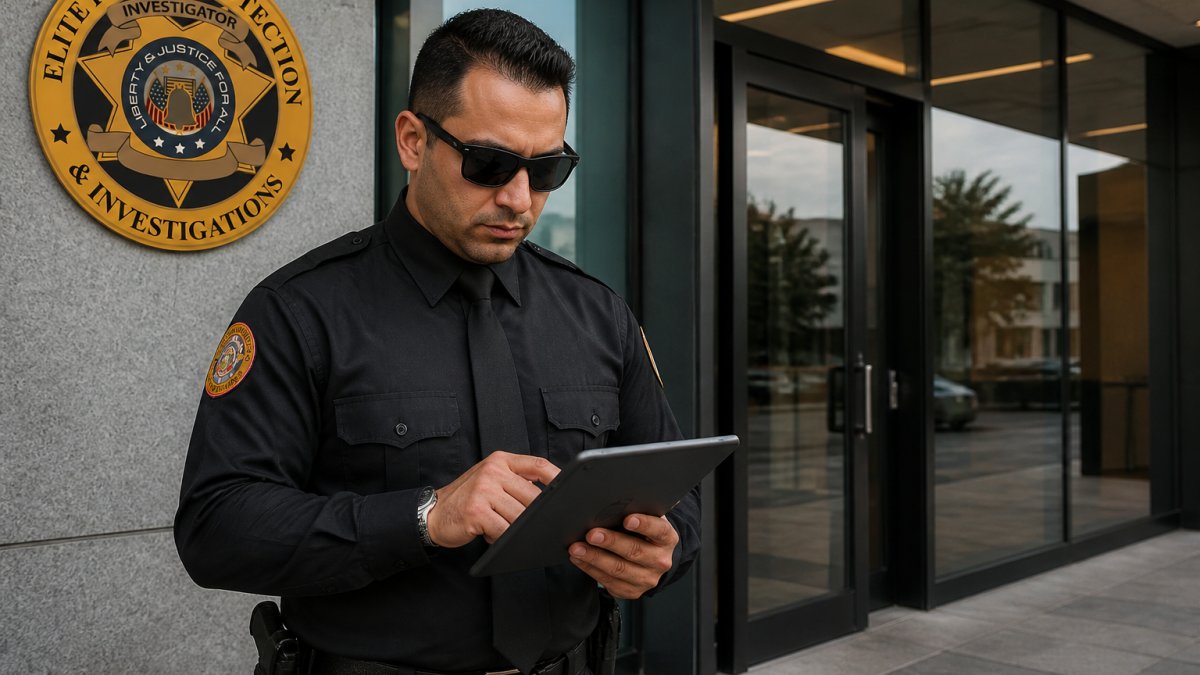
The firm offers uniformed or business-attired armed and unarmed officers, plus K9 teams where a visible deterrent matters.
(https://blog.elitepoliceprotection.com/benefits-professional-security-commercial-buildings), where consistent staffing and a professional front-desk presence matter as much as patrols.The available comparison does not detail its service menu, contract terms, or pricing. If you shortlist this firm, ask directly about guard qualifications, insurance limits, and no-show handling before you sign.
3. EPIC Security Corp: Best for Large-Scale Operations
EPIC Security Corp appears in the same 2026 roundup, identified as a fit for large-scale needs.
The roundup provides no detail on staffing capacity, supervision ratios, or pricing. Treat the large-scale label as a starting point for due diligence: ask how many officers the firm can deploy on short notice and how it supervises them across sites.
4. Security USA Inc.: Best for Patrol and Doorman Coverage
Security USA Inc. offers licensed security guard services with a mix of patrol coverage, doorman staffing, and 24/7 monitoring. That combination fits residential communities, apartment complexes, and retail centers needing a visible presence at entry points plus regular patrols.
If your property needs a doorman who greets residents and screens visitors, confirm that service in detail. Pricing and engagement terms are not stated, so plan on a scoping conversation before comparing costs.
5. AAM Secure: Best for Armed and Unarmed Flexibility
AAM Secure advertises both armed and unarmed guard services and states more than 28 years of experience.
Experience claims are worth verifying during the RFP process. Ask for references from sites similar to yours and confirm the firm's state licensing and insurance coverage before awarding a contract.
Armed vs. Unarmed Security Guards: Which Fits Your Risk Profile
The right choice depends on your risk assessment, not budget alone. Unarmed guards fit access control, front-desk screening, and visible deterrence at offices, apartment complexes, and retail centers. Armed guards make sense where the site handles high-value assets, cash, or a documented threat.
A practical decision framework:
- If your site is low-risk and public-facing: choose unarmed officers for presence and de-escalation
- If you handle cash, valuables, or have a threat history: choose armed officers with law enforcement backgrounds
- If risk varies by location or time: choose a provider offering both, and match staffing to each site
A Verification Checklist Before You Sign
This is the step most buyers skip, and where the real liability lives.
**1.
**2.
3. Training documentation. Requirements vary widely by state.
**4.
5. Insurance coverage and limits. Ask for a certificate of insurance showing general liability and workers' compensation coverage, and confirm the limits.
6. Background screening standards. Ask what the firm screens for, criminal history, employment verification, drug testing, and how often it rescreens.
**7.
Matching the Provider to Your Site Type
Risk profile and site type should drive your shortlist. The matrix below maps common property types to the service model that typically fits, so you can screen providers against your actual need.
| Site Type | Typical Service Model | What to Prioritize |
|---|---|---|
| Class A office / commercial building | Unarmed front-desk and lobby coverage | Professional appearance, access control experience, consistent staffing |
| Residential community / apartment complex | Unarmed patrol plus doorman or gate coverage | Resident interaction skills, patrol logging, after-hours response |
| Retail center | Unarmed patrol and visible deterrence | De-escalation training, incident reporting speed, coordination with local police |
| Construction site | Unarmed or armed patrol, often overnight | Theft deterrence, equipment and material logging, remote-site reliability |
| Healthcare facility | Unarmed officers with de-escalation focus | Behavioral de-escalation training, patient and staff interaction protocols |
| Event venue | Unarmed or armed crowd management | Scalability on short notice, supervisor-to-guard ratio, crowd control experience |
| High-value asset or cash-handling site | Armed officers | Armed endorsements, firearm qualifications, higher liability limits |
| Executive or high-profile individual | Executive protection detail | Protective experience, advance work, discretion, coordination with local authorities |
Measuring Whether the Firm Is Actually Performing
Rankings tell you what a firm claims; service-level metrics tell you what it delivers. Before you sign, ask each shortlisted firm to commit in writing to measurable standards and build them into the contract:
- Response time for backup or emergency calls at your site
- Supervisor visit frequency, how often a field supervisor physically inspects the post
- Incident report turnaround, how quickly a written report reaches you after an event
- Guard retention rate, high turnover means constant retraining and unfamiliar officers on your post
Whichever service model you choose, confirm the firm's licensing, insurance, and training standards in writing before you sign. For a deeper look at how to choose a security company, request a custom security plan and compare providers on accountability, not just headcount.
Frequently Asked Questions
What are the best security guard firms in 2026?
The best security guard firms in 2026 vary by need. Elite Police Protection stands out for clients wanting off-duty or retired law enforcement officers, armed or unarmed coverage, and K9 teams. Building Security Services was named best overall in a 2026 roundup. EPIC Security Corp suits large-scale operations, Security USA Inc. covers patrol and doorman staffing, and AAM Secure offers armed and unarmed flexibility.
How do I choose a security guard company?
Start by defining your risk profile: do you need armed guards, unarmed officers, mobile patrol, or executive protection? Then verify state licensing, insurance coverage, guard training standards, and background check procedures. Request a site assessment so the provider can build a custom security plan. Ask for client references in your industry and confirm how they handle no-shows, incident reporting, and guard monitoring. A structured security guard company checklist keeps the comparison objective.
What should I look for when hiring security guards?
Look for active state licensing, general liability and workers' compensation insurance, documented guard training, and a formal background check process. Ask whether guards are employees or subcontractors, since that affects accountability. Confirm the provider offers 24/7 availability, real-time incident reporting, and a named account manager. For sites with elevated risk, verify access to armed officers or off-duty law enforcement.
How much does it cost to hire security guards?
Security guard service cost depends on several factors: armed versus unarmed status, shift length, site risk level, required certifications, and whether you need mobile patrol, K9 units, or executive protection. Because these variables differ so widely, most firms provide custom quotes after a site assessment rather than flat rates. Contact Elite Police Protection directly for current pricing tailored to your property type and coverage schedule.
What is the difference between armed and unarmed security guards?
Armed guards carry firearms and typically require additional state licensing, firearms training, and higher insurance coverage. They suit high-risk environments like financial institutions, cannabis facilities, or locations with valuable assets. Unarmed guards focus on observation, access control, de-escalation, and incident reporting, and they fit most retail, office, and residential settings. The right choice depends on your risk assessment, local regulations, and liability tolerance.