 listicle
Are Professional Security Personnel Worth It for Events?
Last Updated: November 2, 2026
Quick Summary
Professional security personnel are worth it for events with large crowds, high-value guests, or alcohol service, because they control access, manage crowds, deter theft and handle conflicts early. The right staffing level depends on attendee count, entry points, restricted areas and peak crowd density.
- Professional security personnel handle access control, including ticket verification and credential checks for staff and vendors.
- Trained guards use de-escalation techniques to resolve disputes before they require police involvement.
- Build staffing from attendee count, number of entry points, restricted areas and the peak-density moment.
- Relief planning and documented post assignments separate a professional staffing plan from a headcount estimate.
- Ask prospective firms about minimum shift lengths, training standards and how they handle no-shows.
Table of Contents
- Why Event Organizers Rely on Professional Security Personnel
- Event Security Guard Duties That Protect Attendees and Staff
- Deterring Theft, Vandalism and Unauthorized Access
- How Many Security Guards an Event Needs
- Event Security Planning Across the Event Lifecycle
- Coordinating With Venue Staff, Police and Emergency Services
- Booking Event Security Coverage for Your Next Event
- Frequently Asked Questions
Why Event Organizers Rely on Professional Security Personnel
Event security is a growing business. The global event security guard services market reached $5.52 billion in 2025, up from $5.17 billion in 2024, and is projected to reach $7.11 billion by 2029 (Building Security, Event Security Industry Statistics 2026). That growth reflects a simple reality: organizers who skip professional protection often pay for it later.
At Elite Police Protection, we see the same question from event planners every season. Are professional security personnel worth the cost? The answer depends on what you are protecting, who is attending, and what could go wrong. Trained guards bring structure to all three.
Many organizers assume a few friendly volunteers can handle the crowd. Compare hiring an outside security firm against using internal staff to see which fits your event. That works for a small community gathering. It rarely works for a concert, a sporting event, or a corporate function with high-value guests. Professional personnel are trained to spot problems early, which is often the difference between a minor disturbance and a serious incident.
The U.S. Bureau of Labor Statistics describes security guards as personnel who guard, patrol, or monitor premises to prevent theft, violence, or rule violations (U.S. Bureau of Labor Statistics, Occupational Employment and Wage Statistics). Those core duties map directly onto what event organizers need most.
Event Security Guard Duties That Protect Attendees and Staff
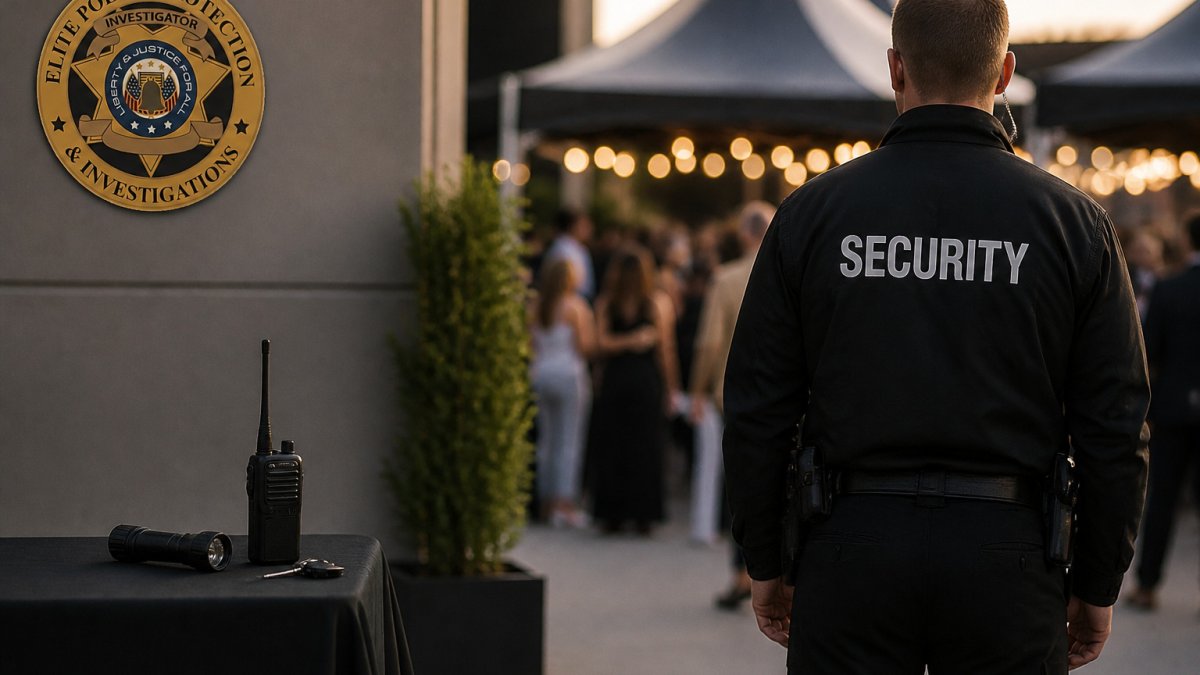
Professional security personnel do far more than stand near the entrance. Their duties cover people, property, and the flow of the event itself. Understanding these duties helps you define what you actually need before you hire.
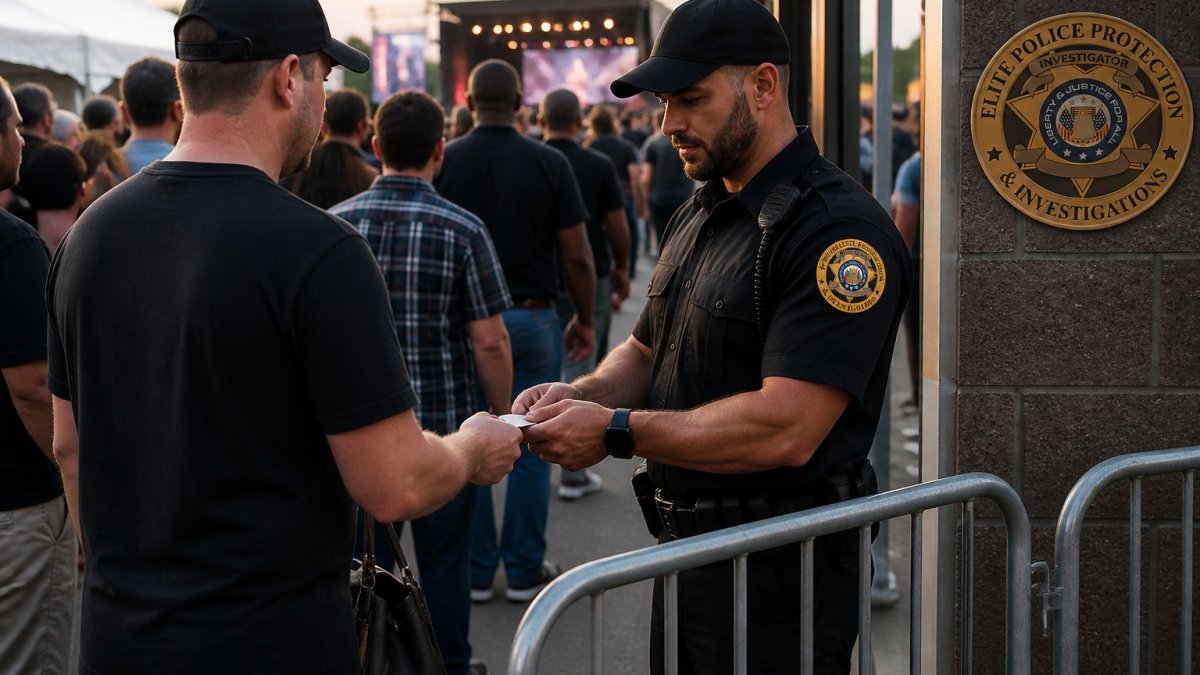
Access Control and Credential Checks
Access control is often the first thing guards handle. They verify tickets, check credentials for staff and vendors, and monitor entry points. Done well, this keeps unauthorized people out without slowing legitimate attendees to a crawl.
Crowd Management and Conflict De-escalation
Crowd management is where experience matters most. Guards watch crowd flow, identify bottlenecks, and step in before a line becomes a crush. When a dispute starts, trained personnel use de-escalation techniques to calm the situation. The goal is to resolve conflict quickly and quietly, before it reaches police involvement.
Deterring Theft, Vandalism and Unauthorized Access
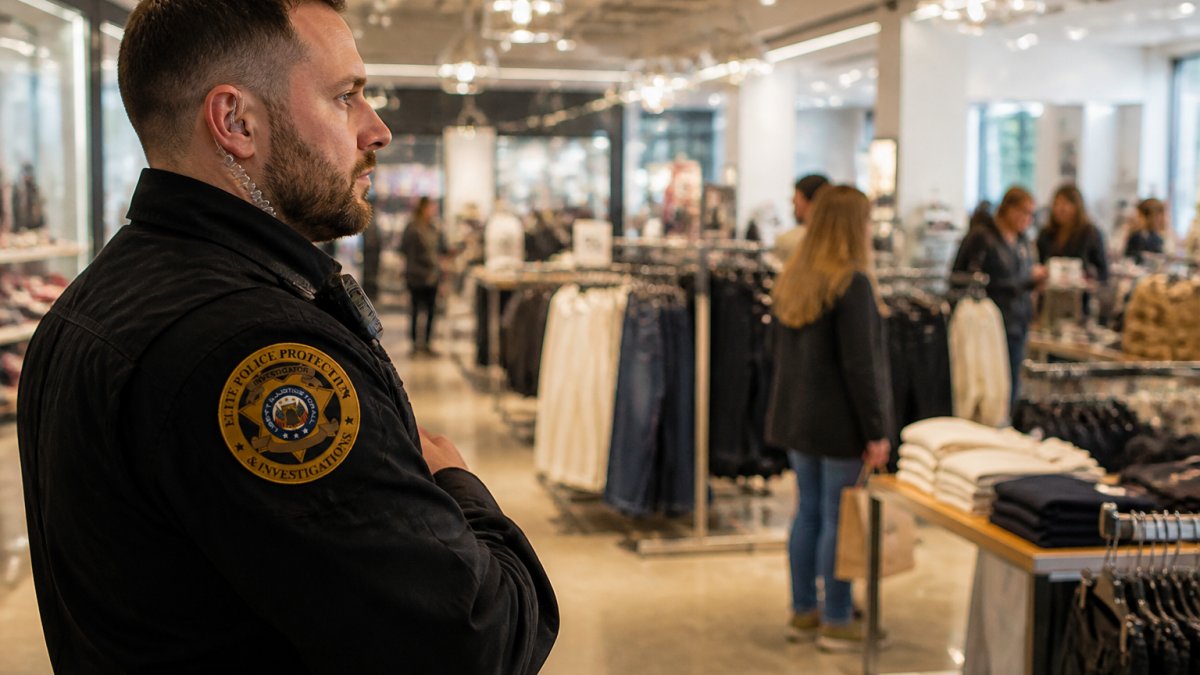
A visible security presence discourages crime before it starts. Potential thieves and vandals are less likely to act when uniformed officers are watching. Guards also protect equipment, merchandise, and venue property during setup, operation, and teardown.
Unauthorized access is a related risk. Backstage areas, VIP zones, and storage rooms all need clear boundaries. Professional personnel enforce those boundaries and report violations through a documented process. Incident reporting creates a record that helps organizers and venues respond to problems later.
How Many Security Guards an Event Needs
There is no single staffing number that fits every event, but the range is narrower than most planners assume once you break it down by event type. Headcount depends on event size, venue layout, expected crowd behavior, alcohol service, and risk level. The practical approach is to build a staffing model from four inputs: attendee count, number of entry points, high-value or restricted areas, and the peak-density moment of the event.
Staffing can be planned by separating coverage into fixed posts, roving patrols, and a response reserve, then sizing each against the event profile.
Two factors often matter more than raw attendee count: entry throughput, since more screening lanes mean more officers, and alcohol and evening programming, which can shift the incident profile toward disputes and medical calls.
Start with a risk assessment and a venue walk-through. Identify your entry points, high-value areas, restricted zones, and the moments when crowd density peaks. Then match staffing to those points rather than to a flat per-guest ratio.
Document the staffing plan with post assignments, break rotations, and relief coverage. Relief planning is one of the details that separates a professional staffing plan from a headcount estimate.
Event Security Planning Across the Event Lifecycle
Security is not just a day-of decision. Effective planning starts weeks before the event and continues through teardown.
Phase 1, Pre-event risk assessment and planning (weeks out). The deliverables here are a written risk assessment, a venue security review, a staffing and post plan, and a communication and escalation plan. The risk assessment should name the specific threats the event faces, unauthorized entry, theft of equipment or merchandise, crowd crush at entry and exit, disruptive behavior, medical incidents, and any elevated risk tied to VIPs or public figures, and map each to a control. The venue review confirms entry and exit points, restricted areas, camera coverage, lighting, and loading-dock access. The staffing plan assigns every officer to a named post with a relief rotation. The communication plan lists who calls whom, how incidents escalate, and how to reach venue management, police, and emergency medical services.
Phase 2, Pre-event briefing and setup (day before and morning of). Before doors open, brief every officer on the post plan, the escalation path, the venue layout, and the specific risks identified in the assessment. Confirm radio channels and contact lists with venue staff and organizers. During setup, security covers equipment, merchandise, and venue property, and enforces access boundaries around backstage, storage, and production areas.
Phase 3, Live operations (during the event). Personnel monitor access points, crowd flow, and restricted zones in real time, and respond to incidents as they arise.
Phase 4, Post-event review (after teardown). Incident reports and a debrief turn the event into data for the next one. Review the incident log against the KPIs above, note which posts were over- or under-staffed, and capture what the escalation path got right or wrong. Organizers who plan across the full timeline tend to avoid last-minute gaps, and they have clearer answers when stakeholders, insurers, or venues ask how the event was protected.
When evaluating a provider, you can ask prospective firms to explain how they handle risk assessment, post planning, and incident reporting.
The article lays out four phases of event security planning, each with its own deliverables and timing.
| Phase | Timing | Key deliverables |
|---|---|---|
| Pre-event risk assessment and planning | Weeks out | Risk assessment, venue review, staffing plan, communication plan |
| Pre-event briefing and setup | Day before and morning of | Officer briefing, radio and contact checks, equipment and boundary coverage |
| Live operations | During the event | Monitor access, crowd flow and restricted zones; respond to incidents |
| Post-event review | After teardown | Incident reports, debrief, KPI review, staffing assessment |
Coordinating With Venue Staff, Police and Emergency Services
Security personnel rarely work alone. They coordinate with venue management, event organizers, and, when needed, local police and emergency services. Clear communication channels matter. Everyone should know who makes which decisions, how incidents get escalated, and how to reach emergency responders quickly.
Before the event, share your security plan with venue staff. Confirm contact details for police and emergency medical services. This coordination prevents confusion when minutes count.
Booking Event Security Coverage for Your Next Event
Pricing for event security depends on staffing levels, event duration, and the type of coverage you need. For current pricing or a quote tailored to your event, visit request a professional quote on our website.
When you compare providers, look beyond the hourly rate. Ask about minimum shift lengths, training standards, and how the company handles no-shows. Confirm what happens if an officer cannot make a shift.
Quick summary: Professional security personnel protect attendees, control access, manage crowds, deter theft, and coordinate with emergency services. The right staffing level depends on your event's size and risk profile.
Event security can feel like an overhead cost until something goes wrong. Plan early, staff for your actual risks, and choose a provider that can show you how they will perform on the day. Apply now to start the conversation with Elite Police Protection.
Frequently Asked Questions
What do security guards do at events?
Event security guards control access at entry points, check tickets and credentials, watch crowd movement, and deter theft or vandalism. They also handle disruptive or suspicious behavior, de-escalate conflicts, and report incidents to event organizers. Their visible presence alone discourages many problems before they start, which is why organizers rely on them for both prevention and response.
How many security guards does an event need?
The number depends on event size, venue layout, attendee count, alcohol service, and the risk level of the crowd. Larger events with multiple entry points and high-risk elements need more officers, while small private gatherings may need only a few. Staffing levels are usually planned by assessing these factors rather than applying a flat ratio.
How much does event security cost in the US?
Pricing depends on the number of officers, shift length, event dates, and the level of service required. Elite Police Protection does not publish standard rates, so pricing is provided by quote after reviewing your event. Visit the Elite Police Protection website to request a current quote tailored to your event.