 comparison
What Makes Uniformed Security Services Essential for Retail Stores?
Last Updated: October 25, 2026
Quick Summary
Uniformed security services retail provide visible deterrence that stops shoplifting and organized retail crime before it happens, while reassuring customers and employees that your store is safe. A trained uniformed guard responds to incidents in real time, conducts loss prevention monitoring, and reduces shrink more effectively than cameras alone.
- Shoplifting and merchandise theft increased 19% from 2023 to 2024, making uniformed security a strategic investment.
- Retail security guards handle loss prevention, crowd management, staff safety, and conflict de-escalation on the sales floor.
- Unarmed security works for most retail environments, while armed security is relevant for high-value merchandise or high-crime areas.
- Visible uniformed presence reduces theft through deterrence and improves customer perception of safety and employee morale.
- Multi-location retailers need security partners with infrastructure to staff consistently across all properties without coverage gaps.
Table of Contents
- Why Retail Stores Need Uniformed Security Services
- What Retail Security Guard Duties Include
- Armed Versus Unarmed Security for Retail Stores
- How Retail Loss Prevention Services Reduce Shrink
- Retail Security Staffing and Coverage Models
- Visible Security Presence and Customer Reassurance
- Selecting the Right Uniformed Security Partner for Your Retail Location
- Retail Security Trends and Future Considerations
- Frequently Asked Questions
Why Retail Stores Need Uniformed Security Services
Shoplifting and merchandise theft incidents increased 19% from 2023 to 2024, according to the National Retail Federation's retail security data. That surge reflects a broader shift: retail theft is no longer a minor operational headache. It's a strategic threat to your bottom line, your staff safety, and your customer experience.
Uniformed security services for retail stores address this directly. A visible security presence deters crime before it happens. Unlike cameras that record after the fact, a trained uniformed guard stops losses in real time, and does something equally important: reassures customers and employees that your location is safe.
The retail security landscape has changed. Retailers now face a convergence of physical and digital risks. According to the National Retail Federation's 2026 security guidance, retailers combining uniformed security with technology-enabled monitoring see measurable reductions in shrink and incident response times.
Below, we'll show you exactly how uniformed security services work in retail, what guards actually do on the floor, and how to evaluate whether armed or unarmed coverage makes sense for your operation.
What Retail Security Guard Duties Include
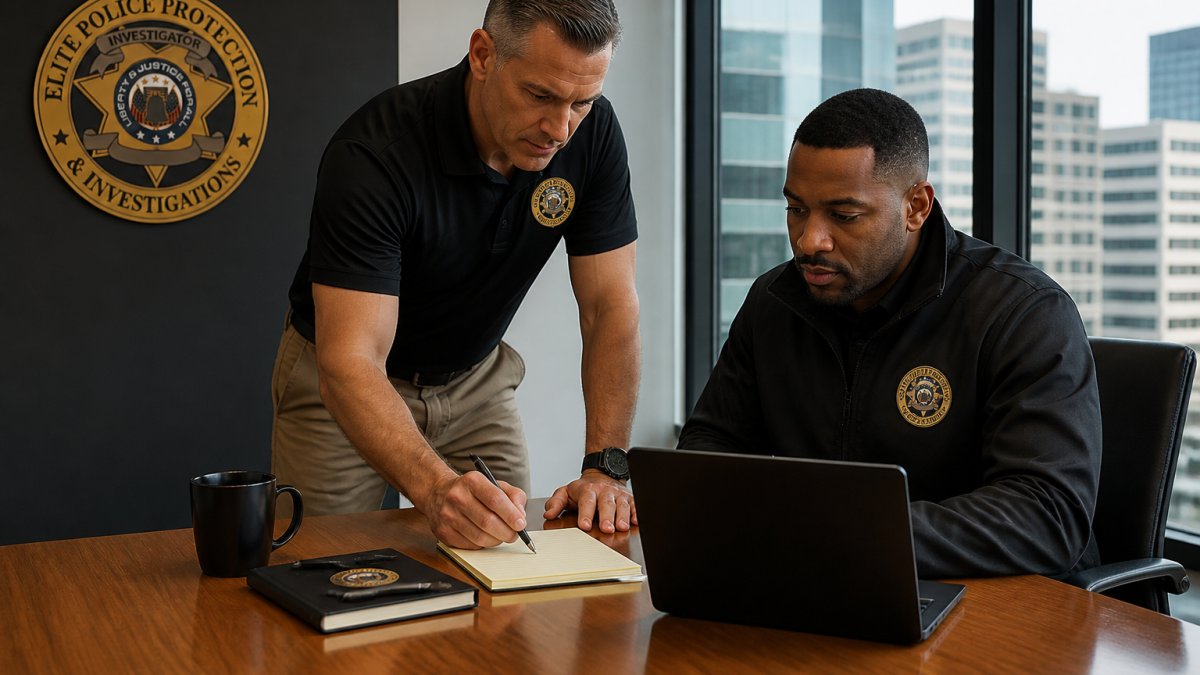
Retail security officers perform a distinct set of tasks designed to prevent loss and protect people. Their primary role is loss prevention, identifying and stopping shoplifting, organized retail crime, and internal theft before merchandise walks out the door.
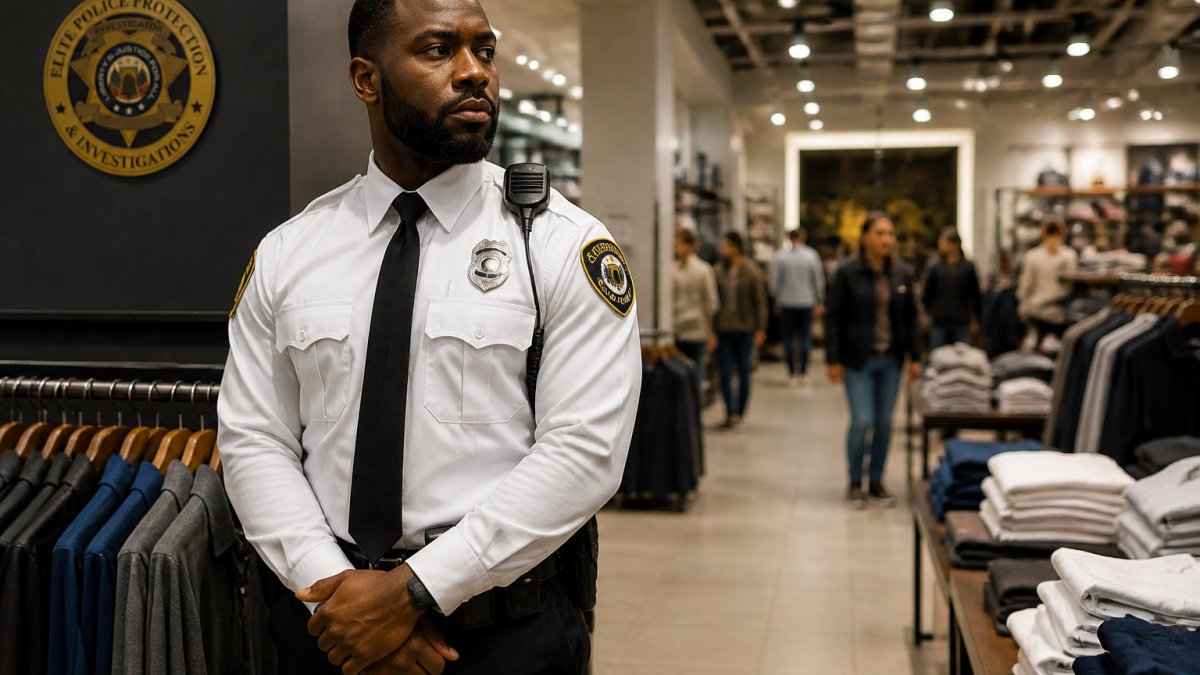
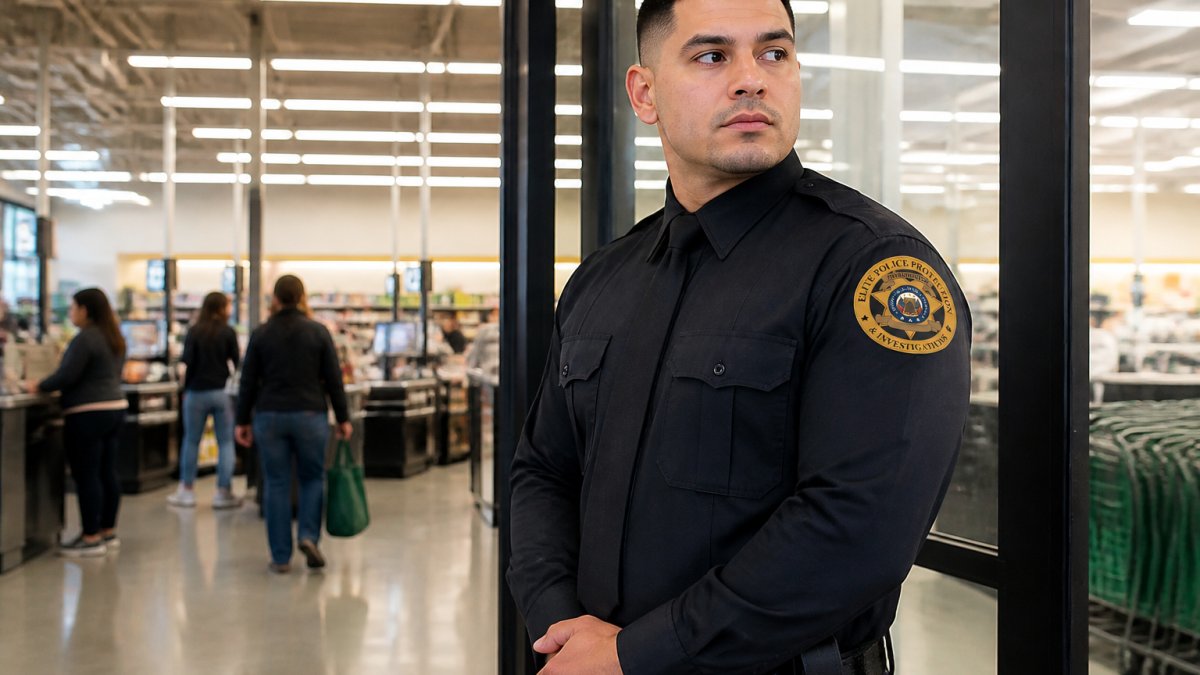
On a typical shift, a uniformed guard monitors the sales floor, watches for suspicious activity, and responds to incidents. They conduct store walkthroughs at irregular intervals. They observe customer and employee behavior.
Uniformed retail security officers also handle crowd management during peak periods.
One critical duty many retailers underestimate: staff safety. A uniformed guard presence protects employees from hostile customers and internal threats. When an employee feels safe, they're more attentive to their work. Turnover drops. Customer service improves.
Guards also serve as a visible deterrent. Research shows that the mere presence of a uniformed officer reduces theft attempts. Shoplifters actively avoid stores with visible security.
Armed Versus Unarmed Security for Retail Stores
The choice between armed and unarmed security depends on your location's risk profile, local regulations, and your customer experience priorities.
Unarmed security is the standard for most retail environments. An unarmed uniformed guard provides visible deterrence, loss prevention, and customer reassurance without the liability and regulatory complexity of firearms. They're trained in conflict de-escalation and can handle 95% of retail security incidents, shoplifting, disruptive customers, employee disputes, without a weapon.
Unarmed guards work well for shopping centers, malls, mid-market retail chains, and urban locations where the threat level is moderate and customer comfort is a priority. They're faster to deploy, easier to train, and carry lower insurance liability.
Armed security becomes relevant in high-risk retail environments: locations with a history of violent crime, high-value merchandise (jewelry, electronics, luxury goods), or late-night operations in dangerous areas. Armed guards provide a stronger deterrent against armed robbery and organized retail crime rings that target valuable inventory.
The decision hinges on three factors: your location's crime statistics, the value of merchandise at risk, and your customer base's expectations. Learn more about armed security options for retail to understand which approach fits your store's risk profile. A luxury jewelry store in a high-crime area will benefit from armed protection. A suburban Target will not.
Elite Police Protection deploys both armed and unarmed uniformed officers depending on the engagement.
How Retail Loss Prevention Services Reduce Shrink
Shrink, the gap between inventory recorded and inventory actually on hand, costs U.S. retailers billions annually, which is why uniformed security services retail has become essential for loss prevention. The causes are shoplifting, employee theft, administrative error, and supplier fraud. Uniformed security services directly attack the largest driver: shoplifting and organized retail crime.
A trained retail loss prevention officer uses behavioral observation to identify theft patterns. They notice which products are targeted, which times of day see the most attempts, and which customer profiles are associated with theft. They document patterns in incident reports. Over time, these reports reveal trends that inform store layout changes, staffing adjustments, and technology upgrades.
Visible uniformed security reduces shrink through two mechanisms: deterrence and apprehension. Shoplifters avoid stores where they see a guard. When theft does occur, a trained officer can intervene, recover merchandise, and gather evidence for law enforcement or internal discipline.
The financial impact is measurable.
Loss prevention also includes monitoring employee behavior. Internal theft, employees stealing merchandise or manipulating transactions, accounts for a significant portion of shrink at many retailers. A uniformed presence deters internal theft and signals to staff that accountability is taken seriously.
Retail Security Staffing and Coverage Models
How you staff uniformed security depends on your location size, operating hours, and risk profile.
Fixed-post coverage places a single guard at a high-risk location, an entrance, the jewelry counter, or the loss-prevention office, for the duration of their shift. This model works for smaller stores or specific high-value zones within larger locations.
Roving patrol coverage deploys a guard who moves throughout the store on a randomized schedule, conducting walkthroughs and monitoring multiple zones.
Multi-location coverage coordinates uniformed security across several retail locations. A single security team manages staffing, training, and incident response for a retail chain's entire portfolio. This model requires a security partner with the infrastructure to deploy consistent personnel across geographies and maintain unified standards.
For shopping centers and malls, common-area patrol protects shared spaces, parking lots, corridors, restrooms, where incidents often occur outside individual stores. A dedicated patrol team monitors the entire property, responds to disturbances, and coordinates with store-level security.
The right model depends on your footprint. A single store needs fixed or roving coverage. A multi-location chain needs a partner who can staff consistently across all properties without gaps. Elite Police Protection manages staffing across retail portfolios.
| Coverage Model | Best For | Typical Deployment |
|---|---|---|
| Fixed-post | High-value merchandise zones, small stores | One guard at entrance or counter |
| Roving patrol | Large retail spaces, shopping centers | Guard moving throughout property |
| Multi-location | Retail chains, shopping centers | Coordinated staffing across all sites |
| Common-area patrol | Malls, shopping centers | Dedicated patrol team for shared spaces |
Visible Security Presence and Customer Reassurance
A uniformed guard does more than prevent theft. They reassure customers that your store is safe.
Customer perception of safety directly affects shopping behavior. Shoppers spend more time and money in locations where they feel secure. They return more frequently. They recommend the store to others. Conversely, stores perceived as unsafe see lower foot traffic and higher customer anxiety.
A uniformed officer provides visible reassurance. Customers see professional security and conclude that management takes safety seriously. This is especially important in high-crime areas, during evening hours, or in locations that have experienced incidents.
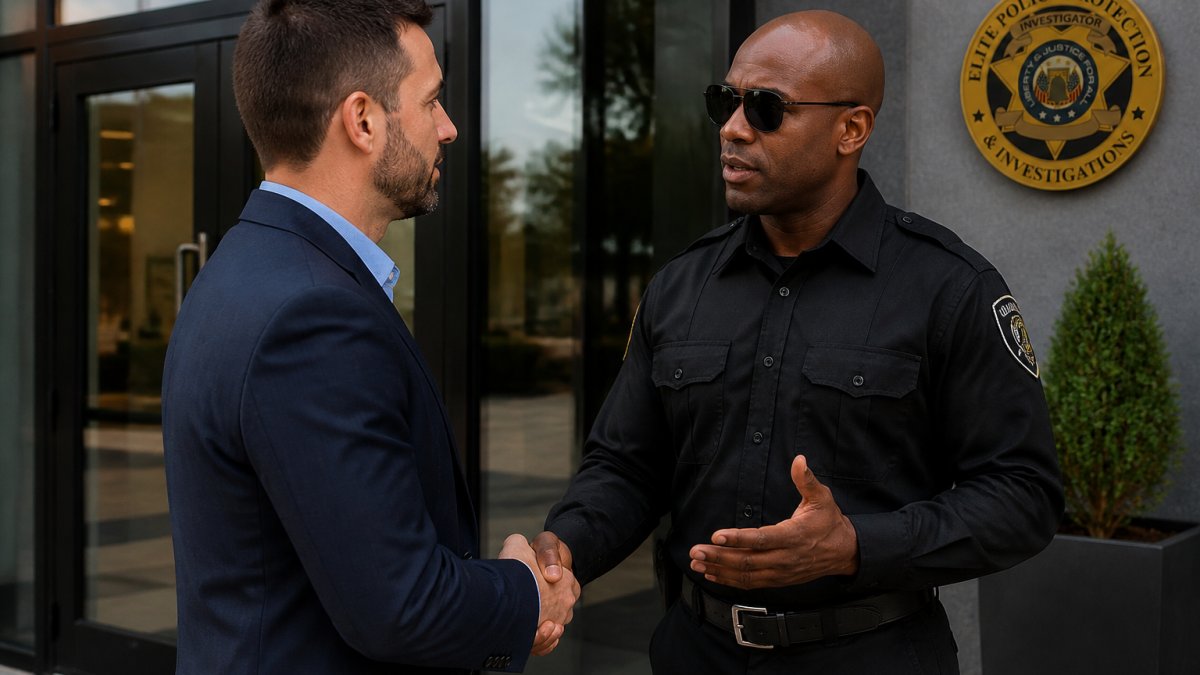
The guard's uniform matters. A professional, well-maintained uniform signals competence and authority. It distinguishes the guard from regular staff and makes their role clear. Customers recognize the uniform and know who to approach if they need help.
Uniformed security also improves employee morale. Staff who feel protected are more engaged, less stressed, and more productive. They focus on customer service instead of worrying about their safety. Turnover drops. Training costs fall.
The psychological effect of visible security is documented across retail environments. It's not just about preventing crime, it's about creating an environment where customers and employees feel confident.
Selecting the Right Uniformed Security Partner for Your Retail Location
Choosing a uniformed security provider requires evaluating several critical factors beyond price.
Personnel quality is non-negotiable. You need guards who are trained, licensed, and experienced in retail loss prevention. Many security companies hire minimally trained staff to cut costs. That approach fails.
Ask about guard backgrounds. Have they worked retail security before? Are they retired or off-duty law enforcement? What training have they completed?
Reliability is the second factor. You need guards who show up on time, every shift. No-shows create gaps in coverage and undermine the deterrent effect. Ask prospective providers: What's your no-show rate?
Coverage consistency matters if you have multiple locations. Can the provider staff all your sites reliably? Or will they tell you they can only cover certain areas?
Technology integration is increasingly important. Modern security providers use guard-monitoring systems that give you real-time visibility into patrol activity, incident reports, and response times.
Insurance and liability must be verified. Ask for proof of general liability coverage and workers' compensation. Confirm that the provider carries adequate insurance to cover incidents involving their personnel.
Selecting qualified private security guards and exploring all security services available will help you evaluate providers systematically.
Retail Security Trends and Future Considerations
The retail security landscape is evolving. According to Trackforce's 2026 retail security trends report, future systems will use AI to analyze past incidents, traffic patterns, and staffing schedules to help retailers anticipate needs and optimize deployment.
Uniformed security will increasingly integrate with technology. Guards will have access to real-time alerts from video surveillance and alarm systems. They'll use mobile apps to log incidents and communicate with central command. The future is hybrid: uniformed officers on the ground, supported by AI-informed analytics and remote monitoring.
Retail security is also becoming more strategic. Retailers now view security not as a cost center but as a revenue-protection function. That shift means security partners need to deliver measurable ROI, documented shrink reduction, incident response metrics, and customer feedback data.
For retailers planning security investments in 2026 and beyond, the message is clear: uniformed security services remain essential, but they work best when combined with technology, data analysis, and a partner who understands retail-specific threats.
Retail theft and loss prevention demand a partner who understands your specific challenges. Elite Police Protection provides uniformed security officers trained in retail loss prevention, deployed across multiple locations with real-time monitoring and transparent reporting.
Frequently Asked Questions
What does a retail security guard actually do during their shift?
Retail security guards monitor sales floors and entrances, detect and deter suspicious activity, respond to incidents, manage crowds during busy periods, and protect merchandise, customers, and employees. They conduct patrols, monitor CCTV feeds when integrated with systems, document incidents, and communicate with store management. Many also assist with access control, verify ID for age-restricted purchases, and provide immediate emergency support. Their visible presence alone deters many potential thefts, shoplifting incidents reportedly increased 19% from 2023 to 2024, making active guard presence critical.
How do uniformed security services reduce retail theft and shrink?
Uniformed guards create a visible crime deterrent that makes potential shoplifters and organized retail crime groups think twice. Their presence reduces loss through active surveillance, swift incident response, and coordination with law enforcement when needed. Guards also identify vulnerable areas, monitor high-theft merchandise categories, and implement real-time loss prevention strategies. The combination of visible security, accurate incident reporting, and professional response measurably lowers shrink.
Should we hire armed or unarmed security guards for our retail store?
Unarmed security is appropriate for most retail environments and provides effective theft deterrence and customer safety without the liability of armed personnel. Armed security is typically reserved for high-risk retail locations, jewelry stores, cannabis retailers, or areas with elevated crime rates. The choice depends on your location's threat level, customer base, merchandise value, and local regulations. Unarmed guards trained in de-escalation and conflict resolution handle the majority of retail incidents effectively. A professional security consultant can assess your specific location and recommend the right option.
How can we ensure consistent, qualified security coverage across multiple retail locations?
Partner with a uniformed security provider that specializes in multi-location retail coverage and maintains rigorous hiring and training standards. Verify they employ law-enforcement-grade personnel, conduct thorough background checks, and provide ongoing training in retail-specific scenarios. Request a client portal or real-time reporting system so you can monitor guard performance and patrol data across all locations. Confirm they maintain 24/7 availability and have backup coverage protocols to prevent no-shows. Ask about their deployment process.