 comparison
K9 Security vs Static Guards for Events: 2026 Guide
Table of Contents
- K9 Security vs Static Guards: Core Differences
- How K9 Detection Services Support Event Security
- Security Guard Duties at Events: What Static Officers Provide
- Conducting an Event Security Risk Assessment
- Building Your Event Security Staffing Plan
- When to Choose K9 Teams, Static Guards, or Both
- Legal, Liability, and Animal Welfare Considerations
- Frequently Asked Questions
Last Updated: October 21, 2026
K9 Security vs Static Guards: Core Differences
When you're planning security for an event, understanding K9 security vs static guards shapes everything from threat detection capability to visible deterrence.
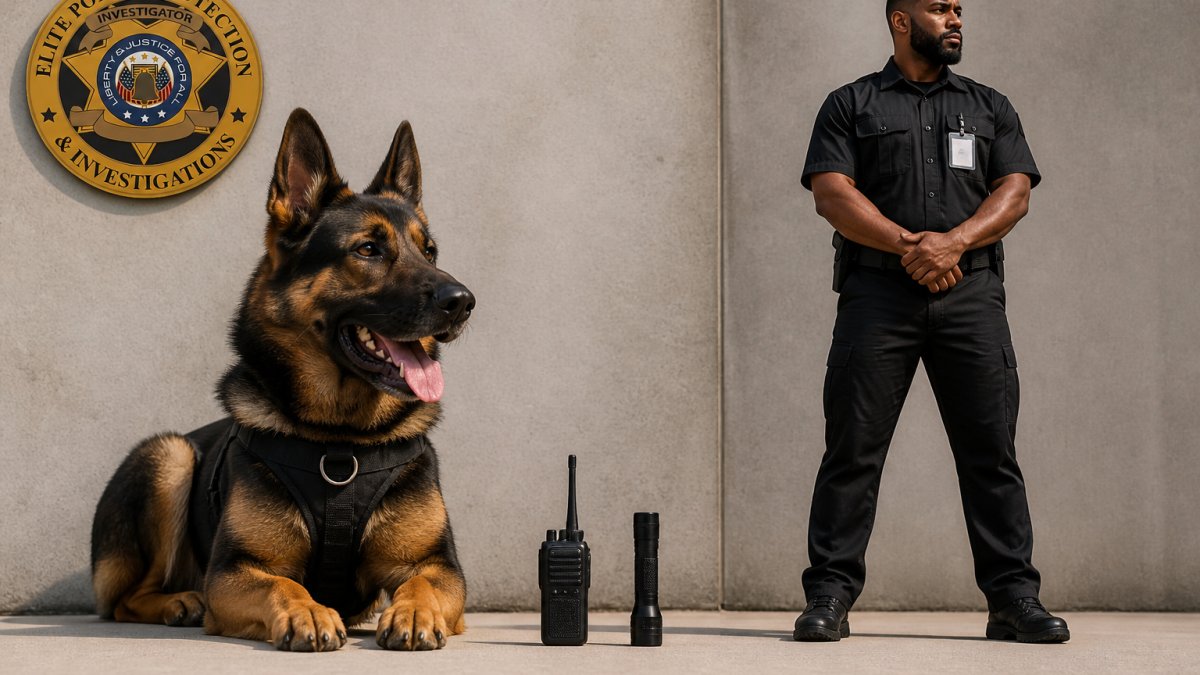
K9 security services deploy trained detection dogs with handlers to identify threats through scent detection.
The fundamental difference: K9 teams detect hidden threats. Static guards control movement and respond to visible incidents. Most high-risk events benefit from both working together, but the choice depends on your specific threat profile and budget constraints.
How K9 Detection Services Support Event Security
Threat and Hazard Detection Capabilities
K9 detection teams bring a capability that no amount of static guard training can replicate: the ability to identify explosives, narcotics, and other hazardous materials through scent detection.
This detection speed matters for high-traffic events. A single K9 team can process hundreds of people per hour at entry points, identifying threats before they reach the venue.
The limitation: K9 teams work best in controlled environments where screening can happen systematically.
Visible Deterrence and Rapid Response
A uniformed K9 team at an entrance creates immediate visual deterrence. The presence of a working dog signals serious security to both attendees and potential threats.
K9 handlers are also trained security professionals, typically with law enforcement backgrounds. They can respond to incidents, manage escalating situations, and coordinate with other security personnel.
Static guards, by contrast, are positioned specifically to respond. They maintain situational awareness, de-escalate conflicts, and can physically intervene if needed. A K9 team supplements this capability but doesn't replace it.
Security Guard Duties at Events: What Static Officers Provide
Access Control and Perimeter Protection
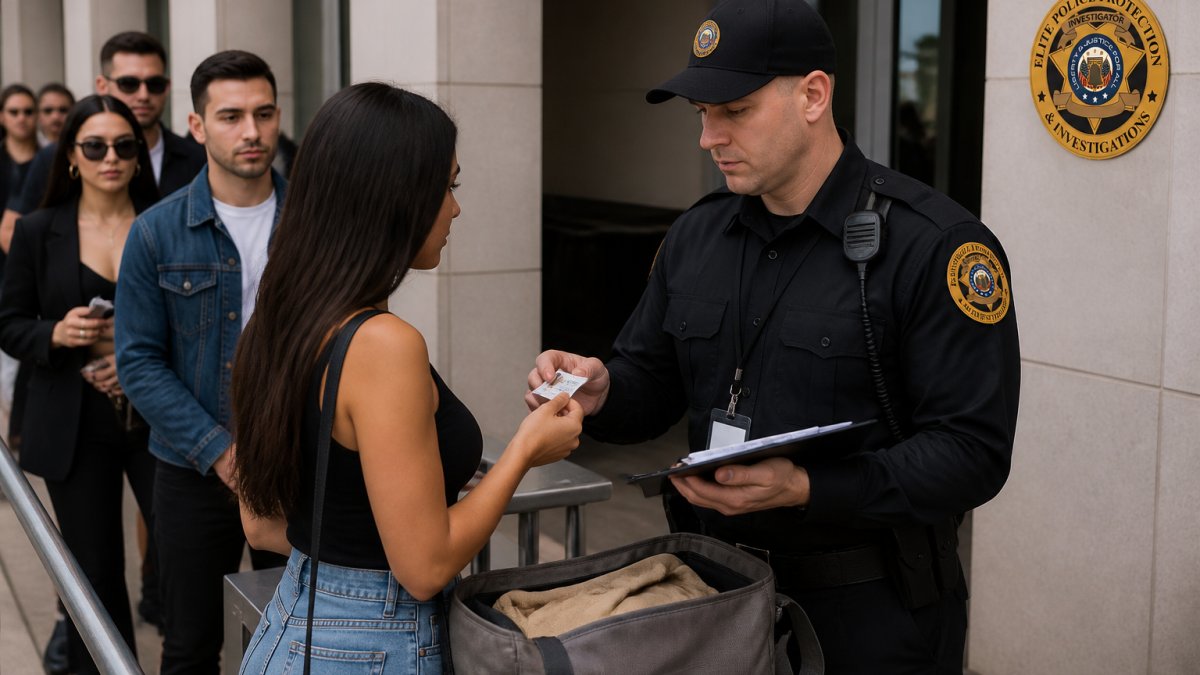
Static guards form the backbone of access control. They check credentials, verify guest lists, scan tickets, and prevent unauthorized entry. This role requires consistent presence at entry and exit points throughout the event duration.
At a typical event, static guards manage:
- Credential verification: Checking IDs, comparing attendees against guest lists
- Bag and package screening: Conducting visual inspections at checkpoints
- Perimeter patrols: Walking the venue boundary to prevent unauthorized access
- Vehicle screening: Checking cars at parking areas or service entrances
This work is labor-intensive but essential. A single guard can manage one entry point effectively. Large venues require multiple guards positioned strategically.
Crowd Management and Incident Response
During an event, static guards manage crowd flow, monitor for suspicious behavior, and respond to incidents. They're trained to de-escalate conflicts, assist injured attendees, and coordinate emergency response if needed.
Effective crowd management prevents many security problems before they occur. Guards positioned throughout the venue can identify overcrowding, manage bottlenecks, and redirect flow to prevent dangerous crush conditions.
When incidents occur, a fight, a medical emergency, a security threat, static guards are the first responders.
Conducting an Event Security Risk Assessment
Before choosing between K9 teams, static guards, or both, assess your actual threat profile. A generic security plan wastes money. A tailored plan matches resources to real risks.
Start by identifying threat categories relevant to your event:
- Explosive devices: More likely at large public gatherings, government events, or high-profile venues
- Narcotics or prohibited substances: Relevant for music festivals, nightlife venues, or events with young demographics
- Weapons: Relevant for almost all public events, though the specific threat level varies
- Crowd violence: More likely at sporting events, political events, or high-density venues
- Theft or property crime: Relevant for events with high-value attendees or merchandise
Your threat assessment should also consider:
- Event type and size: A 200-person corporate dinner has different risks than a 50,000-person festival
- Venue characteristics: Indoor venues with controlled access are easier to secure than outdoor venues with multiple entry points
- Attendee profile: Events attracting high-net-worth individuals, government officials, or controversial figures carry elevated threat levels
- Historical incidents: If your venue or event type has experienced security incidents, that history informs your planning
This assessment drives your staffing decisions. A music festival in an open field with multiple entry points and 10,000 attendees requires different security than a private corporate event with 300 pre-screened guests in a controlled venue.
Building Your Event Security Staffing Plan
Deployment Ratios and Coverage Models
Static guard coverage is typically calculated as a ratio of guards to attendees or by location coverage. Industry practice suggests:
- High-risk venues or events: 1 guard per 50-75 attendees, or 1 guard per entry/exit point plus roaming coverage
- Standard events: 1 guard per 100-150 attendees, or 1-2 guards per entry point
- Low-risk, controlled-access events: 1 guard per 200+ attendees, or 1 guard per entry point
These ratios account for shift changes, breaks, and varying threat levels throughout the event. A guard cannot maintain effective awareness for 8+ hours straight. Most security plans rotate guards every 2-4 hours.
K9 team deployment is measured differently. A single K9 team (dog plus handler) can screen hundreds of attendees per hour, but only at controlled screening points.
The practical staffing plan combines both:
- K9 teams at high-traffic entry points during peak arrival times
- Static guards maintaining access control throughout the event
- Roaming guards patrolling the venue interior
- Perimeter guards monitoring boundaries and service areas
This layered approach provides detection capability, access control, visible deterrence, and rapid response, covering the full spectrum of security functions.
Cost Considerations and Budget Planning
Security costs vary significantly based on staffing levels, guard qualifications, and K9 availability. A typical event security budget includes:
- Static guard hourly costs: Varies by location, guard qualifications, and whether armed or unarmed. Uniformed off-duty law enforcement typically costs more than private security guards
- K9 team hourly costs: Generally higher than static guard costs due to specialized training and handler expertise
- Shift minimums: Most security providers charge for a minimum shift duration (typically 4-8 hours) even if you need shorter coverage
- Travel and setup: For multi-location events or venues outside major cities, travel costs add significantly
Budget planning should account for:
- Peak hours vs. standard hours: You may need more guards during arrival/departure than during the event itself
- Multiple locations: If you manage multiple event spaces, cumulative staffing costs increase substantially
- Backup coverage: Account for sick leave, no-shows, and emergency coverage needs
- Specialized services: K9 screening, executive protection, or plainclothes surveillance cost more than standard uniformed guard services
For accurate pricing, request quotes from qualified providers based on your specific event details: date, location, expected attendance, venue layout, threat profile, and desired guard qualifications. Pricing depends on these variables, and estimates without this context are unreliable.
When to Choose K9 Teams, Static Guards, or Both
High-Risk Venues and Threat Environments
High-risk events, those with elevated threat of explosives, weapons, or organized disruption, benefit significantly from K9 detection teams. These include:
- Government events or events with high-profile attendees
- Large public gatherings in urban areas
- Events following recent security incidents
- Venues that have experienced threats in the past
- Events with controversial speakers or themes
For these events, K9 teams provide detection capability that static guards cannot replicate. They should be deployed at primary screening points, ideally during peak arrival times when threat exposure is highest.
However, K9 teams alone are insufficient. You still need static guards for access control, crowd management, and incident response. The combination, K9 detection plus static guard coverage, provides comprehensive security.
Hospitality and High-Traffic Events
Hospitality venues (hotels, restaurants, event spaces) and high-traffic events (conferences, festivals, concerts) face different threat profiles. The primary risks are typically crowd-related incidents, theft, or disruptive behavior rather than weapons or explosives.
For these events, static guard coverage is the priority. Guards manage guest flow, monitor for problematic behavior, and respond to incidents. K9 teams may add value at large festivals or venues with documented narcotic issues, but they're not essential for most hospitality security.
A typical hospitality event security plan includes:
- Entry/exit guards managing access and credential verification
- Roaming guards throughout the venue monitoring crowds and behavior
- Perimeter guards at boundaries and service areas
- K9 screening (optional) at primary entrances if narcotic concerns exist
Combined Deployment for Maximum Coverage
The most effective security approach combines K9 detection and static guard services. This layered model provides:
- Detection capability (K9 teams identifying hidden threats)
- Access control (static guards verifying credentials and screening)
- Visible deterrence (uniformed presence throughout the venue)
- Incident response (trained guards positioned for rapid response)
- Crowd management (guards maintaining safe flow and preventing dangerous conditions)
Event organizers who combine both services often report higher confidence in their security posture and better incident prevention outcomes. The K9 teams handle what static guards cannot, hidden threat detection, while static guards handle what K9 teams cannot, sustained access control and incident response.
The decision to combine services depends on:
- Event threat level: Higher-risk events justify K9 deployment
- Venue size and complexity: Larger venues benefit from layered security
- Budget constraints: Combined deployment costs more but provides more comprehensive coverage
- Attendee expectations: High-profile events may require visible K9 presence for reassurance
Legal, Liability, and Animal Welfare Considerations
Security deployment carries legal responsibilities that must be addressed before the event.
Liability and insurance are critical.
Guard qualifications and licensing vary by jurisdiction. Some states require security guards to be licensed and trained to specific standards.
K9 animal welfare is also a consideration.
Crowd management and use of force create additional liability.
Choosing between K9 security services and static guard services, or combining both, requires understanding what each provides and how they work together.
At Elite Police Protection, we specialize in tailored security solutions that match your actual threat profile and event requirements.
Frequently Asked Questions
What are the main differences between K9 security and static guards at events?
K9 security teams provide scent-detection capabilities for explosive devices, prohibited substances, and other hazards that static guards cannot identify. Static guards excel at access control, perimeter protection, crowd management, and visible deterrence. K9s work best as a specialized layer added to existing security; static guards form the foundation of event coverage. Many high-risk events use both services together to address detection, deterrence, and operational security needs.
When should an event use K9 detection services for events instead of static guards?
Use K9 detection services when your event faces elevated threat levels, large crowds, or requires screening for prohibited items. K9 teams are especially valuable for government buildings, high-profile venues, large festivals, and events where public safety risk assessment identifies chemical, explosive, or substance threats. Static guards alone cannot detect these hazards. However, K9 services work most effectively alongside static guards who handle access control and patron management.
Can K9 teams and static guards work together at an event?
Yes. K9 teams and static guards complement each other effectively. K9 handlers conduct threat detection and patrol high-risk zones while static guards manage entry points, check credentials, and monitor crowd behavior. This combined approach provides both detection capability and visible security presence. Coordination between handler-dog teams and uniformed officers ensures seamless coverage and faster incident response if a threat is identified.
What factors should influence my event security staffing plan?
Your staffing plan depends on event size, venue layout, expected attendance, threat level, and duration. Conduct an event security risk assessment to identify specific vulnerabilities. Consider whether you need detection capabilities (K9), access control (static guards), or both. Budget constraints, venue restrictions, and guest experience goals also shape decisions. Professional security providers help determine appropriate staffing ratios and deployment models based on these factors.
How do legal and liability considerations differ between K9 and static guard services?
Static guards operate under standard security licensing and liability frameworks. K9 handlers must maintain specialized certifications and insurance covering the dog and handler team. Liability for K9 services includes animal-related incidents, so verify that providers carry comprehensive coverage. Both services require trained, properly credentialed personnel. Ensure your security provider maintains current licensing, background checks, and insurance documentation to protect your event and attendees.