 ultimate-guide
Cost of Professional Security Services: 2026 Pricing Guide
Table of Contents
- What Determines the Cost of Professional Security Services
- Security Guard Hourly Rates 2026: Unarmed vs. Armed
- Hiring Off-Duty Law Enforcement vs. Private Security: Cost and Value
- Specialized Security Services and Premium Pricing
- Hidden Costs and Additional Fees Beyond Hourly Rates
- Security Service Contract Checklist: What to Negotiate
- Evaluating Cost Against Risk and Liability Protection
- Frequently Asked Questions
Last Updated: September 3, 2026
What Determines the Cost of Professional Security Services
The cost of professional security services varies dramatically based on factors most businesses don't consider until locked into a contract. A uniformed guard at a retail location costs entirely differently from executive protection for a high-profile client.
Several core variables determine pricing. Guard training and certification levels matter significantly, a licensed, background-checked professional with de-escalation training costs more than someone with minimal qualifications. Specific duties shape pricing: monitoring a static checkpoint is cheaper than mobile patrol across multiple properties. Geographic location affects rates substantially, with urban centers commanding higher hourly rates than suburban or rural areas. Contract length influences pricing; a one-year commitment typically costs less per hour than short-term staffing.
Equipment and technology integration adds another layer. Real-time monitoring through an advanced guard management system with client portal access increases base cost. Specialized certifications, K9 handlers, armed security licenses, and executive protection credentials push rates upward. Overtime premiums, holiday pay, and after-hours response requirements are common hidden costs.
Professional security firms carry substantial liability insurance embedded in hourly rates. A firm with inadequate coverage is a liability risk you should avoid entirely, regardless of pricing.
Security Guard Hourly Rates 2026: Unarmed vs. Armed
Unarmed security guards typically range from $25 to $40 per hour, depending on location, experience, and specific duties. Armed guards operate in a higher tier, typically between $40 and $75 per hour, reflecting additional licensing requirements, liability exposure, and training demands.
These are baseline figures. Actual rates depend on several modifiers. Guards in major metropolitan areas cost more than those in smaller cities. A guard with five years of experience and advanced de-escalation certification costs more than someone fresh from licensing. Midnight availability or emergency staffing requests command premium rates.
The armed versus unarmed decision isn't purely financial. Armed guards make sense for high-risk facilities, cash handling operations, and executive protection scenarios. Adding an armed guard to a retail location where unarmed presence suffices means overpaying for unnecessary capability. Conversely, deploying only unarmed guards at high-incident facilities leaves you underprotected and exposed to liability.
Elite Police Protection specializes in both armed and unarmed personnel, including off-duty and retired law enforcement professionals who bring substantially more experience than standard security guards. A more experienced professional may prevent an incident entirely, making their higher hourly rate irrelevant compared to the cost of an actual security breach.
Hiring Off-Duty Law Enforcement vs. Private Security: Cost and Value
The decision between off-duty law enforcement and private security guards represents a fundamental choice about what you're purchasing. Off-duty law enforcement professionals bring law enforcement authority, advanced training, and established credibility. They understand criminal law, evidence handling, and courtroom procedures, and can make arrests, capabilities private security guards lack.
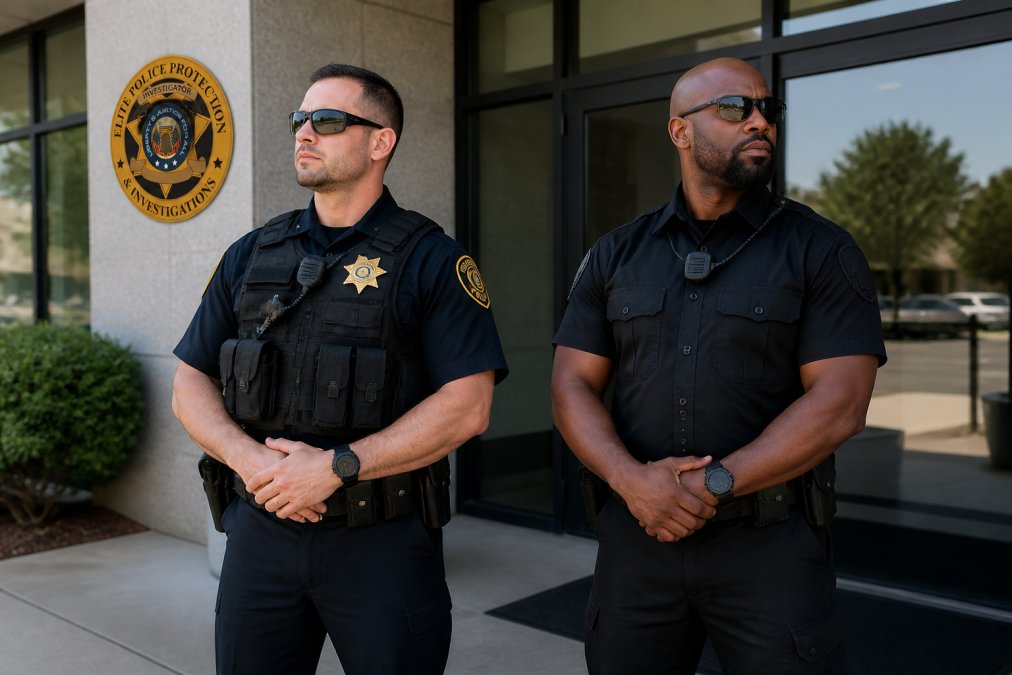
Off-duty law enforcement typically commands premium rates, often $50 to $85 per hour or higher depending on rank and jurisdiction. Private security guards cost less but operate under different legal constraints. A private security guard cannot arrest anyone; they can only detain and call law enforcement.
For certain applications, off-duty law enforcement is worth the premium. Executive protection, high-risk event security, and facilities handling sensitive operations benefit substantially from law enforcement presence and legal authority. If an incident occurs, a trained law enforcement officer creates an evidentiary record that protects you legally.
For routine facility security, asset protection, and loss prevention, private security often delivers better value. You're paying for presence and observation, not law enforcement authority. A professional private security guard with strong training manages most routine situations effectively.
Off-duty law enforcement comes with established background checks and ongoing professional accountability. Private security vetting varies by firm. Elite Police Protection maintains rigorous screening standards for all personnel, including background checks and training verification that exceed many competitors. This quality control costs more but protects you from liability exposure.
Consider your actual risk profile. If you've experienced security incidents or operate in a high-risk environment, off-duty law enforcement makes financial sense. If you need visible security presence to deter casual theft, private security delivers that outcome at lower cost.
Specialized Security Services and Premium Pricing
Executive protection represents the premium tier of security services. Protecting high-profile individuals requires threat assessment, route planning, advance site surveys, and close-protection training. Executive protection typically starts around $85 to $125 per hour, with rates climbing higher for high-threat situations.
Event security charges based on the number of guards, event duration, and specific risks. A 500-person corporate event might require 4-6 guards for 8 hours, costing $1,200 to $2,400 depending on location and guard experience.
Mobile patrol services charge per patrol route or per hour of coverage. A security firm conducting hourly patrols might charge $40 to $60 per patrol, depending on route complexity.
K9 security services command premium rates reflecting specialized training. A trained K9 team costs $75 to $150 per hour depending on the dog's training level and specific application.
Remote surveillance and monitoring services provide an alternative to on-site personnel. You gain 24/7 monitoring and immediate response coordination, but lose the visible deterrent effect of on-site presence.
The cost-benefit analysis for specialized services depends on your actual security needs. Executive protection for a mid-level manager is overpriced. A K9 unit at a retail location is unnecessary expense. But executive protection for a genuine high-profile individual and K9 services at a facility with specific threat requirements represent appropriate resource allocation.
Hidden Costs and Additional Fees Beyond Hourly Rates
The hourly rate quoted by a security firm rarely represents your actual cost.
Overtime premiums appear when guards work beyond standard shifts, typically at 1.5x or 2x the base rate. Holiday pay multipliers sometimes double the base rate. Minimum staffing requirements lock you into paying for a certain number of guards regardless of actual need. Minimum hour commitments might require 40 hours per week even if some weeks require fewer hours.
Equipment and technology fees are common additions. If the security firm provides monitoring system access, real-time reporting, or mobile app integration, expect monthly technology fees. Travel time and mileage charges apply when guards travel to multiple locations.
Cancellation and short-notice fees protect the security firm from last-minute changes. Emergency staffing requests typically cost 50-100% premium over standard rates. Background check and screening fees sometimes appear as upfront costs. Contract termination penalties can be substantial, breaking a one-year contract after six months might cost remaining contract value.
Request a detailed cost breakdown before committing. Ask specifically about overtime rates, minimum requirements, technology fees, and cancellation policies. A firm providing transparent cost documentation upfront is more likely to avoid billing surprises later.
Security Service Contract Checklist: What to Negotiate
A security service contract determines your rights, costs, and protections for months or years. Negotiating key terms before signing prevents disputes and unexpected expenses.
Performance Standards and Response Times
Define post orders in detail, what the guard actually does during their shift. Specify response time requirements if you need guards to respond to alarms or incidents. A contract specifying "guards respond to facility alarms within 10 minutes" is measurable; vague language creates disputes when incidents occur.
Personnel Quality and Continuity
Require background check standards in writing. Specify that all personnel must pass background screening, drug testing, and reference verification. Address personnel continuity, how many different guards will you have across a contract? Request that primary guards be identified and substitutes only occur for legitimate reasons.
Insurance and Liability
The security firm should carry general liability insurance with minimum coverage amounts specified in writing. $1 million is standard, but high-risk situations warrant higher coverage. The contract should clarify that the security firm's insurance is primary, protecting you from liability exposure.
Pricing and Payment Terms
Detail all costs explicitly. Hourly rates, overtime multipliers, holiday rates, minimum staffing requirements, and additional fees should be itemized. Specify when invoices are due and payment terms.
Termination and Exit Clauses
Define how either party can end the contract. A 30-day termination clause with no penalty is more favorable than locked-in long-term contracts. Ensure you're protected from sudden loss of coverage.
Service Level Agreements
Include specific performance metrics. If a guard fails to show up, what's the consequence? If response time is missed, does that reduce your bill? Service level agreements with financial penalties for non-performance protect you from paying for services you don't receive.
Confidentiality and Information Security
Security personnel access sensitive information about your facility, operations, and personnel. The contract should require confidentiality agreements and specify how information is handled. With Elite Police Protection's advanced monitoring system providing real-time access to reports and patrol data, ensure the contract specifies data security standards and who has access.
| Contract Element | Why It Matters | Negotiation Tip |
|---|---|---|
| Post Orders | Defines exactly what guard does | Request detailed written orders, not vague descriptions |
| Personnel Continuity | Prevents constant training of new guards | Specify maximum personnel turnover or identify primary guards |
| Insurance Minimums | Protects you from liability | Require at least $1M coverage; higher for high-risk facilities |
| Termination Clause | Prevents being locked into bad contract | Push for 30-day termination with no penalty |
| Overtime Rates | Controls unexpected cost increases | Clarify what triggers overtime and at what multiplier |
| Response Time | Ensures adequate emergency response | Specify response time requirements in minutes |
Evaluating Cost Against Risk and Liability Protection
The cheapest security service is not the best value if it exposes you to unacceptable risk. Cost evaluation requires understanding what you're actually protecting against.
Assess your genuine risk exposure. What specific threats does your facility face? Retail locations worry about theft and shoplifting. Office buildings concern themselves with unauthorized access and workplace violence. Event venues manage crowd control and patron safety. Your security spending should match your actual risk profile.
Liability exposure determines how much security you need. A facility where an incident could result in substantial legal liability justifies higher security spending. A theft loss of $50,000 makes a $500 monthly security investment look inexpensive. A workplace violence incident causing injury creates liability exposure that dwarfs any security contract cost.
Insurance implications matter significantly. Your liability insurance might require certain security measures as a condition of coverage. Underinsured security or inadequate personnel screening could void your insurance protection entirely. Conversely, documented security measures and professional personnel create an evidentiary record that supports your defense in liability claims.
The decision between cost and risk is ultimately about total cost of ownership. A security firm charging premium rates for highly trained personnel with strong insurance and proven performance might cost more per hour but reduce your overall risk exposure. A firm charging bottom-dollar rates with minimal training standards and inadequate insurance might create more liability risk than it prevents.
Professional security assessment helps calibrate spending. A reputable security firm should conduct a facility assessment, identify specific vulnerabilities, and recommend appropriate countermeasures. Elite Police Protection conducts detailed security assessments that identify vulnerabilities and recommend tailored solutions, providing clarity on whether your current investment matches your actual risk profile.
The cost of professional security services ultimately reflects the value you receive. Lowest-cost options often correlate with lowest quality and highest turnover. Mid-range providers offer reasonable balance between cost and capability. Premium providers deliver enhanced expertise, better personnel continuity, and superior risk management. Your choice should match your facility's risk profile and liability exposure.
Protecting your facility or personnel requires matching security spending to your actual risk and liability exposure. The cost of professional security services varies substantially based on guard training, specialization, location, and contract terms. Understanding what drives pricing helps you negotiate effectively and avoid overpaying for unnecessary services or underpaying for inadequate protection. Elite Police Protection provides detailed security assessments, highly trained personnel including off-duty law enforcement professionals, and advanced monitoring systems that give you real-time visibility into security operations. Get started with Elite Police Protection and receive a customized security assessment that identifies your specific vulnerabilities and recommends appropriate solutions.
Frequently Asked Questions
What is the average hourly rate for a professional security guard in 2026?
Unarmed security guards typically cost $25-$40 per hour, while armed security professionals range from $40-$75 per hour. Executive protection and specialized services command higher rates, often $85-$125 per hour or more. Actual pricing depends on location, guard training level, experience, licensing, and contract terms. Request a quote from your security provider for accurate rates based on your specific needs.
How does the cost of off-duty law enforcement compare to standard security guards?
Off-duty law enforcement professionals typically cost 20-40% more than standard private security guards due to their advanced training, legal authority, and experience. They bring enhanced situational awareness, conflict resolution skills, and credibility in high-risk environments. While the hourly rate is higher, many organizations find the additional expertise justifies the cost when managing complex security challenges or high-profile assignments.
What should be included in a professional security service contract?
A solid security service contract must specify guard qualifications and licensing, hourly rates and billing terms, liability insurance and coverage limits, service level agreements with response times, post orders and security protocols, overtime and holiday premium rates, cancellation policies, and dispute resolution procedures. The contract should also define what happens if a scheduled guard doesn't show and clarify who bears responsibility for equipment and incident documentation.
What factors influence the cost of professional security services most?
Key cost drivers include guard training and certification level, armed versus unarmed status, location and regional market rates, contract duration (longer contracts typically cost less per hour), time of service (nights and weekends command premiums), specialized expertise required, liability insurance coverage, and equipment needs. Risk assessment findings and the complexity of your security infrastructure also affect pricing significantly.
This article was written using GrandRanker