 ultimate-guide
Security Guards for Apartment Communities: A Complete Guide
Table of Contents
- What Security Guards Do in Apartment Communities
- Key Responsibilities: Access Control, Patrol, and Emergency Response
- Apartment Complex Security Patrol Services: What to Expect
- Why Property Managers Choose Armed and Unarmed Guard Options
- Cost of Security Guards for Residential Buildings and ROI
- Hiring Off-Duty Police for Apartment Security: Benefits and Considerations
- Liability, Legal Compliance, and Insurance for Property Managers
- Integration with Smart Security Systems and Technology
Last Updated: August 29, 2026
What Security Guards Do in Apartment Communities
Security guards for apartment communities serve as the frontline defense against unauthorized access, property damage, and criminal activity. Their presence creates a visible deterrent while providing residents with the peace of mind they expect from their living environment. Unlike retail or corporate settings, residential security demands a nuanced approach that balances protection with tenant privacy and community relations.
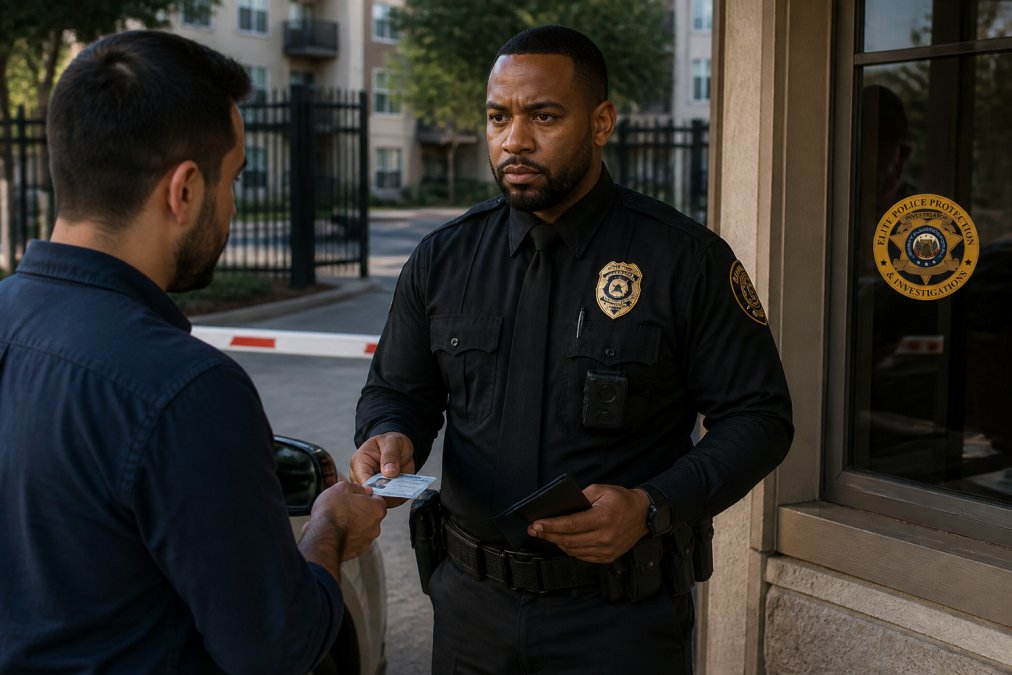
Modern security guards manage access control systems, monitor surveillance feeds, respond to emergencies, and document incidents with precision. They're trained to de-escalate conflicts, assess suspicious behavior, and coordinate with local law enforcement when necessary. A trained security guard can identify vulnerabilities in your perimeter, spot patterns in criminal activity, and prevent incidents before they escalate. They become familiar with legitimate residents and vehicles, making it easier to spot outsiders attempting unauthorized entry.
Key Responsibilities: Access Control, Patrol, and Emergency Response
Security personnel in residential settings manage several critical functions that work together to create a secure environment.
Visitor Management and Access Control
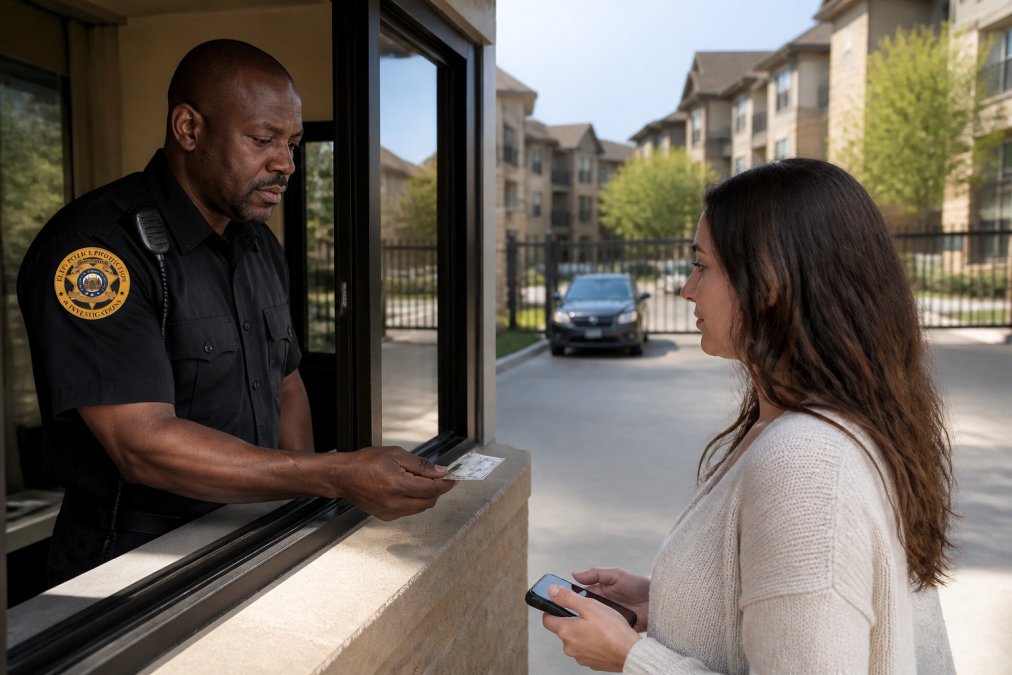
Controlling who enters your property is foundational to residential security. Security guards implement visitor management systems that verify identities, confirm resident authorization, and maintain detailed logs of all entries and exits. This documentation becomes invaluable if an incident occurs.
Access control extends beyond the main entrance. Professional security personnel monitor package deliveries, contractor access, and vendor entry points. They ensure that maintenance workers and service providers don't wander unmonitored through common areas or residential corridors. Effective security guards balance thoroughness with courtesy, creating a welcoming environment for legitimate visitors while maintaining firm protocols for verification.
Property Patrol and Crime Deterrence
Visible security presence deters criminal activity more effectively than any alarm system alone. Security guards conduct regular patrols of common areas, parking structures, and perimeter grounds using randomized schedules to prevent predictability.
During patrols, trained personnel look for signs of attempted break-ins, suspicious individuals, damaged locks, or environmental hazards. They verify that gates remain secured, lighting functions properly, and landscaping hasn't created blind spots. Parking lot security represents a particular vulnerability in apartment communities. Security personnel patrol parking areas at varying times, checking for suspicious activity and documenting license plates.
Emergency Response and Alarm Monitoring
When alarms activate or emergencies occur, security guards serve as the immediate response layer. They investigate alarm activations, determine whether a genuine emergency exists, and coordinate with emergency services. Professional security personnel are trained in first aid and CPR, allowing them to provide immediate assistance during medical emergencies while emergency services respond. They understand how to secure a scene, preserve evidence, and provide accurate information to law enforcement.
Apartment Complex Security Patrol Services: What to Expect
Professional apartment complex security patrol services operate on structured protocols that ensure consistent coverage. Structured patrols follow documented routes and timing patterns that are randomized to prevent predictability. A security provider should offer documented patrol logs showing when and where guards conducted inspections, what they observed, and any incidents they documented.
The frequency and intensity of patrols should match your property's risk profile. A quality security provider conducts a risk assessment before proposing a patrol schedule, ensuring coverage aligns with your specific vulnerabilities. Response time matters significantly, a guard stationed on-site responds within minutes; an off-site provider may take 20-30 minutes.
Documentation and reporting distinguish professional patrol services from basic guard presence. Every incident, observation, and patrol completion should be recorded in a system that property managers can access. Elite Police Protection provides structured patrol services with real-time monitoring capabilities and client portal access to patrol data, ensuring consistent execution across all assigned locations.
Why Property Managers Choose Armed and Unarmed Guard Options
The decision between armed and unarmed security guards depends on your property's risk profile, resident demographics, and liability considerations.
Unarmed security personnel focus on access control, customer service, and deterrence through visible presence. They're appropriate for most residential communities where the primary concern is unauthorized entry, package theft, and minor incidents. Unarmed guards cost less to deploy and create a less intimidating atmosphere for residents.
Armed security guards are necessary in higher-risk environments or properties with significant crime history. They provide escalated response capability for serious threats and can engage in armed response if necessary. Armed personnel require extensive training, background investigation, and certification, making them more expensive but also more capable of handling dangerous situations.
Off-duty or retired law enforcement officers bring additional credibility and training to either role. They understand criminal behavior patterns, maintain composure under pressure, and have established relationships with local police departments. Many property managers find that hiring former police officers provides confidence that personnel understand serious situations and respond appropriately.
Cost of Security Guards for Residential Buildings and ROI
Evaluating security costs requires understanding both direct expenses and the value security provides through incident prevention. Security costs vary based on whether guards are armed or unarmed, whether coverage is 24/7 or limited hours, property size and complexity, and local labor rates.
The ROI calculation should include prevented losses. A single burglary in an apartment community can result in resident losses, property damage, insurance claims, and reputational damage. Security guards that prevent even one break-in per year often pay for themselves through reduced insurance claims and prevented resident losses.
Beyond financial ROI, security improves resident satisfaction and retention. Residents pay premium rent for communities they perceive as safe. Enhanced security becomes a marketing advantage that justifies higher rents and reduces turnover. Insurance companies often provide premium reductions for properties with documented security programs, offsetting a significant portion of security costs.
Hiring Off-Duty Police for Apartment Security: Benefits and Considerations
Off-duty law enforcement officers bring law enforcement credibility and training to security guard roles. They understand criminal behavior, maintain composure in dangerous situations, and have established relationships with local law enforcement. When an incident occurs, their presence often accelerates police response and ensures professional scene management.
The training advantage is significant. Off-duty officers have received formal law enforcement training in emergency response, de-escalation, evidence preservation, and legal liability. However, hiring off-duty police involves specific legal and operational considerations. Department policies govern whether officers can work security details while off-duty. Property managers should verify that any off-duty officer arrangement complies with local department policies.
Clear policies distinguishing their role as a security guard (not a police officer) become essential to avoid liability complications. Elite Police Protection specializes in deploying off-duty, retired, and prior law enforcement professionals for security roles, with a legal and operational framework that addresses the specific considerations involved in deploying law enforcement officers for residential security.
Liability, Legal Compliance, and Insurance for Property Managers
Property managers often overlook the legal framework surrounding security operations, creating significant liability exposure. Security personnel can create liability if they act outside their authority or fail to follow proper protocols.
Insurance requirements vary by state and by security provider. Most professional security companies carry general liability insurance covering their personnel's actions. Property managers should verify that coverage extends to the specific services being provided.
Documentation becomes critical in liability situations. If an incident occurs and legal questions arise, detailed security logs, patrol records, and incident reports provide evidence of proper procedures. Background checks and vetting procedures protect against hiring personnel with criminal histories or behavioral issues. Professional security providers conduct thorough background investigations including criminal history, employment verification, and reference checks.
Training and certification requirements vary by state. Property managers should verify that security personnel meet all applicable state and local requirements. Operating with uncertified or improperly licensed security personnel creates regulatory violations and liability exposure.
Integration with Smart Security Systems and Technology
Modern apartment communities increasingly combine on-site security personnel with technology systems that enhance coverage and response capability. Access control systems integrate with security personnel by automating identity verification and maintaining digital entry logs. Surveillance systems provide security personnel with real-time visibility into areas they cannot physically monitor simultaneously.
Alarm systems alert security personnel to emergencies, triggering immediate response. Mobile reporting systems allow security personnel to document incidents and observations in real-time. Advanced guard monitoring systems provide property managers with real-time access to patrol data, incident reports, and security status through client portal access.
The integration of personnel and technology creates security that neither can provide alone. Technology without trained personnel cannot respond to incidents or make judgment calls. Personnel without technology cannot monitor all areas simultaneously. Combined, they create comprehensive security coverage appropriate for modern apartment communities.
Effective security for apartment communities requires trained personnel, documented protocols, technology integration, and ongoing management oversight. Property managers who invest in professional security guards report reduced incidents, improved resident satisfaction, and measurable ROI through prevented losses.
Elite Police Protection brings law enforcement expertise and 24/7 availability to residential security, deploying highly trained personnel with real-time monitoring capabilities and client portal access to patrol data. Their focus on professionalism and tailored security solutions addresses the specific vulnerabilities that apartment communities face. Get started with Elite Police Protection and transform your property's security posture from reactive to proactive.
Frequently Asked Questions
What are the primary responsibilities of security guards in apartment communities?
Security guards in apartment communities monitor access points, verify visitor credentials, conduct property patrols, respond to alarms, and deter criminal activity. They maintain incident reports, coordinate with emergency responders, and enforce parking regulations. Many guards also provide a visible security presence that reassures residents and deters theft and trespassing. The specific duties depend on the property's size, layout, and security protocols established by management.
How much does it cost to hire security guards for residential buildings?
Pricing for security guards depends on several factors: property size, guard type (armed or unarmed), shift coverage (24/7 or part-time), location, and guard qualifications. Off-duty police officers typically cost more than standard unarmed guards. For accurate pricing tailored to your property's specific needs, contact Elite Police Protection for a customized quote that reflects your security requirements and coverage hours.
What's the difference between hiring off-duty police versus standard security guards?
Off-duty police officers bring law enforcement training, legal authority, and crisis de-escalation skills that standard guards may lack. They understand criminal procedure, can make arrests, and carry the credibility of their badge. Standard unarmed guards provide visible deterrence and access control at lower cost. Many property managers choose off-duty officers for high-risk properties or areas with persistent crime, while others use unarmed guards for routine patrol and visitor management.
What liability and insurance considerations should property managers know about?
Property managers are responsible for ensuring security personnel are properly trained, insured, and follow established protocols. Your security provider should carry general liability and workers' compensation insurance. Document all incidents, maintain clear security policies, and ensure guards receive conflict de-escalation and tenant communication training. Verify that your security contract includes indemnification clauses and that your property's liability insurance covers security-related incidents. Consult your legal counsel to confirm compliance with local regulations.
This article was written using GrandRanker