
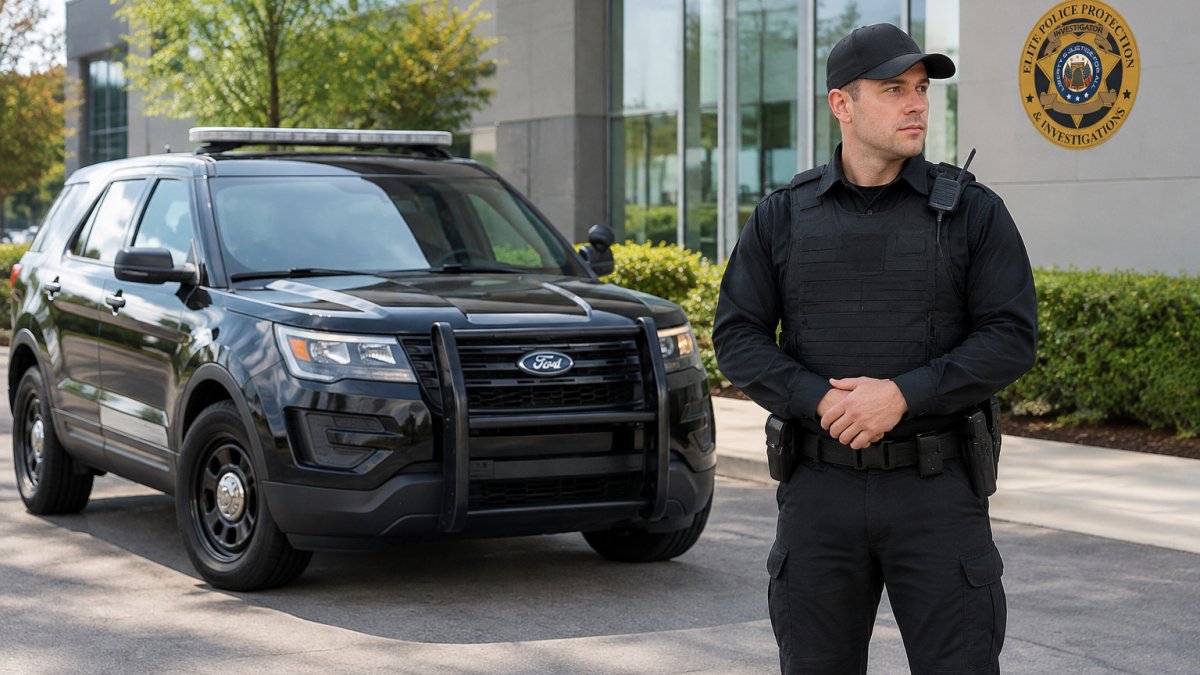
 comparison
Mobile Patrol vs Stationary Guards for Your Property
Last Updated: November 4, 2026
Quick Summary
A stationary guard suits sites where people enter and leave all day and every visitor must be checked, while mobile patrol suits spread-out or quiet properties that need regular checks. Many properties end up using both, with a fixed post at the main entrance and a mobile patrol covering the rest.
- Score your site on access-control demand, vulnerable points, hours, spread, incident history and response needs.
- High access-control demand and response expectations point toward a stationary guard.
- Many vulnerable points and multiple sites spread out point toward mobile patrol.
- Write patrol frequency, checkpoint completion and missed-visit escalation into the contract.
- Compare quotes only after normalizing for visit frequency and response expectations.
Table of Contents
- Mobile Patrol vs Stationary Guards: The Core Differences
- How Mobile Patrol Services Work
- How Stationary Guard Services Work
- Matching Coverage Model to Property Size, Layout and Operating Hours
- Visibility, Access Control and Response Time Compared
- Cost Comparison: Hourly Rates and Sample Scenarios
- Hiring Armed vs Unarmed Officers for Either Model
- Schedule a Site Assessment to Choose Your Coverage Model
- Frequently Asked Questions
Choosing between mobile patrol and stationary guards is one of the first decisions a property owner makes when building a security plan, and it shapes everything that follows: cost, coverage, and how quickly a problem gets noticed. This comparison reflects how security providers typically help clients weigh the two options.
The right answer depends on your site. A stationary guard holds one post and gives constant, visible presence. A mobile patrol officer moves across several locations or a large footprint, checking doors, gates, and vulnerable areas on a schedule. Neither is better in every case, but each fits a different set of conditions.
Mobile Patrol vs Stationary Guards: The Core Differences
The core difference is where the officer spends the shift. A stationary guard stays at one post, usually an entrance, lobby, or gatehouse, where visitors are checked and access is controlled. A mobile patrol officer covers ground, moving between buildings or sites on a set or randomized route.
That difference drives the rest of the decision. Stationary coverage gives you a person who is always present at one point. Patrol coverage gives you a person who reaches many points, but not all of them at once. Many businesses find that the choice comes down to whether they need constant access control or broader coverage over time.
How Mobile Patrol Services Work
A mobile patrol service typically sends an officer, often in a marked vehicle, to check a property at scheduled or randomized intervals. Each visit includes walking or driving the perimeter, checking locks, looking for signs of damage or intrusion, and logging what was found.
Patrol frequency is the detail to pin down early. Randomized patrols make it harder for someone to predict when a site will be unattended. Ask for the route, the number of checks per shift, and how the officer reports incidents. A clear reporting process matters more than the vehicle.
How Stationary Guard Services Work
A stationary guard is assigned to a fixed post for the full shift. The officer may check identification, monitor cameras, control access through gates or turnstiles, and respond to alarms at that location. The value lies in continuous presence and immediate response within the post.
Stationary coverage is most useful where people enter and leave all day, such as hospitals and busy shopping centers. A guard at the main entrance can screen visitors before they reach the rest of the building, something a patrol officer passing by cannot do.
Matching Coverage Model to Property Size, Layout and Operating Hours
Property size alone is a weak signal. A 200,000-square-foot warehouse with one guarded gate and a 200,000-square-foot campus with twelve entry points need different answers. The practical approach is to score the site on the factors that actually change the coverage math, then let the score point to a model.
A weighted decision framework. Rate each factor from 1 (low) to 5 (high):
- Access-control demand. How many people and vehicles must be screened, and how often? High scores favor stationary guards.
- Number of vulnerable points. Doors, gates, loading docks, and fence lines that need checking. High scores favor patrol.
- Operating hours. Continuous public traffic favors a fixed post; quiet after-hours periods favor patrol.
- Geographic spread. Multiple buildings or sites favor patrol; a single concentrated footprint can support either.
- Incident history. Repeated trespassing, theft, or vandalism at specific points may justify a fixed post there.
- Response expectation. If a person must be intercepted before entry, only a stationary post delivers that.
If access-control demand and response expectation score high, stationary coverage wins. If vulnerable points and geographic spread score high, patrol wins. When both sets score high, a hybrid, a fixed post at the primary entrance plus patrol across the remainder, is usually the defensible answer.
Service-level metrics to write into either contract. The model matters less than whether the provider can be held to measurable expectations. Insist on defined patrol frequency and checkpoint completion (GPS-verified where available), response-time targets for alarm calls, incident-report turnaround, and a missed-visit escalation procedure. A patrol contract without a missed-visit clause is a promise, not a service level.
Industry patterns. Construction sites typically favor patrol because the asset is spread out and vacant after hours, though a fixed gate post helps during active phases. Warehouses often pair a stationary dock or gate post with perimeter patrol. Retail centers frequently use a fixed post at the main entrance during business hours and patrol overnight.
Limitations to weigh honestly. Patrol leaves gaps between visits and can become predictable if routes are not randomized. Stationary guards concentrate coverage at one point and can face fatigue on long shifts. Neither model replaces emergency services, cameras, alarms, or access-control hardware, they complement them.
Watch out: choosing a model before documenting entry points, incident history, and operating hours usually produces a plan that looks adequate on paper and fails on the first busy night. Complete the scoring exercise first, then ask for a quote.
Visibility, Access Control and Response Time Compared
Visibility is where stationary guards have the clearest advantage. A uniformed officer standing at an entrance is a visible deterrent that people notice immediately. A patrol vehicle can deter too, but it is present only briefly at any given spot.
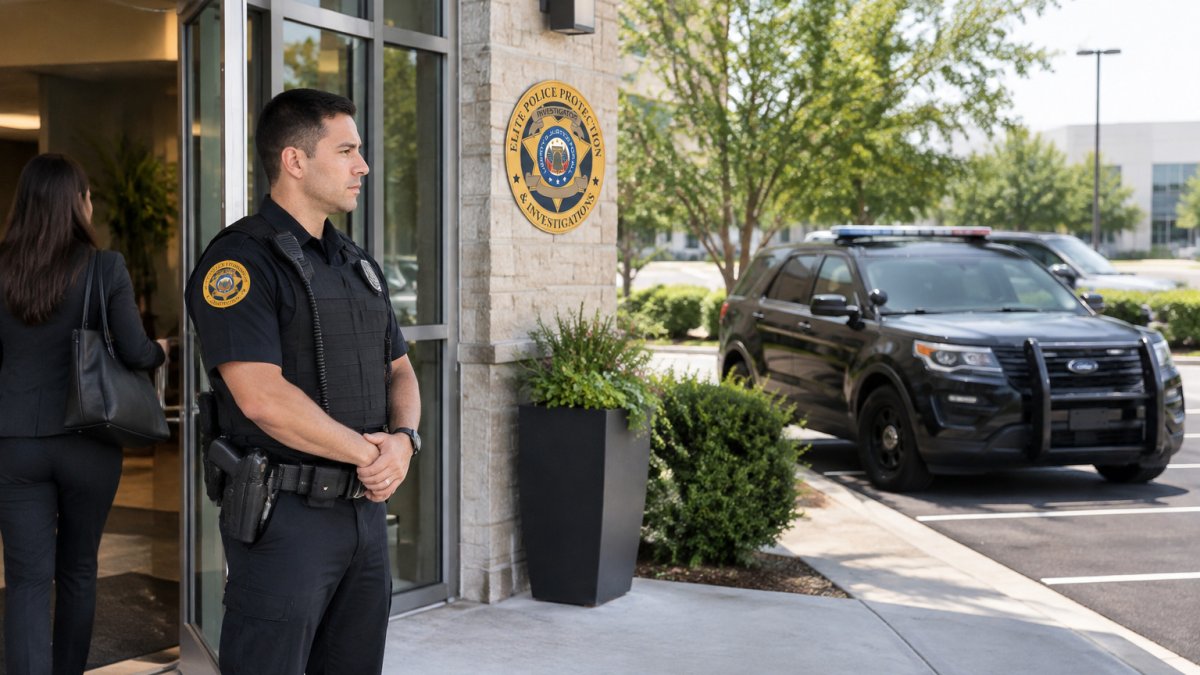
Access control follows the same pattern. Only a stationary post can check every person entering a specific door. Response time is more nuanced. A stationary guard responds fastest to events at their post, while a patrol officer may reach a distant corner of the property sooner than a guard stationed elsewhere. The honest answer is that response time depends on where the incident happens relative to where the officer is.
Cost Comparison: Hourly Rates and Sample Scenarios
Cost is usually the deciding factor, and the honest way to compare the two models is to separate the cost drivers from the headline rate. For a detailed look at what flex and hourly officers are paid and charged, see the Flex Security Officer Guide to Hiring and Pay. A stationary post is priced as dedicated labor: one officer, one location, every hour the post is staffed.
The drivers that move either quote up or down are consistent across the industry:
- Staffing hours. A 24/7 stationary post requires roughly 168 officer-hours per week before you account for relief coverage, breaks, and call-offs. Patrol hours are set by visit frequency and route length, not by the clock.
- Armed versus unarmed. Armed officers generally require additional licensing and training under applicable state law.
- Site geography. Patrol economics improve when sites are close together; long drives between properties consume paid time that produces no coverage.
- Post complexity. A gatehouse with visitor screening, camera monitoring, and log requirements needs a more qualified officer than a simple presence post.
- Reporting and technology. GPS-verified checkpoints, digital tour systems, and incident-reporting platforms add cost but also create accountability you can audit.
A useful way to frame the trade-off is cost per covered hour versus cost per covered site. A single stationary post concentrates all of its cost on one address. A patrol shift spreads its cost across every property on the route, which is why distributed portfolios often find patrol cheaper per site, but only when visit frequency is realistic.
Consider a property manager with four small retail centers who wants overnight coverage. Four stationary posts would require four officers for the same hours, while a single patrol officer making randomized visits could cover all four sites with gaps between visits. The right choice depends on whether an intruder has eight hours or twenty minutes to work unnoticed.
Watch out: comparing a patrol quote to a stationary quote without normalizing for visit frequency and response expectations produces a false saving. Ask each provider to state visits per night, average minutes on site, and what happens when a visit is missed.
Pricing depends on hours, location, officer qualifications, and armed status. Visit the Elite Police Protection website or request a quote for current pricing based on your coverage plan.
The table below summarises the main cost drivers and how each one moves a quote.
| Cost driver | Effect on cost | Note |
|---|---|---|
| Staffing hours | Stationary post needs about 168 officer-hours per week | Patrol hours are set by visit frequency and route length |
| Armed vs unarmed | Armed officers raise cost | Armed officers need additional licensing and training under state law |
| Site geography | Distant sites raise patrol cost | Long drives consume paid time with no coverage |
| Post complexity | Gatehouse with screening and logs costs more | Needs a more qualified officer than a simple presence post |
| Reporting and technology | Adds cost | Creates accountability you can audit |
Hiring Armed vs Unarmed Officers for Either Model
Whether you choose patrol or stationary coverage, you also need to decide between armed and unarmed officers. Unarmed officers are typically the right fit for deterrence, access control, and incident reporting. Armed officers are generally considered for higher-risk environments, and they bring additional licensing, training, and liability requirements under state law.
Matching the officer type to a documented risk assessment is the sound approach rather than relying on a general sense of concern. For a deeper side-by-side comparison of the two options before deciding, see Hiring Armed vs Unarmed Guards. The same question applies to both coverage models: what is the actual threat, and what response does it require?
Schedule a Site Assessment to Choose Your Coverage Model
The fastest way to decide is a site assessment. A site assessment can look at your property layout, entry points, operating hours, and risk profile to help determine a coverage model.
Elite Police Protection offers uniformed and armed or unarmed officers, and can help you consider the right model before you sign anything. If you are ready to see what fits your property, contact us to schedule an assessment and get a quote tailored to your site.
Frequently Asked Questions
What are the primary operational differences between mobile patrol and stationary guards?
Mobile patrol officers move between several locations or cover a wide area on a set or randomized route, checking doors, gates, and perimeters at intervals. Stationary guards stay at one fixed post, usually an entrance, lobby, or gatehouse, where they control access and provide continuous visible presence. Mobile patrol suits larger or dispersed properties with lower-intensity needs, while stationary guards suit sites that need constant access control or immediate on-site response. Many businesses compare the two by asking how often a human needs to be physically present versus how much ground must be covered.
In what scenarios is a stationary guard more effective than mobile patrol?
A stationary guard is usually the better choice when a property has one or a few controlled entry points, when visitors must be screened or logged, or when the site needs a visible deterrent at all times. Healthcare and behavioral health facilities, distribution centers with staffed docks, and retail properties during high-traffic hours often rely on fixed posts for this reason. Stationary coverage also fits situations where a guard must respond to alarms or incidents from one location without delay, since the officer is already on site.
How does the cost of mobile patrol compare to 24/7 stationary security?
Mobile patrol generally costs less per property than round-the-clock stationary coverage because one officer can cover several checkpoints or sites in a single shift. A stationary post staffed 24 hours a day requires multiple officers to cover each shift, which raises the total labor cost. Pricing depends on location, officer qualifications, and hours. Visit the Elite Police Protection website for current pricing or to request a quote.
Can mobile patrol services be combined with stationary guards for better coverage?
Yes. A common hybrid model places a stationary guard at the main entrance during business hours and uses mobile patrols to check perimeters, parking areas, and secondary buildings during the day or overnight. This approach keeps access control at the most important point while extending coverage to areas that do not justify a dedicated post. A site review can help determine how to divide coverage between fixed posts and patrol routes.