 comparison
Hiring Armed vs Unarmed Guards: A 2026 Guide
Table of Contents
- Armed vs Unarmed Guards: What Each Role Actually Covers
- Armed Security Guard Training Requirements
- Risk Assessment for Private Security: Choosing the Right Threat Level
- Security Guard Liability Insurance and Legal Exposure
- Deterrence, Public Relations, and Threat Response Compared
- When to Choose Armed vs Unarmed Guards for Your Property
- Conclusion
Last Updated: August 24, 2026
Armed vs Unarmed Guards: What Each Role Actually Covers
The decision to hire armed vs unarmed guards is one of the most consequential choices a property manager or business owner makes. Most people default to whichever option costs less without conducting a proper threat assessment first. At Elite Police Protection, we work with property managers, healthcare facilities, retail centers, and warehouse operators every week, and the pattern is consistent: the right choice depends on your specific risk profile, not a general preference.
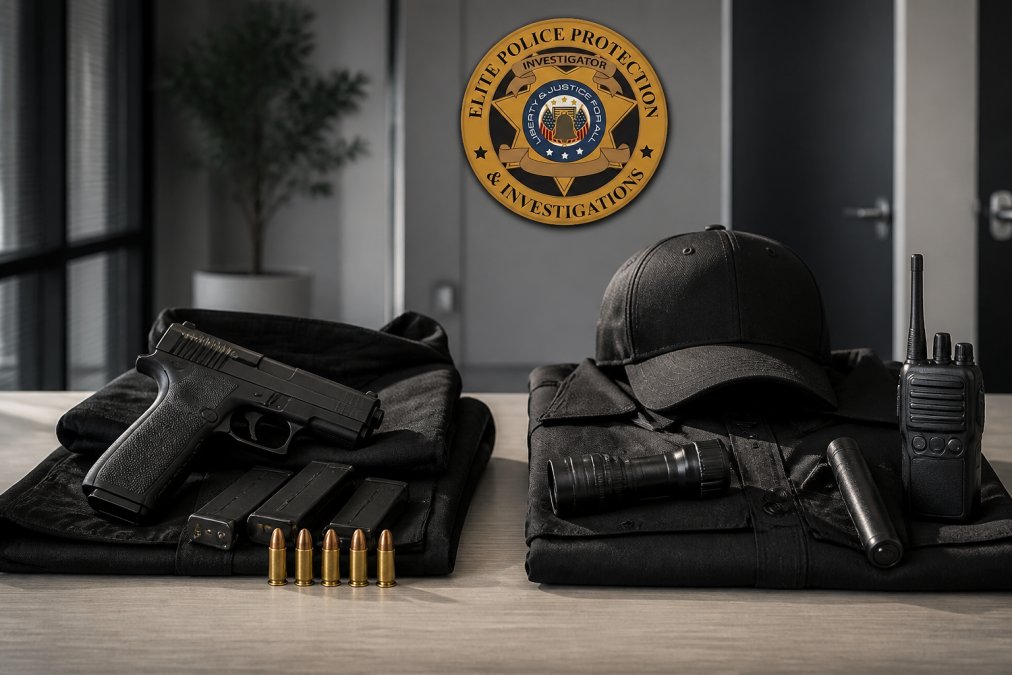
Armed security is a designation for personnel who carry a firearm and are trained and licensed to use it. Unarmed security refers to security personnel who rely on observation, communication, access control, and de-escalation to manage threats without a lethal weapon. Both roles serve a legitimate purpose, but they are not interchangeable.
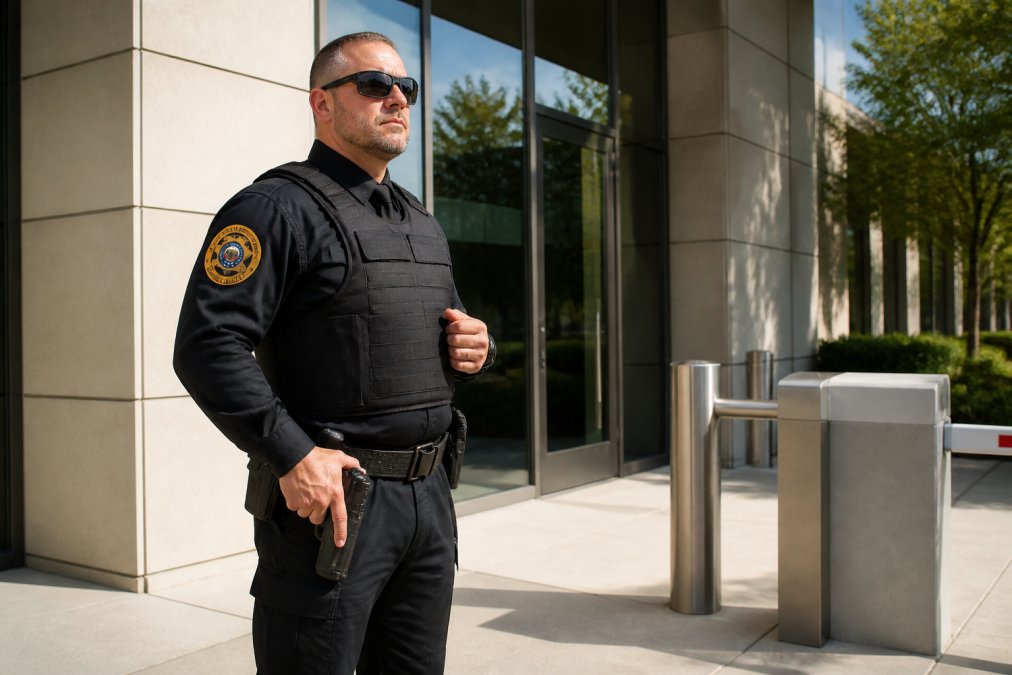
What Unarmed Security Personnel Do on Site
Unarmed guards handle the majority of day-to-day security functions at most commercial properties. Their duties include monitoring access control points, conducting patrols, observing and reporting suspicious activity, responding to non-violent disturbances, and providing visible deterrence. Unarmed personnel excel in environments where the primary threat is low-level: trespassing, shoplifting, vandalism, or unauthorized access. Their presence alone deters a significant portion of opportunistic incidents.
What Armed Security Personnel Do on Site
Armed security personnel carry all the responsibilities of their unarmed counterparts, plus the capability for armed response in high-threat scenarios. Their expanded role includes responding to active threats, providing physical security at locations handling high-value assets or cash, protecting individuals under executive protection assignments, and serving as a credible deterrent in elevated-threat environments. Armed guards typically carry higher professional certification requirements, more extensive background checks, and specialized training in use of force and threat assessment.
Armed Security Guard Training Requirements
Training standards for security personnel vary by state, but the gap between armed and unarmed requirements is substantial.
Unarmed Guard Licensing and Certification
Most states require unarmed guards to complete a pre-assignment training course covering legal authority, emergency response, report writing, and basic security protocols. Many jurisdictions also require a state-issued security guard license involving a background check and fingerprinting. According to the Bureau of Labor Statistics Occupational Outlook for Security Guards, security guard positions typically require a high school diploma and on-the-job training, with formal certification requirements varying significantly by state. Unarmed guards working in specialized environments may face additional site-specific training requirements.
Armed Guard Certification and Use of Force Standards
Armed guard certification requirements are considerably more demanding. Most states require a valid unarmed security guard license as a prerequisite, completion of a firearm training course approved by the state regulatory body, demonstrated proficiency in firearms handling and marksmanship, training in use of force law and de-escalation, and ongoing qualification requirements (typically annual firearms requalification). Some states also require armed guards to hold a separate armed guard endorsement distinct from a standard concealed carry license. Elite Police Protection hires only law enforcement professionals, ensuring their armed personnel arrive with professional certification, real-world emergency response experience, and a deeply ingrained understanding of use of force standards.
Risk Assessment for Private Security: Choosing the Right Threat Level
A structured risk assessment for private security should account for your specific environment before choosing between armed and unarmed guards.
Site-Specific Factors That Drive the Decision
Before choosing between armed and unarmed guards, evaluate these factors for each property:
| Risk Factor | Lower Threat (Unarmed Sufficient) | Higher Threat (Armed Recommended) |
|---|---|---|
| Asset value on site | Low-to-moderate inventory | High-value assets, cash, pharmaceuticals |
| Crime history at location | Minimal incident reports | Prior armed incidents, theft, assault |
| Operating hours | Daytime, high foot traffic | Overnight, isolated, or 24/7 operations |
| Occupant vulnerability | General public | At-risk populations, executives, children |
| Access control complexity | Single entry, low volume | Multiple access points, high-security zones |
| Proximity to law enforcement | Within 5-minute response | Remote location, extended response times |
Score your property across these dimensions honestly. A warehouse storing consumer electronics in an area with documented theft history scores differently than a suburban apartment leasing office open 9-to-5.
De-escalation and Technology as Force Multipliers
De-escalation techniques, verbal communication strategies, and spatial positioning allow trained unarmed officers to resolve confrontations before they become physical. Technology integration compounds this effect. Advanced guard monitoring systems with GPS-tracked patrol verification, real-time incident reporting, and client portal access give property managers visibility into exactly what's happening on site. Elite Police Protection's advanced guard monitoring system provides clients real-time access to approved reports and patrol data, which changes the accountability dynamic entirely. Pairing strong de-escalation training with solid technology integration often makes unarmed security far more effective than a poorly trained armed guard.
Security Guard Liability Insurance and Legal Exposure
Security guard liability insurance is one of the most underexamined factors in the armed vs unarmed decision, and it directly affects your organization's risk profile. Armed security operations carry higher liability exposure by definition. Insurance carriers reflect this reality in premiums. Armed security contracts typically require higher liability coverage limits, and the cost of that coverage is built into the service rate.
As documented in ASIS International's security management guidelines, property owners who contract security services retain some degree of liability for incidents that occur on their premises, particularly if they directed the nature of the security deployment. Key liability considerations include vicarious liability (property owners may share liability for a guard's actions), negligent hiring claims (if a security firm fails to conduct proper background checks), scope of authority issues (guards operating outside their defined scope), and incident documentation (thorough reporting is the primary defense against inflated claims).
Before signing any security contract, verify the provider's insurance coverage, understand the indemnification clauses, and confirm that guards' scope of authority is clearly defined in writing.
Deterrence, Public Relations, and Threat Response Compared
An armed guard sends an unambiguous signal: threats will be met with force. This is highly effective in environments where the potential offender is calculating risk before acting, such as cargo theft operations targeting a distribution center. Unarmed guards produce strong deterrence against opportunistic, low-sophistication threats like shoplifting and vandalism. Armed guards in certain environments, such as pediatric healthcare facilities or community apartment complexes, can make legitimate visitors and residents feel unsafe or unwelcome, creating unintended operational costs.
Deterrence effectiveness is environment-specific. Armed guards are not universally "more deterrent" than unarmed ones; they deter different threat profiles. Matching the deterrence signal to the actual threat is the goal. For threat response, armed guards have a clear capability advantage in active threat scenarios, but the probability of an active threat at most commercial properties is low. According to OSHA's guidance on workplace violence prevention, workplace violence risk varies significantly by industry sector, with healthcare, retail, and late-night service environments carrying the highest baseline risk.
When to Choose Armed vs Unarmed Guards for Your Property
The choice between hiring armed vs unarmed guards should follow directly from your risk assessment, not from a general preference or a competitor's approach.
Scenarios Where Unarmed Guards Are Sufficient
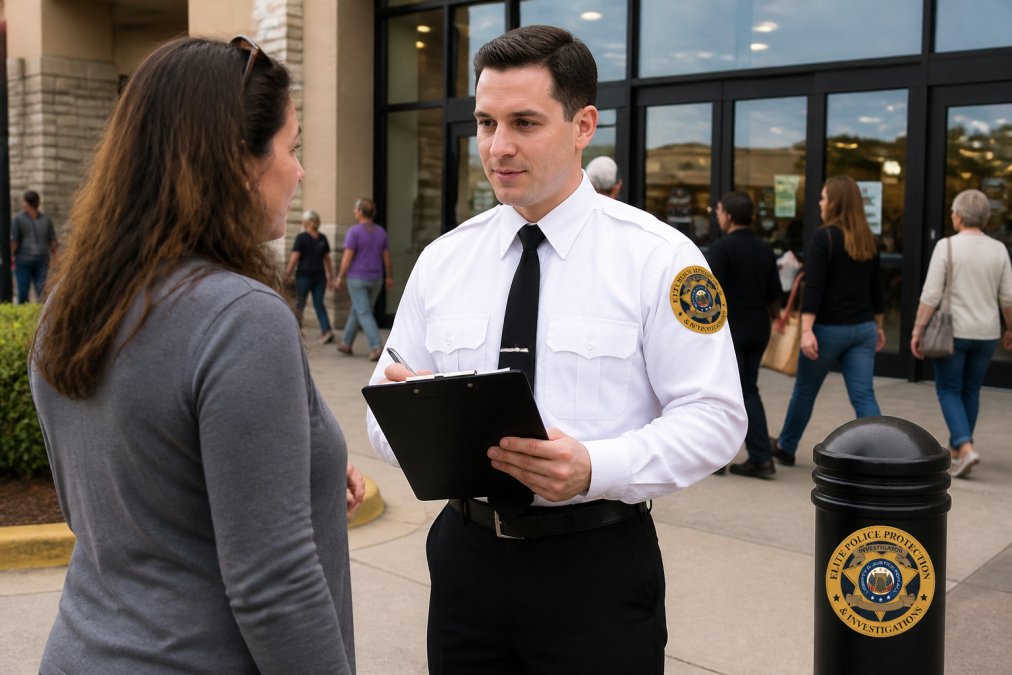
Unarmed security personnel are the right choice for most commercial environments where the primary threats are opportunistic rather than organized or violent: apartment communities, retail shopping centers, healthcare facilities (non-behavioral), daytime construction sites, and corporate offices with low threat history. The common thread: environments where the threat profile is low-to-moderate, incidents are typically non-violent, and the presence of a firearm would generate more friction than security value.
Scenarios That Call for Armed Security
Armed security is appropriate when the threat level, asset value, or vulnerability of occupants crosses a meaningful threshold: behavioral health facilities, warehouses and distribution centers with high-value inventory, cash-intensive businesses, executive protection assignments, overnight or remote site security, and events with elevated threat profiles.
Pricing for security services varies based on guard type, hours, location, and required training. Contact Elite Police Protection directly for a custom quote that reflects your actual site requirements. What most property managers find is that the difference between a well-deployed unarmed program and a poorly deployed armed one isn't the firearm, it's the quality of the personnel and the rigor of the monitoring system behind them. For a comprehensive overview of security industry standards, the ASIS International Professional Development resources provide detailed guidance on what separates baseline compliance from genuine professional competence.
Choosing between armed and unarmed security is ultimately a risk management decision, not a budget line item. The wrong deployment creates more exposure than it resolves. Elite Police Protection provides both armed and unarmed officers, with armed personnel drawn exclusively from law enforcement professionals, real-time patrol monitoring through an advanced client portal, and the flexibility to staff uniformed or business-attired officers based on your environment. Get started with Elite Police Protection and put the right level of protection in place for your specific property.
=== FAQ ANSWERS (audit these too, same rules) ===
[1] Q: What is the main difference between an armed and unarmed security guard? A: Armed guards carry a firearm and are authorized to use force when legally justified, making them suited for high-threat environments. Unarmed guards rely on observation, deterrence, de-escalation, and incident reporting. Both types must hold valid state security guard licenses, but armed guards carry additional certification requirements, including firearms qualification, use-of-force training, and regular re-qualification, all governed by state-level regulatory compliance standards.
[2] Q: Are there specific legal requirements for hiring armed security guards? A: Yes. Armed security guard training requirements vary by state but consistently include a valid guard license, a separate armed guard certification or carry permit, background checks, psychological screening, and documented firearms proficiency. Many states also require periodic re-qualification. Businesses hiring armed security should verify that the provider meets all state licensing requirements and that guards carry the appropriate credentials for the jurisdiction where they will be deployed.
[3] Q: How does having an armed guard affect liability and insurance premiums? A: Armed security guard deployments typically increase a provider's insurance premiums due to the elevated risk of a use-of-force incident. Businesses should ask any security provider for proof of security guard liability insurance, including general liability and workers' compensation coverage. An incident involving an armed guard that results in injury or property damage can expose the client business to legal liability if proper due diligence on the provider's credentials was not conducted beforehand.
[4] Q: When is an unarmed guard sufficient for site security? A: Unarmed guards work well for access control, loss prevention, patrol services, and deterrence at locations with low-to-moderate threat levels, such as apartment communities, retail centers, office buildings, and healthcare facilities. If your site's risk assessment for private security shows no credible threat of armed confrontation, unarmed personnel paired with technology like surveillance cameras and real-time patrol monitoring typically deliver cost-effective protection without the liability exposure of armed response.
[5] Q: What factors should businesses consider when choosing between armed and unarmed security? A: Start with a formal risk assessment for private security that examines crime data for the area, the nature of assets on site, incident history, hours of operation, and the vulnerability of people present. High-value inventory, cash handling, behavioral health settings, or prior violent incidents generally push the decision toward armed security. Customer-facing environments with moderate risk, shopping centers, warehouses, apartment communities, often perform well with trained unarmed personnel and strong security protocols.
Frequently Asked Questions
What is the main difference between an armed and unarmed security guard?
Armed guards carry a firearm and are authorized to use force when legally justified, making them suited for high-threat environments. Unarmed guards rely on observation, deterrence, de-escalation, and incident reporting. Both types must hold valid state security guard licenses, but armed guards carry additional certification requirements, including firearms qualification, use-of-force training, and regular re-qualification, all governed by state-level regulatory compliance standards.
Are there specific legal requirements for hiring armed security guards?
Yes. Armed security guard training requirements vary by state but consistently include a valid guard license, a separate armed guard certification or carry permit, background checks, psychological screening, and documented firearms proficiency. Many states also require periodic re-qualification. Businesses hiring armed security should verify that the provider meets all state licensing requirements and that guards carry the appropriate credentials for the jurisdiction where they will be deployed.
How does having an armed guard affect liability and insurance premiums?
Armed security guard deployments typically increase a provider's insurance premiums due to the elevated risk of a use-of-force incident. Businesses should ask any security provider for proof of security guard liability insurance, including general liability and workers' compensation coverage. An incident involving an armed guard that results in injury or property damage can expose the client business to legal liability if proper due diligence on the provider's credentials was not conducted beforehand.
When is an unarmed guard sufficient for site security?
Unarmed guards work well for access control, loss prevention, patrol services, and deterrence at locations with low-to-moderate threat levels, such as apartment communities, retail centers, office buildings, and healthcare facilities. If your site's risk assessment for private security shows no credible threat of armed confrontation, unarmed personnel paired with technology like surveillance cameras and real-time patrol monitoring typically deliver cost-effective protection without the liability exposure of armed response.
What factors should businesses consider when choosing between armed and unarmed security?
Start with a formal risk assessment for private security that examines crime data for the area, the nature of assets on site, incident history, hours of operation, and the vulnerability of people present. High-value inventory, cash handling, behavioral health settings, or prior violent incidents generally push the decision toward armed security. Customer-facing environments with moderate risk, shopping centers, warehouses, apartment communities, often perform well with trained unarmed personnel and strong security protocols.
This article was written using GrandRanker