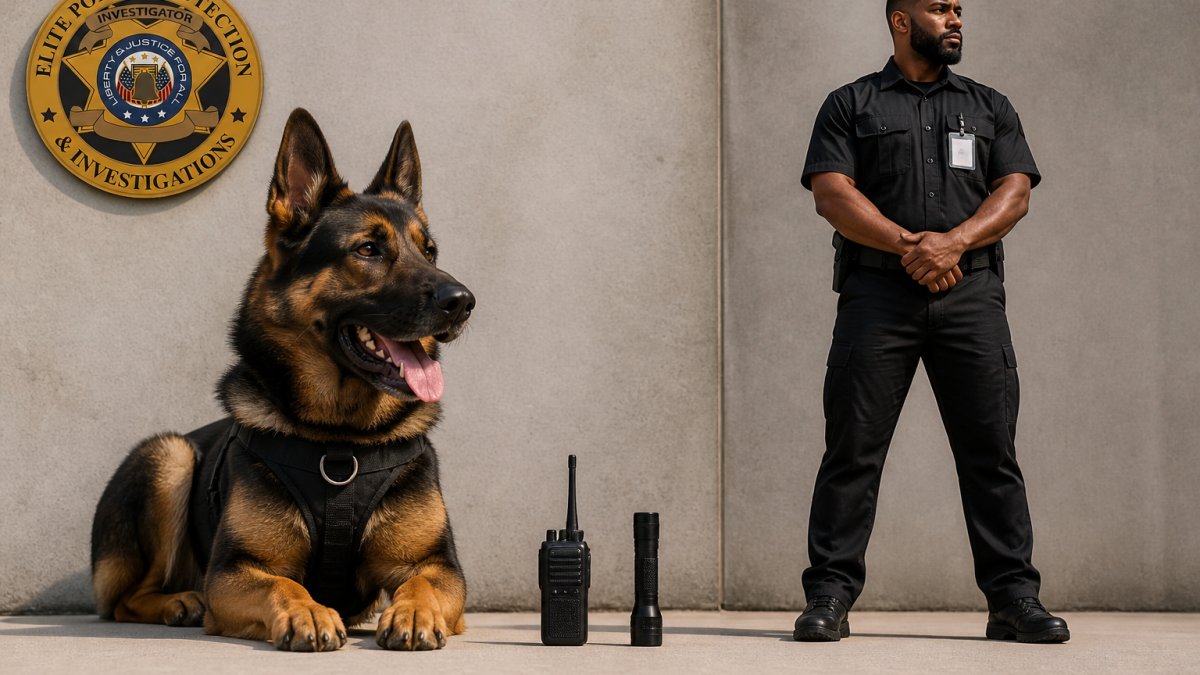
 comparison
Hirepolice Alternatives for Corporate Security
Table of Contents
- Why Companies Move Beyond Hirepolice
- How to Hire Off-Duty Police for Corporate Security
- Private Security vs. Off-Duty Police: Key Differences
- Security Guard Liability and Insurance Considerations
- Top Corporate Security Alternatives Compared
- Technology-First Security Integration
- Scalability for Multi-Site Corporate Deployments
- Frequently Asked Questions
Last Updated: August 31, 2026
Why Companies Move Beyond Hirepolice
When property managers, facility directors, and corporate security leaders evaluate their options, Hirepolice often surfaces as a familiar name. But familiarity doesn't solve the real problems: inconsistent guard quality, limited investigative capabilities, and a one-size-fits-all approach that rarely aligns with specific facility needs.
Companies outgrow these platforms for concrete reasons. The first is accountability, when a guard doesn't show up or arrives unprepared, your facility is exposed. The second is specialization, off-duty law enforcement brings tactical expertise and conflict resolution skills that standard guards lack. The third is integration, modern corporate security demands real-time reporting, advanced monitoring systems, and investigative support, not just bodies in uniforms.
This guide explores what separates effective corporate security alternatives from the rest, comparing off-duty police options against private security firms, examining the liability landscape, and showing you how to evaluate solutions that scale across multiple locations without sacrificing quality or accountability.
How to Hire Off-Duty Police for Corporate Security
Off-duty law enforcement officers represent a distinct category within the broader security market. Unlike standard security guards, these professionals bring sworn law enforcement training, tactical decision-making experience, and the legal authority that comes with their background.
The hiring process differs significantly from standard guard recruitment. You're sourcing from a limited pool, not every department allows off-duty work, and those that do have specific guidelines. You're vetting individuals who already carry professional credentials and background clearances.

The practical approach involves working with a specialized provider rather than attempting direct recruitment. Providers like Elite Police Protection maintain relationships with active and retired law enforcement, ensuring consistent availability and vetting. When you contract through an established firm, you gain access to officers who've already passed rigorous background checks and understand the operational standards required for corporate environments.
Compensation structures for off-duty officers typically exceed standard guard rates, reflecting their training, liability profile, and specialized work. You'll establish a service agreement specifying coverage windows, response protocols, performance metrics, armed or unarmed status, uniform standards, and incident reporting procedures.
One critical distinction: off-duty officers working through a professional security firm maintain a clear chain of command and accountability structure. This differs fundamentally from hiring an individual officer directly, which creates ambiguous liability and compliance issues. A structured provider relationship ensures proper insurance coverage, incident documentation, and regulatory compliance.
Private Security vs. Off-Duty Police: Key Differences
The security market presents two fundamentally different value propositions. Private security firms employ personnel trained specifically for civilian protection work. Off-duty law enforcement brings sworn officer background and tactical authority.
Private security guards receive training tailored to corporate environments: customer service, de-escalation, access control, and incident documentation. Off-duty police officers bring tactical decision-making under pressure and the legal standing to take action in complex situations. A private guard calls police; an off-duty officer IS the police.
This distinction matters operationally. In a confrontation, a private guard's role is containment and communication. An off-duty officer can make arrests, conduct investigations, and exercise judgment that private personnel cannot. For facilities managing high-risk populations or handling sensitive assets, this authority translates to faster incident resolution and reduced liability exposure.
Liability structures diverge sharply. Private security firms carry standard commercial liability insurance. Off-duty law enforcement working through a professional provider operates under a hybrid structure where their sworn status creates different legal protections and exposure points. A proper provider manages this complexity through specialized insurance, clear operational protocols, and documented training standards.
Cost comparison reveals another layer. Private security typically costs less per hour because training requirements are lower and liability profiles are narrower. Off-duty police command premium rates reflecting their background and specialized work. However, total security costs include incident response, liability management, and operational effectiveness. A lower hourly rate requiring frequent police response or generating liability claims becomes expensive quickly.
Staffing consistency separates these options significantly. Off-duty police working through Elite Police Protection or similar providers maintain higher continuity because officers are selected for specific assignments and vetted for reliability. This consistency reduces training overhead and improves situational awareness.
Security Guard Liability and Insurance Considerations
Liability exposure is where many corporate security decisions fall apart. A security incident involving the wrong coverage or inadequate insurance can transform a single event into cascading financial and legal consequences.
Start with the fundamental question: who bears liability when a security incident occurs? If your contracted guard uses excessive force, fails to prevent an incident, or makes an error in judgment, your organization is potentially exposed. The security provider's insurance should indemnify you against certain claims, but the language matters enormously.
Private security firms carry standard commercial general liability insurance, typically in the $1-2 million range, which often excludes claims involving excessive force, false imprisonment, or violations of civil rights. Off-duty law enforcement working through a professional provider operates under a different insurance structure. Their sworn status means they may carry law enforcement liability coverage addressing scenarios where their authority is exercised. Elite Police Protection structures its coverage to protect both client and officer, with clear delineation of responsibility.
The insurance conversation must address specific scenarios: What happens if a guard injures someone during detention? What if a security assessment misses a vulnerability? What if an officer uses force and a lawsuit follows? Your contract should explicitly address these.
Documentation practices directly impact liability exposure. When a security provider maintains detailed incident reports, patrol logs, and client communication records, these become evidence of due diligence. Providers without strong documentation systems leave you vulnerable to claims of negligence.
One often-overlooked factor: the security provider's own liability history. A firm with multiple claims or lawsuits signals operational problems. Request information about the provider's claims history, insurance ratings, and any regulatory actions.
Top Corporate Security Alternatives Compared
The market offers distinct alternatives, each with different operational models and value propositions.
Elite Police Protection
Elite Police Protection delivers premier security services built on off-duty and retired law enforcement professionals. The company specializes in uniformed security, executive protection, and comprehensive investigative services, with 24/7 availability.
The core strength is personnel quality. Elite Police Protection recruits from active and retired law enforcement, ensuring officers bring tactical training and decision-making experience that standard guards lack. The company's advanced guard monitoring system provides real-time access to patrol data and incident reports through a client portal.
Key capabilities include armed and unarmed officer deployment, K9 teams for specialized environments, and investigative support for complex situations. The investigative function matters significantly. When incidents occur or vulnerabilities emerge, having access to trained investigators who understand evidence standards and legal requirements changes outcomes.
For corporate clients managing multiple properties, the scalability advantage is significant. Rather than juggling relationships with different providers across locations, a single provider relationship ensures consistent standards, unified reporting, and simplified vendor management.
Securitas USA
Securitas USA operates as a global security giant with deep roots in corporate protection. The company integrates on-site guarding, mobile patrol, remote monitoring, and electronic security into comprehensive solutions.
The scale advantage is real. Securitas maintains infrastructure across most major markets, enabling consistent service across multiple locations without managing separate provider relationships. For large enterprises with distributed facilities, this operational simplicity carries significant value.
The service mix combines human presence with technology. Remote guarding capabilities allow monitoring of multiple sites from centralized command centers, reducing on-site personnel needs. Mobile patrol services provide flexible coverage for facilities that don't require constant presence.
The trade-off involves customization and specialization. As a large provider serving diverse clients, Securitas applies standardized approaches to most situations. For organizations with unique security challenges or high-profile protection needs, the one-size-fits-most model may not deliver the tailored attention that specialized providers offer.
Prosegur USA
Prosegur USA focuses on licensed security guard services with emphasis on industry-specific customization. The company offers armed and unarmed officers, 24/7 coverage, and specialized services like concierge, front desk, and doorman roles.
The operational strength lies in training standards. Prosegur emphasizes rigorous officer preparation, ensuring personnel understand industry-specific requirements. For healthcare facilities, retail environments, or specialized operations, this tailored training approach reduces the learning curve and improves incident response.
The service flexibility accommodates different facility types through modular services. You can combine on-site guarding, mobile patrol, access control, and emergency response based on actual needs, optimizing spending across facilities with varying risk profiles.
Blackstone Security Services
Blackstone Security Services brings operational experience to corporate protection. The company emphasizes armed and unarmed guard services, access control systems, mobile patrols, and customized training programs.
The experience advantage is tangible. Operational experience in the market means Blackstone has navigated regulatory changes, managed complex client relationships, and refined operational standards through real-world experience. This institutional knowledge translates to mature processes and reliable execution.
The service model emphasizes customization and relationship-based service. Rather than applying standardized packages, Blackstone works with clients to design security approaches matching specific needs.
Technology-First Security Integration
Modern corporate security demands integration between human presence and digital monitoring. Providers that excel at this combination deliver superior situational awareness and operational efficiency.
Technology integration begins with real-time reporting systems. Rather than waiting for end-of-shift reports, you need live visibility into patrol activities, incident detection, and security events as they occur. Elite Police Protection's advanced guard monitoring system exemplifies this approach, with officers in the field connecting to a centralized platform that feeds data directly to your client portal.

Access control integration matters significantly. When your security provider connects to your facility's access control systems, they gain visibility into who's entering, where, and when. This integration enables faster incident response and prevents unauthorized access attempts.
Video integration with security personnel creates another layer of effectiveness. When guards have access to camera feeds and can review incidents in real time, they make better decisions faster. Some providers integrate body cameras worn by officers, creating accountability and evidence documentation simultaneously.
Incident documentation systems separate mature providers from basic ones. When every incident generates a digital report with timestamps, locations, personnel involved, and actions taken, you create an audit trail that protects your organization legally and operationally.
Scalability for Multi-Site Corporate Deployments
Organizations managing multiple facilities face a distinct challenge: maintaining consistent security standards across locations while managing vendor relationships efficiently.
The scalability problem emerges quickly with fragmented providers. If you contract with different security firms at different locations, you face inconsistent standards, separate billing systems, multiple points of contact, and fragmented reporting.
A single provider managing multiple locations solves this problem through unified standards and centralized reporting. Elite Police Protection's approach to multi-location clients demonstrates this efficiency. Rather than managing separate relationships, you work with one provider who maintains consistent personnel standards, uses the same reporting systems across all facilities, and provides consolidated visibility into security operations company-wide.
The staffing consistency advantage becomes more valuable as you scale. Providers that maintain officer continuity, assigning the same personnel to your locations regularly, build institutional knowledge that improves security effectiveness.
Incident coordination across multiple sites requires sophisticated communication systems. When something happens at one facility, your security leadership needs to know immediately and assess whether similar risks exist at other locations. Centralized command centers with visibility across all your properties enable this coordinated response.
When your organization needs security that goes beyond basic guarding, corporate security alternatives deliver the specialization, accountability, and integration that Hirepolice and commodity providers can't match. Off-duty law enforcement brings tactical expertise and decision-making authority. Advanced monitoring systems provide real-time visibility. Investigative capabilities address complex situations. Multi-location support scales efficiently.
Elite Police Protection combines these elements into a comprehensive approach designed for organizations managing significant assets, sensitive operations, or complex security challenges. The company's focus on off-duty and retired law enforcement, advanced guard monitoring system, and investigative capabilities address the specific needs that drive companies beyond basic security platforms. For property managers, facility directors, and corporate security leaders evaluating alternatives, Elite Police Protection's emphasis on personnel quality, accountability, and technology integration delivers the reliability and effectiveness that matter when security failures create real consequences. Get started with Elite Police Protection and build security operations that protect your assets, your people, and your reputation.
Frequently Asked Questions
What are the main advantages of hiring off-duty police compared to private security guards?
Off-duty law enforcement brings specialized training in threat assessment, conflict de-escalation, and emergency response that many private security guards lack. They understand arrest authority, evidence handling, and legal procedures, making them valuable for high-risk environments. However, private security firms offer more flexibility in staffing and often integrate better with modern surveillance systems. The choice depends on your specific risk profile and whether you need law enforcement expertise or consistent, scalable coverage across multiple locations.
How do I hire off-duty police for corporate security?
Contact security firms that specialize in off-duty law enforcement recruitment, such as Elite Police Protection. These companies vet and schedule retired or active off-duty officers who meet your security needs. You'll typically need to provide details about your facility, security concerns, and coverage requirements. The provider handles background checks, scheduling, and compliance with state regulations governing armed or unarmed security. Direct hiring of off-duty officers is complex due to liability and regulatory requirements, so working through an established security firm is the standard approach.
What insurance and liability issues should I understand before hiring security personnel?
Security guard liability and insurance vary significantly between off-duty police and private security firms. When you hire through a security firm, their general liability and workers' compensation insurance typically covers incidents involving their personnel. However, you should verify coverage limits and ensure the provider carries adequate protection for armed officers if applicable. Request certificates of insurance and review your own premises liability policy with your insurance broker. Off-duty officers may carry personal liability coverage, but the security firm's policy is your primary protection. Always clarify indemnification clauses before signing a contract.
Can a single security provider handle multiple locations across different areas?
Yes, larger security firms like Securitas USA and Prosegur USA can deploy personnel to multiple corporate locations. However, consistency depends on the provider's local infrastructure and staffing capacity. Before committing, discuss coverage reliability, backup protocols for no-shows, and how they ensure quality standards across all sites. Some companies use centralized training and monitoring systems to maintain uniform standards, while others may struggle with regional coordination. Ask for references from companies with similar multi-location requirements to verify their scalability.
This article was written using GrandRanker