
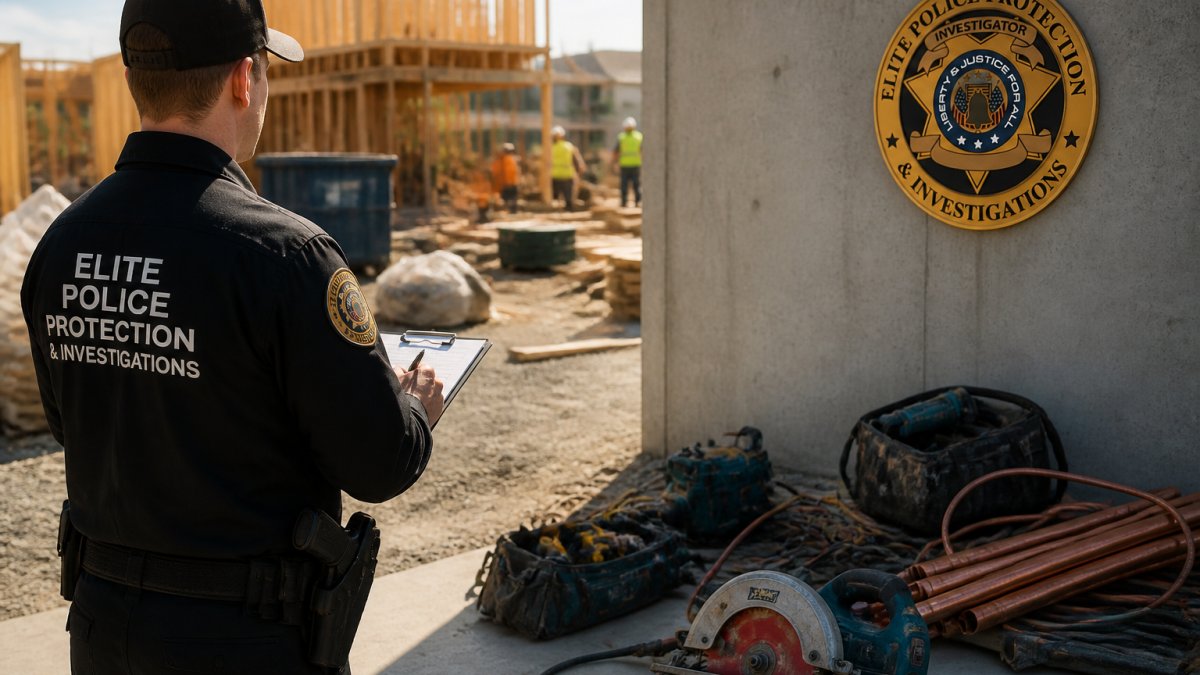
 how-to
How to Prevent Construction Site Theft: 7 Proven Steps
Table of Contents
- Start With a Construction Site Security Plan, Not Guesswork
- What Construction Equipment Theft Statistics Reveal About Your Risk
- Step 1: Secure the Perimeter With Fencing, Walls, and Vehicle Barriers
- Step 2: Control Site Access and Screen Every Visitor
- Step 3: Light the Site and Add Cameras, Alarms, and Remote Monitoring
- Step 4: Lock Up Tools, Equipment, and Storage Units
- Step 5: Mark Equipment, Track Serial Numbers, and Keep Purchase Records
- Step 6: Add Off-Duty Police for Construction Security
- Step 7: Train Your Crew and Report Every Incident
- Frequently Asked Questions
Last Updated: October 6, 2026
Start With a Construction Site Security Plan, Not Guesswork
A construction site security plan is a written strategy that maps your vulnerabilities, sets access rules, and assigns responsibility for protecting tools, materials, and equipment. Here is the core truth most crews learn too late: thieves study your site before you ever notice them. Below are seven proven steps to prevent construction site theft, from the first site walk to off-duty police coverage, all aimed at stopping construction site theft before it starts.
Walk the Site and Map Your Vulnerabilities
Walk the site the way a thief would. Look for easy entry points, dark corners, and unlocked trailers.
Ask yourself:
- Where could someone climb in without being seen?
- Which gates stay open during the day and never get locked at night?
- Are tools left out overnight near the fence line?
Write down every weak spot. This list becomes your priority order. Fix the easiest targets first.
Build the Plan Around Your Project Phases
Your risk changes as the project moves. A site with only dirt and a fence is a different problem than one stacked with copper wire and heavy machinery.
Plan in phases:
- Site prep: Focus on fencing and access control.
- Structure build: Add lighting, cameras, and locked storage.
- Finishing: Tighten inventory tracking and visitor logs.
Update the plan at each phase. A security plan from month one will not fit month nine.
What Construction Equipment Theft Statistics Reveal About Your Risk
Construction equipment theft statistics show a consistent pattern: equipment is targeted because it is expensive, portable, and easy to resell. National databases track thousands of stolen machines each year, and recovery rates stay low because serial numbers often go unrecorded. The National Insurance Crime Bureau tracks heavy equipment theft trends and consistently reports that most stolen machines are never recovered.
That single fact should shape your whole approach. If recovery is unlikely, prevention is everything.
Step 1: Secure the Perimeter With Fencing, Walls, and Vehicle Barriers
Perimeter security is your first layer of defense. A determined thief will get through almost anything, but most look for the easiest target on the block. Make yours harder than the site down the street.
Start with these basics:
- Install a full-perimeter fence at least 8 feet tall.
- Add vehicle barriers at driveways and loading zones.
- Use gates that close and lock automatically.
Chain-link fencing with a top guard rail stops casual thieves; concrete barriers stop vehicles from ramming through. Together they buy time, and time makes a thief move on.
Step 2: Control Site Access and Screen Every Visitor
Access control means only approved people get in, and you know who is on site at all times. Unauthorized entry is the root of most theft incidents.
Badge, Log, and Escort
Set up a simple system:
- Issue badges to every worker and subcontractor.
- Keep a sign-in log at every gate.
- Require escorts for visitors and delivery drivers.
A clipboard works for small sites. Larger sites benefit from electronic access control with key cards.
Make Unauthorized Entry Hard, Not Just Discouraged
Signs alone do not stop thieves, physical barriers, locked gates, and a visible guard presence do. With no one watching the gate, anyone can walk in wearing a hard hat and blend in.
Step 3: Light the Site and Add Cameras, Alarms, and Remote Monitoring
Thieves prefer darkness and silence. Lighting and visibility remove both.
Cover these areas first:
- Gates and entry points
- Equipment storage yards
- Fuel tanks and generator locations
Add night-vision cameras at each gate and storage area. Motion-activated alarms and remote monitoring let you check the site from anywhere. A guard monitoring system with a client portal gives real-time access to patrol data and reports.
Step 4: Lock Up Tools, Equipment, and Storage Units
Locking up is the simplest, cheapest step, and the one crews skip most often.
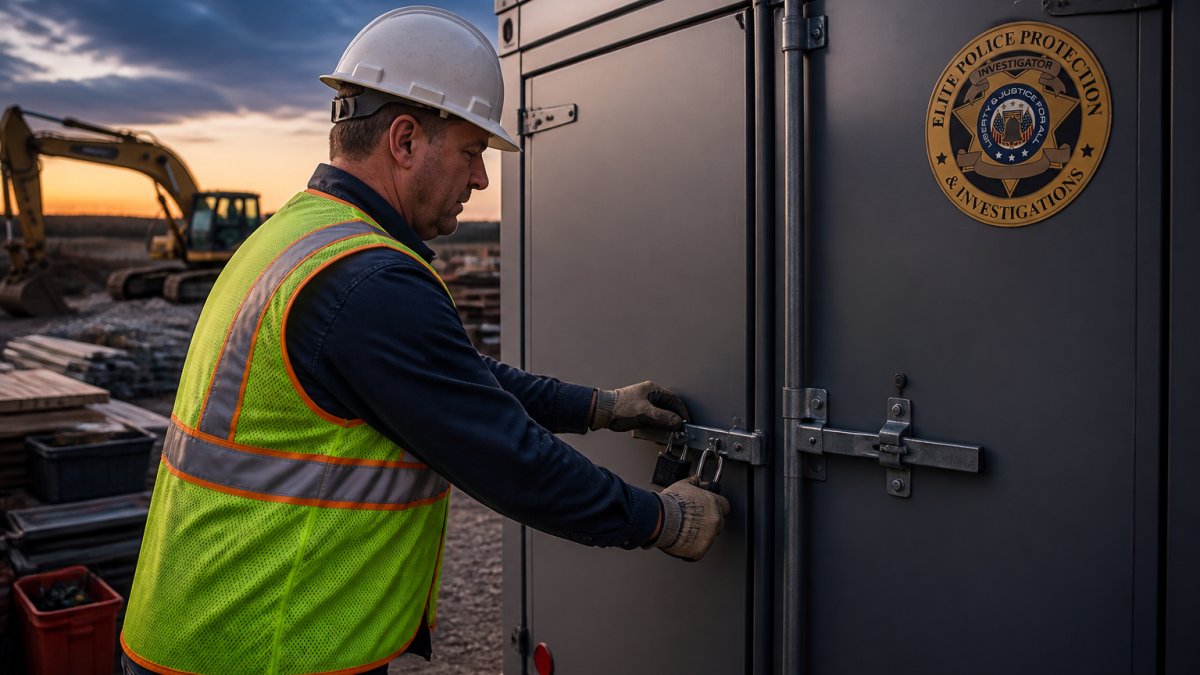
Follow these rules:
- Lock tools in a steel storage container every night.
- Chain and lock heavy machinery at the tracks or wheels.
- Lock building entrances and secure all storage units.
A mobile storage unit with a hardened lock defeats most opportunistic theft. It will not stop a professional crew with a torch, but it removes you from the easy-target list.
Step 5: Mark Equipment, Track Serial Numbers, and Keep Purchase Records
Equipment identification makes recovery and insurance claims possible. Mark it, record it, and store the records off site.
- Engrave or stamp tools with a company ID.
- Photograph every machine and its serial number.
- Keep purchase records and ownership records in a cloud folder.
Asset Tracking and GPS on High-Value Machines
For excavators, generators, and trailers, GPS tracking is worth the cost. Asset tracking shows where a machine is in real time; if it moves at 2 a.m., you get an alert, often the difference between recovery and a total loss.
Step 6: Add Off-Duty Police for Construction Security
Off-duty police for construction security give you a visible, trained deterrent that most thieves will not test. Off-duty officers arrive with real authority, real training, and the ability to make arrests on the spot.
Here is what off-duty officers bring that a standard guard cannot:
- Immediate law enforcement authority and arrest powers
- Conflict resolution and situational awareness
- Faster coordination with local police
Elite Police Protection staffs sites with off-duty, retired, and prior law enforcement professionals, available 24/7. Our officers are armed or unarmed, uniformed or business-attired, depending on your site's needs.
Choosing Between Guards, Cameras, Lighting, Tracking, and Barriers
No single measure wins. Spend where the marginal dollar removes the most risk. Use this framework to prioritize.
- Physical barriers and fencing first. They are the cheapest per square foot of coverage and work every hour without staffing. A locked gate and a full-perimeter fence stop the casual thief before any technology matters.
- Lighting next. Motion-activated lighting is inexpensive, needs almost no maintenance, and removes the cover thieves rely on. It pairs with everything else.
- Cameras and remote monitoring. Cameras document and deter, but they do not physically stop anyone. Their real value is evidence and remote verification. Watch for connectivity dead zones, power availability, and false alarms from weather or wildlife, a camera that trips constantly gets ignored.
A Simple Way to Weigh Cost Against Risk
You do not need exact dollar figures to make a sound call. Estimate the replacement value of what sits on site overnight, multiply by a realistic chance of loss, and compare that exposure to the annual cost of each measure. A yard holding $200,000 in equipment faces very different math than a site holding $20,000 in hand tools.
Measure Whether It Is Working
A security program you never evaluate is just spending. Track a few numbers month over month: incidents and attempted break-ins, total dollar value lost, recovery rate on stolen items, and average time from incident to police report. If incidents fall and recovery rises, your mix is working. If losses hold steady, shift budget toward the failing layer, usually access control or overnight coverage.
Step 7: Train Your Crew and Report Every Incident
Your workers are your best sensors, and the hours right after a theft decide whether you recover equipment or eat the loss. Train them to spot and report suspicious activity, then give them a written response procedure so nobody improvises at 6 a.m.
Run a short toolbox talk each month covering:
- How to challenge someone without a badge
- Where to report suspicious vehicles and when to call 911 versus a supervisor
- What to do if they find a lock cut, a gate open, or a trailer missing
The First 24 Hours After a Theft: A Step-by-Step Response
Most crews lose more money to a botched response than to the theft itself. Work this sequence in order.
- Stop and secure. Do not let the crew "tidy up" the area. Lock down the site, post someone at the breach point, and keep everyone else out.
- Call law enforcement and file a report the same day. A police report number is the backbone of every insurance claim. Ask the responding officer how to obtain the report and whether the item will be entered into the FBI's National Crime Information Center (NCIC) database, which is the system law enforcement uses to flag stolen property nationwide.
- Document the scene before anything moves. Photograph and video the point of entry, cut locks or chains, tire tracks, tool marks, and any items left behind. Note the date, time, weather, and who discovered the loss. Preserve physical evidence, do not handle tools or gloves a suspect may have touched.
- Pull your records. Have serial numbers, photographs, purchase receipts, and ownership documents ready. This is why Step 5 exists; without a serial number, an item usually cannot be entered into NCIC and is far harder to recover or insure.
- Notify your insurer promptly. Most commercial property policies require prompt notice of loss. Report the claim, provide the police report number, and submit your inventory and proof of ownership. Ask what the deductible is and whether the loss exceeds it before deciding how hard to pursue the claim.
- Check your cameras and access logs. Export footage before it overwrites, many systems retain only 7 to 30 days. Cross-reference the sign-in log and badge records against the time window.
- Alert your network. Notify neighboring sites, your equipment dealer, and any tracking provider. If a machine has GPS, report the last known location to police immediately.
- Debrief and patch the hole. Within a week, review what failed and update the security plan. Every incident should close one vulnerability.
Keep a Theft and Incident Log
Track every incident, even attempted break-ins and cut locks, in one log with the date, time, location, items involved, estimated value, police report number, and outcome. Over a few months, that log shows which hours, gates, and asset types are targeted, exactly the data you need to justify spending on guards, cameras, or tracking. It also becomes your evidence file if a claim or dispute arises.
| Problem | Fix | Why It Works |
|---|---|---|
| Open gates at night | Auto-locking gates | Removes easy entry |
| Unmarked tools | Engrave and photograph | Enables recovery and NCIC entry |
| Dark storage yard | Motion lights and cameras | Removes cover |
| No visitor log | Sign-in and escort policy | Blocks unauthorized entry |
| Scene cleaned up after theft | Written response procedure | Preserves evidence and protects the claim |
| Slow incident reporting | Same-day police report | Protects insurance claim and recovery odds |
Frequently Asked Questions
What is the most commonly stolen construction equipment?
Compact equipment that one or two people can move quickly tops most theft reports: skid steers, mini excavators, generators, air compressors, welders, and power tools. Trailers loaded with tools are also frequent targets because they can be hooked up and driven off in minutes. Because these items are easy to resell, they need the strongest layers of protection: locked storage, equipment identification such as serial numbers and markings, and GPS tracking on the highest-value machines.
How does a construction site security plan reduce insurance premiums?
Insurers price construction risk on documented controls, not promises. A written construction site security plan that shows perimeter fencing, access control, lighting, cameras, and locked storage gives your agent evidence that losses are less likely. Some carriers offer credits or lower deductibles for verified measures, and a clean incident record built on those controls strengthens your position at renewal. Ask your broker which specific security measures your policy rewards before you invest.
How can off-duty law enforcement improve construction site security?
Off-duty police for construction security bring sworn authority, training in observation and de-escalation, and the ability to make arrests and write reports that hold up with local law enforcement. They deter trespassers who recognize a professional presence, document incidents properly for insurance claims, and can coordinate directly with the department handling your case. For high-value sites or overnight coverage, that combination often outperforms a standard guard post.
What are the best practices for securing high-value tools overnight?
Move tools into a locked gang box or mobile storage unit, chain and lock larger equipment together, and park heavy machinery so it blocks access to the exit. Leave exterior lighting on and confirm cameras and alarms are armed. Record serial numbers and take photos of the stored items so a theft report is accurate. Rotate storage locations occasionally and never leave keys on site. These steps turn a quick overnight grab into a risky, time-consuming job.