
 ultimate-guide
Why Professional Security Is Necessary for Your Business
Table of Contents
- The Real Cost of Unprotected Assets and Unmanaged Risk
- Why Professional Security Is Necessary for Deterrence and Crime Prevention
- Protecting Physical Assets, People, and Operational Continuity
- Legal Liability and Compliance: What Business Owners Need to Know
- How to Choose a Security Guard Company That Delivers
- Hiring Off-Duty Police for Security: Advantages and Considerations
- Your Security Agency Vetting Checklist
- Conclusion
- Frequently Asked Questions
Last Updated: September 16, 2026
The Real Cost of Unprotected Assets and Unmanaged Risk
A single unguarded entrance, a neglected camera blind spot, a loading dock left open after hours. These gaps rarely announce themselves until an incident forces a reckoning. This guide from Elite Police Protection explains why professional security is necessary for any business with physical assets, employees, or regulatory obligations.
Why Professional Security Is Necessary for Deterrence and Crime Prevention
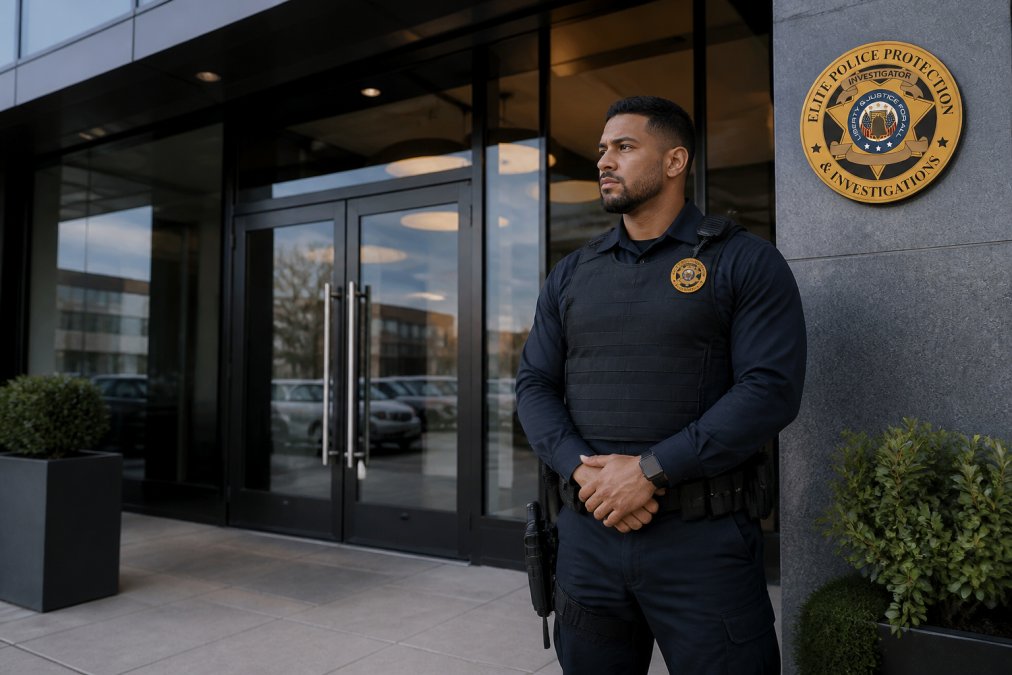
Visible, trained security personnel deter crime before it starts. A uniformed officer at an entrance changes how a would-be offender assesses risk: an alert, professional guard signals the location is monitored, documented, and difficult to target.
Protecting Physical Assets, People, and Operational Continuity
Asset protection covers three fronts: physical property, the people on site, and the business processes that depend on both. A warehouse losing inventory to theft faces more than replacement cost, delayed shipments, unhappy clients, and weeks of disrupted operations.
Professional security addresses each front with different tools:
- Physical assets: access control, surveillance, and loss prevention patrols reduce shrinkage and vandalism
- People: trained officers provide emergency response, conflict resolution, and workplace safety oversight
- Operational continuity: documented incident reporting and monitoring keep operations running through disruptions
The Cost of Doing Nothing: A Simple ROI Framework
Most security marketing sells fear. A better approach is arithmetic. The National Retail Federation's National Retail Security Survey has consistently found that shrink, a category that includes external theft, internal theft, and administrative error, represents a meaningful share of retail revenue, and the Federal Bureau of Investigation's Uniform Crime Reporting program publishes property crime rates by jurisdiction that you can use to sanity-check your own exposure.
Use this four-step framework:
- Estimate annual loss exposure. Multiply your asset value at risk by a realistic incident probability for your area and industry. A 200-unit apartment community with recurring package theft, for example, may lose a predictable monthly amount in reimbursements and turnover.
- Add the indirect costs. Insurance deductibles, incident-response overtime, staff turnover, tenant churn, and reputational damage routinely exceed the direct loss. One workplace violence incident can trigger workers' compensation claims, litigation, and months of reduced productivity.
- Compare against the fully loaded cost of coverage. A security program is not just hourly guard wages. It is wages plus payroll taxes, insurance, supervision, monitoring technology, and management overhead. Ask any provider for the all-in monthly figure, not the hourly rate.
- Calculate the break-even incident rate. Divide the annual program cost by your per-incident loss estimate. If coverage costs $60,000 per year and a single serious incident costs $30,000 in direct and indirect losses, the program pays for itself at two prevented incidents per year. Most facilities with a documented vulnerability window exceed that threshold.
Where the Numbers Actually Come From
Two public sources make this framework defensible without inventing statistics. First, your own incident log, even a year of informal reports gives you a baseline. Second, your insurance carrier: ask your commercial property or general liability underwriter what loss history they see for facilities like yours. Carriers track this data closely and often share aggregate patterns at renewal, frequently surfacing risks you had not priced in.
Legal Liability and Compliance: What Business Owners Need to Know
Business owners carry legal exposure when security is inadequate, and that exposure is often financial. Premises liability, workplace safety obligations, and industry-specific compliance all intersect with how a property is protected. The mechanics matter more than the warning.
Negligent Security: The Doctrine That Drives Most Claims
In most jurisdictions, a property owner owes a duty of reasonable care to people lawfully on the premises. When a foreseeable criminal act injures someone, plaintiffs commonly pursue a negligent security claim, arguing the owner knew or should have known about the risk and failed to act. Foreseeability is the battleground: prior incidents on or near the property, area crime statistics, and the nature of the business all feed into whether a court treats an attack as foreseeable.
How Professional Security Affects Insurance
Insurance is where legal exposure and operating cost meet. Commercial property and general liability underwriters price risk, and documented security controls are inputs they can credit. A monitored alarm system, access control, professional guard coverage, and written incident reporting all reduce the perceived probability and severity of a loss. Many business owners find a portion of program cost offset by premium reductions, higher acceptable deductibles, or improved renewal terms.
The mechanics are straightforward. During underwriting, provide:
- A current security risk assessment
- A description of physical controls (access control, cameras, lighting, patrols)
- Your incident-reporting and escalation procedures
- Proof of guard firm licensing and liability insurance
Certificates of Insurance and Contractual Risk Transfer
If you hire a security firm, you are also managing contractual risk. Require a certificate of insurance showing general liability and, where applicable, professional liability and workers' compensation coverage. Confirm limits in writing and check whether your business is named as an additional insured. If a guard injures someone on your property, the claim can name both the guard firm and you as property owner; a contract with indemnification language and verified insurance shifts much of that exposure to the provider.
Compliance Is Industry-Specific
Beyond general premises liability, specific sectors carry their own security obligations. Healthcare facilities answer to patient privacy and safety rules. Financial institutions operate under federal and state physical security requirements. Cannabis, alcohol, and gaming operators face licensing conditions including security staffing and surveillance standards. Landlords in some jurisdictions must meet crime-prevention-through-environmental-design expectations to preserve certain claims or permits. The common thread is documentation: regulators and courts want to see that you assessed the risk and acted on it.
How to Choose a Security Guard Company That Delivers
Choosing a security guard company comes down to three things: verification of personnel, transparency of reporting, and proof of insurance. Price alone tells you little about whether guards will show up, whether they are trained, or whether the firm will stand behind them when something goes wrong.
- Confirm every officer is licensed and background-checked
- Ask how the firm monitors guard attendance and patrol completion
- Review a sample incident report and client portal
- Verify liability insurance limits in writing
- Request references from similar facilities
Hiring Off-Duty Police for Security: Advantages and Considerations
Hiring off-duty police for security brings situational awareness and conflict resolution that standard guard services often cannot match. Off-duty, retired, and prior law enforcement professionals arrive with real field experience: they read crowds, de-escalate tense situations, and understand the legal boundaries of their authority.
| Security Option | Best For | Key Advantage | Watch Out For |
|---|---|---|---|
| Unarmed guards | Retail, offices, communities | Visible deterrence, lower cost | Limited response to violent incidents |
| Armed officers | High-risk, high-value sites | Stronger deterrent, faster response | Higher cost, stricter training needs |
| Off-duty police | Bars, events, disputes | Real field experience, de-escalation | Scheduling constraints, higher rates |
| K9 teams | Warehouses, large perimeters | Detection and patrol coverage | Not suited to crowded indoor spaces |
Your Security Agency Vetting Checklist
A security agency vetting checklist turns a vague evaluation into a repeatable process. Use this before renewing or signing any contract:
- Licensing and registration verified for the firm and every assigned officer
- Background check process documented in writing
- Training standards and certifications confirmed
- Liability insurance limits reviewed and confirmed
- Guard monitoring and attendance tracking explained
- Client portal or reporting access demonstrated
- Sample incident report reviewed for detail and timeliness
- References contacted from facilities similar to yours
- Escalation and emergency response procedures documented
- Contract terms on no-shows and coverage gaps reviewed
Conclusion
The challenge is not deciding whether your business needs protection. It is finding a provider that shows up, documents its work, and understands the legal weight of the job. Elite Police Protection staffs off-duty, retired, and prior law enforcement professionals, backs them with an advanced guard monitoring system and client portal access, and deploys K9 teams and armed or unarmed officers tailored to each facility.
Frequently Asked Questions
What are the primary benefits of hiring professional security guards?
Professional security guards provide visible deterrence, continuous monitoring, and rapid incident response. They protect physical assets, reduce vandalism and trespassing, and maintain workplace order. Trained guards also handle emergency situations, document incidents for liability purposes, and free up your staff to focus on core operations. The combination of deterrence, response capability, and documented protocols creates a safer environment for employees, customers, and visitors.
What is the difference between off-duty law enforcement and standard security guards?
Off-duty law enforcement officers carry full police powers, including arrest authority, and have completed state-certified training academies. Standard security guards typically have limited arrest powers and may complete only basic state-mandated training. Off-duty officers bring investigative experience, courtroom familiarity, and advanced conflict resolution skills. For high-risk environments or situations requiring legal authority, hiring off-duty police for security offers capabilities that standard guards cannot match.
What should businesses look for when hiring a security agency?
Start with licensing and insurance verification. Confirm the agency carries general liability and workers compensation coverage. Ask about training standards, background check procedures, and guard supervision systems. Request client references and review incident reporting protocols. A thorough security agency vetting checklist should also include turnover rates, response procedures for emergencies, and whether the company provides a dedicated account manager. These factors separate reliable firms from those that simply fill shifts.
Can professional security services help reduce insurance premiums?
Insurance carriers often offer reduced premiums for properties with documented security measures, including professional guard services, access control, and surveillance systems. The specific savings depend on your carrier, policy type, and risk profile. Beyond potential premium reductions, professional security reduces the likelihood of claims by preventing incidents before they occur. Documented patrol logs, incident reports, and security audits provide evidence of due diligence that carriers recognize during underwriting reviews.