
 ultimate-guide
Liability Insurance for Security Companies: 2026 Guide
Table of Contents
- Why Liability Insurance for Security Companies Is Non-Negotiable
- General Liability Insurance Requirements for Security Firms
- Professional Liability Insurance for Security Guards: When General Liability Is Not Enough
- Security Guard Insurance Cost: What Drives Your Premium
- Specialized Coverage for Armed, K-9, and High-Risk Operations
- Cyber Liability and Other Gaps Most Security Firms Miss
- How the Claims Process Works When Something Goes Wrong
- Frequently Asked Questions
Last Updated: September 13, 2026
Why Liability Insurance for Security Companies Is Non-Negotiable
Liability insurance for security companies keeps a firm solvent when a guard's actions, or inaction, lead to a third-party claim. It covers legal defense costs, settlements, and judgments tied to bodily injury, property damage, and personal and advertising injury.
Your officers face confrontational, high-risk operations every shift, detaining people, patrolling dark parking lots, responding to disturbances. Any of those moments can turn into a lawsuit naming your firm as the defendant.
What Happens Without Coverage
One serious incident can end a security business. A negligence claim drags through the courts for months or years, and your firm pays legal defense costs whether or not it did anything wrong, then a settlement or judgment lands on top.
Beyond the money, most clients will not sign a contract without a certificate of insurance. Property management companies, construction developers, and healthcare facilities all require proof of coverage before your first guard walks the site.
General Liability Insurance Requirements for Security Firms
General liability insurance requirements for security firms are set by two forces: state licensing mandates and client contracts. General liability (GL) covers third-party claims of bodily injury and property damage, the baseline policy nearly every regulator and client expects.
The specifics vary widely by state. Your state's licensing authority sets the minimum, and your clients often demand far more.
State Licensing Mandates: A Working Framework
Most states that license private security firms require proof of general liability coverage before issuing or renewing a license. Those requirements fall into a few patterns:
- Flat firm-level minimums. A single limit applies to the company regardless of headcount, common in states with smaller private security industries.
- Per-guard or payroll-based minimums. The required limit scales with the number of officers you employ or your annual guard payroll.
- Tiered requirements by service type. Armed officers, K-9 units, and private investigators often face separate, higher limits than unarmed guard services.
- Bond-plus-insurance combinations. Some licensing authorities require a surety bond in addition to liability coverage, and the two are not interchangeable.
Because the numbers change with each legislative session, pull your state's current statute or administrative rule directly. The licensing board that issues your guard company license is the authoritative source, and most publish their insurance minimums in the application packet. Confirm the figure in writing before you bind a policy.
Why the State Minimum Is Not Your Real Target
State minimums are designed to keep you legal, not to protect you from a real claim. A minimum limit can vanish in a single hospital visit or property damage dispute, covering only a fraction of what a serious negligence claim costs.
A more useful approach is to treat the state minimum as the floor and your largest client contract as the ceiling. If your biggest client requires a $1 million per-occurrence limit, that is your real operating minimum, not the state figure.
Contractual Requirements from Clients
Clients routinely require higher limits than the state does. Commercial property owners, retail centers, and general contractors often ask for a certificate of insurance naming them as an additional insured, extending your policy's protection to them for your operations on their premises.
Common contractual asks include:
- A specific minimum per-occurrence and aggregate limit
- Additional insured status for the client and its property manager
- A waiver of subrogation
- Notice of cancellation if your policy lapses
- Proof of workers' compensation and auto coverage
- A primary and non-contributory endorsement, which puts your policy first in line before the client's own coverage
Miss any of these and you can lose a contract at renewal, even with a spotless service record. The certificate of insurance is a contract deliverable, and clients audit it.
How to Verify Your Requirements Before You Buy
A short verification sequence saves money and prevents licensing delays:
- Pull your state licensing board's current insurance minimum from the official application or rule.
- Collect the insurance requirements from your top three client contracts.
- Compare the two and set your target limits to the higher figure.
- Ask your carrier to confirm additional insured, waiver of subrogation, and primary and non-contributory endorsements in writing.
- Re-verify at every renewal, because both state rules and client contracts change.
Workers' Compensation and Auto: The Requirements Clients Bundle In
General liability is rarely the only proof a client wants. Workers' compensation coverage is mandatory in nearly every state once you have employees, and clients routinely require a certificate showing it. Commercial auto coverage is a separate requirement when your guards drive company vehicles or patrol cars; if they use their own vehicles, hired and non-owned auto coverage fills the gap. Treat the full certificate package, not just GL, as the deliverable.
Professional Liability Insurance for Security Guards: When General Liability Is Not Enough
Professional liability insurance for security guards, also called errors and omissions (E&O), covers claims that your services failed to meet a professional standard. General liability handles a slip on a wet floor; professional liability handles allegations that your guard failed to act, acted negligently, or gave bad advice that led to a loss.
This distinction matters because GL policies typically exclude claims arising from the professional nature of your service. If a client sues you for failing to prevent a theft your patrol was supposed to deter, that's an E&O claim, not a GL claim.
Claims-Made vs. Occurrence Policies
Claims-made policies cover claims filed while the policy is active, regardless of when the incident happened. Occurrence policies cover incidents that happen during the policy period, no matter when the claim is filed.
For security firms, the difference is not academic. If you switch to a claims-made policy and later let it lapse, you lose coverage for past incidents unless you buy tail coverage. Occurrence policies avoid that trap but usually cost more up front.
Security Guard Insurance Cost: What Drives Your Premium
Security guard insurance cost depends on your risk profile, not a flat rate. Underwriters price around what could go wrong, how often, and how much it would cost, two firms with the same number of guards can pay very different premiums.
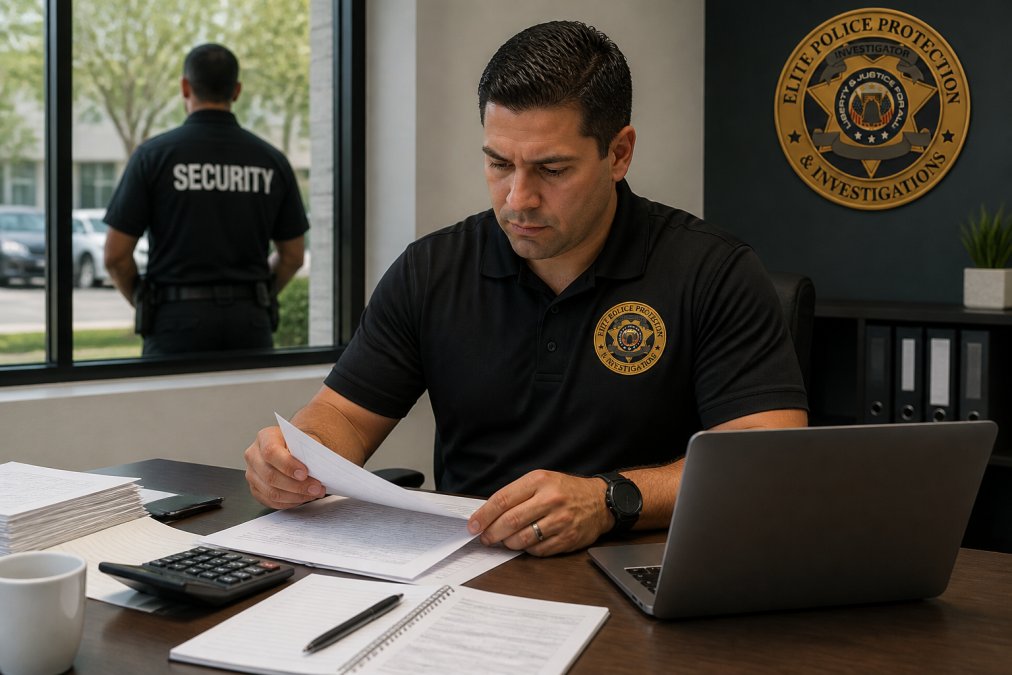
The biggest drivers include payroll size, armed versus unarmed operations, client industries, claims history, and coverage limits. Firms serving bars, nightclubs, and behavioral health facilities typically pay more than those guarding warehouses, because claim frequency and severity are higher.
Because pricing depends on so many variables, the only reliable number is a quote built around your actual operations.
How to Lower Your Premium Without Cutting Coverage
You reduce premiums by lowering risk, not by dropping limits. Cutting coverage to save money is how firms end up exposed on the claim that matters.
Practical steps that help:
- Raise deductibles on lines where you can absorb a loss
- Document training, supervision, and incident-reporting procedures
- Adopt a guard monitoring system with verifiable patrol records
- Keep a clean claims history by resolving small issues early
- Bundle general liability, professional liability, and auto where it makes sense
- Shop the market every few years as your risk profile improves
Specialized Coverage for Armed, K-9, and High-Risk Operations
Standard policies often exclude the very operations that define a specialized firm. Armed officers, K-9 units, and high-risk assignments like bars and behavioral health facilities need endorsements or separate policies to be covered at all.
Armed operations raise the stakes on bodily injury claims, so carriers may require assault and battery coverage, frequently excluded from baseline GL policies. K-9 teams can trigger animal-related exclusions, and executive protection and private investigations carry their own professional liability exposure. If you operate in these niches, confirm in writing that your policy responds.
Cyber Liability and Other Gaps Most Security Firms Miss
Cyber liability is the gap that catches modern security firms off guard. You collect client data, guard schedules, access codes, incident reports, and sometimes video footage. A breach creates notification costs, regulatory exposure, and third-party claims that no general liability policy touches.
Beyond cyber, several common gaps deserve a hard look:
- Hired and non-owned auto: covers liability when guards drive their own cars on the job, a frequent exposure for patrol and response work.
- Umbrella or excess liability: sits above your primary limits for catastrophic claims.
- Business interruption: replaces lost income if an incident or investigation shuts down operations.
- Commercial property insurance: protects your own equipment, vehicles, and office.
- Business owner policy (BOP): bundles property and liability for smaller firms.
A specialized security firm should treat this list as a checklist, not a menu. Each gap is a place where a single incident can move from covered to uncovered.
How the Claims Process Works When Something Goes Wrong
The claims process starts the moment an incident happens, and the first hour matters more than most owners realize. What your guard documents, preserves, and reports in that window shapes how the entire claim unfolds.
Step 1: Secure the Scene and the People
Address injuries first, then preserve evidence: separate witnesses before they compare stories, photograph the scene before anything moves, and identify anyone who saw the incident. If force was used, the officer's account should be written independently before any group debrief, because coordinated accounts are the first thing opposing counsel attacks.
Step 2: Document Immediately and Completely
The incident report is the single most important document in most security claims. A useful report includes:
- Date, time, and exact location of the incident
- Names and contact information for every officer, witness, and involved party
- A chronological narrative in plain language, with no conclusions about fault
- Description of any force used, and why it was necessary
- Photographs and video references, with timestamps
- Names of any responding law enforcement officers and report numbers
Preserve footage before it overwrites. Many camera systems retain only a fixed window of recording, and once it cycles out, it is gone. Pull and store the relevant clip the same day.
Step 3: Notify Your Carrier Promptly
Late notice is one of the most common reasons a claim gets denied. Most policies require notice "promptly" or within a defined period, and the definition varies by carrier and state. Report the incident to your carrier or broker as soon as you have the basic facts, even if you are not yet sure a claim will be filed. An incident report is not an admission of liability; it is notice.
Step 4: Cooperate with the Investigation
Your insurer assigns an adjuster and, if a lawsuit follows, defense counsel. Cooperate fully: produce the incident report, footage, training records for the officers involved, and your written post orders for the site. Insurers and defense counsel look for evidence that your officers followed your own procedures; if they did not, that gap becomes the center of the case.
Step 5: Track the Claim to Resolution
Stay engaged through settlement or judgment. The outcome affects your future premiums, your ability to renew coverage, and in some states your license standing. Keep a written record of every communication with the carrier and counsel.
What Happens to Your Premium After a Claim
A paid claim typically follows you for several years. Most carriers look at a three-to-five-year loss history when pricing renewal, and a single large claim can move your premium meaningfully or push a carrier to non-renew. Resolving small issues early and documenting risk controls matters: a clean loss run is a pricing asset.
How to Prepare Before a Claim Ever Happens
A short pre-incident checklist pays for itself:
- Write clear post orders for every site and train officers on them
- Standardize your incident report form and require it for every use-of-force event
- Set a footage retention policy long enough to cover the notice period in your policy
- Designate one person in your firm to handle carrier notice and documentation
- Run a tabletop drill once a year with your supervisors
This is where working with a firm that understands the legal side pays off. Clients get real-time access to approved reports and patrol data through a client portal.
Frequently Asked Questions
How much is liability insurance for a security company?
Security guard insurance cost depends on several factors: your annual revenue, number of employees, service type (armed vs. unarmed), claims history, and coverage limits. A small unarmed firm may pay less than a larger armed operation with K-9 units. Most insurers price policies based on payroll and risk classification. Request quotes from multiple carriers and compare coverage limits, deductibles, and exclusions before deciding. The cheapest policy is not always the best if it leaves gaps in protection.
What is the difference between general liability and professional liability for security services?
General liability covers third-party bodily injury and property damage, such as a client slipping on a wet floor during a patrol. Professional liability insurance for security guards, also called errors and omissions, covers claims that your services failed to meet the expected standard, like failing to detect a breach or providing inadequate protection. Most security firms need both policies because they address different risk types. General liability alone will not cover negligence claims related to the professional advice or judgment your guards provide.
Does general liability insurance cover security guard negligence?
General liability typically covers bodily injury and property damage caused by your operations, but it may not cover all negligence claims. If a guard fails to follow protocol and a client suffers a loss, that claim often falls under professional liability or errors and omissions coverage. Review your policy language carefully. Some general liability policies exclude claims arising from failure to provide a service. A certificate of insurance showing both general and professional liability gives clients confidence that you are properly protected.
What insurance do I need for my security company?
Most security firms need general liability, professional liability, workers compensation (required in nearly every state once you have employees), and commercial auto for patrol vehicles. If you provide armed services, add assault and battery coverage. Cyber liability is increasingly important for firms storing client data. Commercial property insurance protects your office equipment. An umbrella policy adds an extra layer of protection above your primary limits. Requirements vary by state and client contracts, so verify what applies to your operation.