
 listicle
Best Private Security Guard Companies: 2026 Guide
Table of Contents
- Quick Comparison: Top Private Security Guard Companies
- The 8 Best Private Security Guard Companies Reviewed
- 1. Elite Police Protection: Law Enforcement-Grade Personnel
- 2. Securitas USA: Technology-Integrated Guarding at Scale
- 3. GardaWorld: Largest Private Security Network
- 4. Pinkerton: Risk Management and Investigations Heritage
- 5. Walden Security: Quality-Certified Contract Security
- 6. Brosnan Risk Consultants: Threat Intelligence Plus Guarding
- 7. G4S Secure Solutions: Specialized Officers for High-Risk Sectors
- 8. Andrews International: Cleared Officers for Government Contracts
- Armed vs Unarmed Security Guards: Which Do You Need?
- How to Hire Private Security Guards Without Getting Burned
- Cost of Private Security Services: What Shapes the Price
- What to Include in a Security Guard Service Contract Template
- Conclusion
Last Updated: August 22, 2026
Choosing the wrong private security guard company creates liability exposure, coverage gaps, and incidents that end up in legal filings. At Elite Police Protection, we've seen what separates genuinely effective security providers from firms that simply put bodies in uniforms and call it a day. This guide assesses private security guard companies, plus frameworks to evaluate any provider before signing a contract.
Quick Picks:
- Best Overall: Elite Police Protection, law enforcement-grade personnel with real-time client monitoring
- Best for Technology Integration: Securitas USA, blends physical guarding with remote managed security
- Best for Scale: GardaWorld, largest privately owned security network in the world
- Best for Risk Intelligence: Brosnan Risk Consultants, threat intelligence paired with traditional guarding
Quick Comparison: Top Private Security Guard Companies
| Company | Best For | Armed/Unarmed | Technology | Specialty |
|---|---|---|---|---|
| Elite Police Protection | Law enforcement-grade guarding | Both | Client portal + monitoring | K9, executive protection, investigations |
| Securitas USA | Large-scale integrated security | Both | Operations Centre + remote monitoring | Corporate, industrial, retail |
| GardaWorld | Broad national coverage | Both | Mobile patrols | Multi-sector contract security |
| Pinkerton | Corporate risk management | Both | Intelligence platforms | Investigations, crisis management |
| Walden Security | Quality-certified contract security | Both | Mobile surveillance trailers | Government, commercial |
| Brosnan Risk Consultants | Threat intelligence + guarding | Both | Remote monitoring, IaaS | Retail, banking, property management |
| G4S Secure Solutions | High-risk sectors | Both | Systems integration | Government, energy, financial |
| Andrews International | Government cleared contracts | Both | Risk management systems | DoD, national landmarks |
The 8 Best Private Security Guard Companies Reviewed
The firms below were evaluated on personnel quality, service breadth, technology integration, licensing standards, and suitability across property management, healthcare, retail, construction, and warehousing.
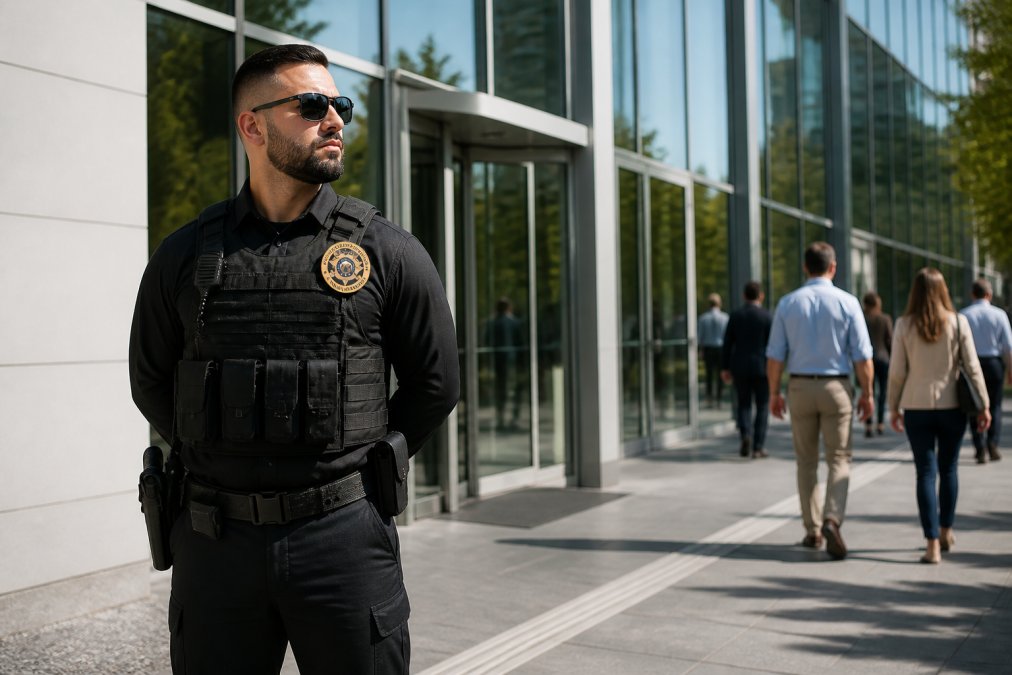
1. Elite Police Protection: Law Enforcement-Grade Personnel
Elite Police Protection staffs off-duty, retired, and prior law enforcement professionals, officers who bring situational awareness, conflict resolution training, and legal authority that standard private security guards cannot replicate.
What makes it stand out:
- Uniformed or business-attire armed and unarmed officers available 24/7
- K9 teams deployable across diverse environments
- Executive protection for high-profile individuals and corporate principals
- Advanced guard monitoring system with client portal for real-time patrol data and incident reports
- Private investigations with legally sound, court-admissible methodology
The client portal is a genuine differentiator. Property managers overseeing multiple locations can review approved reports and patrol activity without making phone calls, addressing the most common complaint in the industry: clients never knowing whether their guards actually showed up.
Best for: Corporations, government agencies, healthcare facilities, apartment communities, retail centers, and organizations where guard quality and accountability are non-negotiable.
2. Securitas USA: Technology-Integrated Guarding at Scale
Securitas USA operates more than 400 branch locations nationwide, blending on-site uniformed officers with remote managed security services through a dedicated Securitas Operations Centre. Electronic security services, including video surveillance and alarm integration, give clients layered perimeter security rather than relying solely on physical presence.
Pros: Nationwide infrastructure, 24/7 monitoring, strong technology integration Cons: Breadth of services can overwhelm smaller clients; pricing requires direct negotiation
3. GardaWorld: Largest Private Security Network
GardaWorld is the world's largest privately owned integrated security and risk company. That scale translates to extensive branch networks with local operational teams rather than remote dispatch, a meaningful difference for patrol services and rapid response. Mobile patrols are a particular strength for large campuses, distribution centers, and multi-building properties.
Pros: Unmatched scale, local branch presence, diverse service range Cons: Technology integration specifics for individual guard deployments are less detailed than specialized firms; service consistency varies by region
4. Pinkerton: Risk Management and Investigations Heritage
Pinkerton specializes in corporate risk management, investigations, and intelligence services. Physical protective services exist within a broader risk management philosophy. If your organization needs employment screening, crisis management, executive protection, or deep investigative capability alongside physical security, Pinkerton offers an integrated approach. For clients seeking straightforward uniformed officer deployment, other providers are more focused.
Pros: Unrivaled investigations heritage, holistic risk management, global intelligence reach Cons: Less suited to clients seeking straightforward uniformed guard deployment; pricing reflects the consulting-heavy model
5. Walden Security: Quality-Certified Contract Security
Walden Security carries ISO 9001:2015 certification for its Quality Management System, signaling process discipline. For clients in government contracting or regulated industries where documentation and compliance standards matter, that certification provides a verifiable baseline. They serve commercial properties, government facilities, and residential communities with armed and unarmed uniformed security officers, supplemented by mobile surveillance trailers and risk assessments. Walden is also WBENC-certified Women's Business Enterprise.
Pros: ISO 9001:2015 certified, award-winning reputation, security training and consulting included Cons: Service availability varies by state; pricing is custom-quoted
6. Brosnan Risk Consultants: Threat Intelligence Plus Guarding
Brosnan Risk Consultants pairs traditional armed and unarmed security guard services with a proprietary Threat Intelligence as a Service platform. Their intelligence team draws on professionals with backgrounds in the NYPD, CIA, and FBI, giving their threat mitigation analysis credibility that most contract security firms cannot match. For retail loss prevention, banking security, and property management clients wanting strategic intelligence reporting alongside physical guards, Brosnan offers a combination most providers don't attempt.
Pros: Threat intelligence depth, scalable proprietary systems, strong retail and banking expertise Cons: Intelligence-heavy focus may exceed what some clients need; pricing not publicly available
7. G4S Secure Solutions: Specialized Officers for High-Risk Sectors
G4S Secure Solutions serves government agencies and large corporations in complex security environments: energy infrastructure, financial institutions, healthcare, and critical infrastructure. Their Custom Protection Officers and Upscale Security Officers programs provide specialized training through an ISO-certified training institute. Security systems integration is a core offering.
Pros: Specialized officer programs, ISO-certified training, integrated technology and personnel Cons: Now a subsidiary of another large firm, introducing integration complexity for new clients; less focused on smaller commercial accounts
8. Andrews International: Cleared Officers for Government Contracts
Andrews International specializes in cleared security officers, including personnel holding Top Secret/SCI clearances for Department of Defense contracts. That capability is rare in the private security market and makes Andrews the default consideration for organizations with federal contract obligations or sensitive facility requirements.
Pros: TS/SCI cleared officers, strong government contract experience, risk management depth Cons: General commercial security information is less detailed for non-government clients; ownership transitions may affect service continuity
Armed vs Unarmed Security Guards: Which Do You Need?
The right choice between armed and unarmed security guards depends on your threat environment, regulatory obligations, and the message your security presence sends.
Armed security guards are appropriate when:
- Your facility handles high-value assets, cash, or sensitive materials
- Your location or industry has elevated threat history
- You need a visible deterrent capable of immediate force response
- Executive protection or high-profile individual security is required
Unarmed guards are appropriate when:
- Your priority is access control, visitor management, and incident reporting
- The environment is customer-facing and a lower-profile presence is preferred
- Regulations or facility agreements restrict armed personnel
- Loss prevention and patrol services are the primary need
A common mistake is defaulting to unarmed guards purely on cost without completing a proper risk assessment. The best providers will assess your environment before making a recommendation.
According to ASIS International's security management guidelines, a formal site risk assessment should precede any security staffing decision, accounting for incident history, asset value, occupancy type, and local threat data.
How to Hire Private Security Guards Without Getting Burned
Most organizations that end up with underperforming security contracts made the same mistake: they evaluated price first and everything else second.
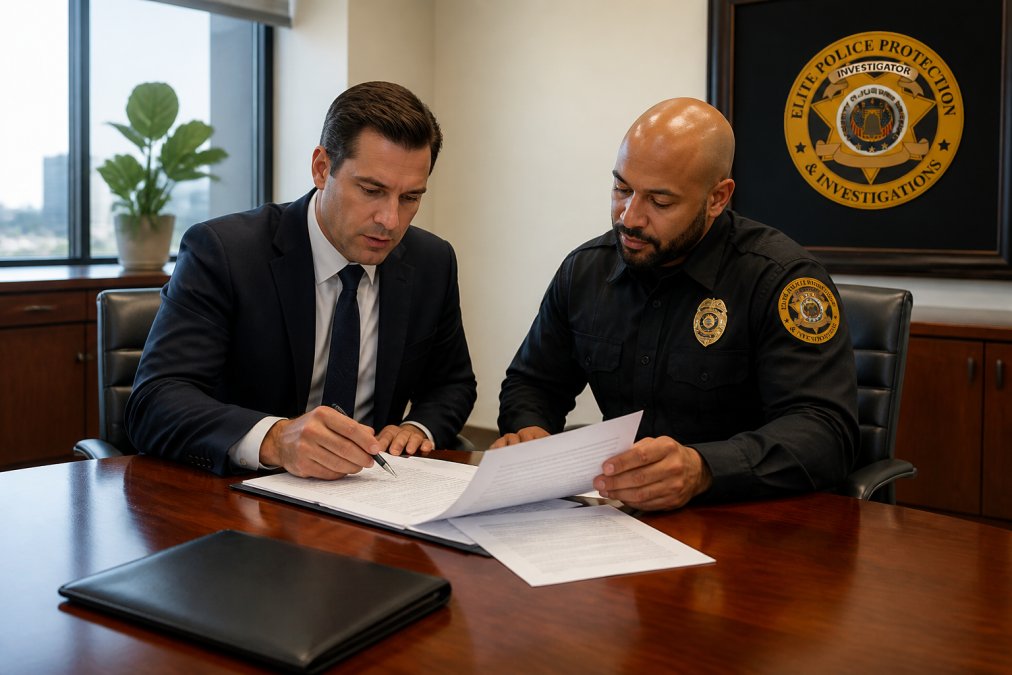
Start with a written scope of work before contacting any provider. Define your hours of coverage, post locations, required officer qualifications, reporting expectations, and escalation protocols. Providers who can't respond to a detailed scope with a detailed proposal are telling you something important about their operational discipline.
Verify Licensing, Bonding, and Liability Insurance
Guard licensing requirements are set at the state level. Verify both the firm's business license and each guard's individual guard card before signing anything.
Liability insurance is non-negotiable. Ask for a certificate of insurance naming your organization as an additional insured. Bonding protects you if a guard causes property damage or theft. Both should be present.
Background Verification and Guard Training Standards
Background verification standards in private security vary significantly. Ask specifically: what does your background check include? A thorough check covers criminal history at county, state, and federal levels, sex offender registry screening, identity verification, and prior employment verification.
Training standards are equally variable. At minimum, guards should complete your state's required pre-assignment training hours. Beyond that, ask about de-escalation training, emergency response protocols, incident reporting procedures, and specialized training relevant to your industry.
Ask how the firm handles guard replacement when an officer calls out. The answer reveals whether you're getting a managed protection relationship or a staffing agency with uniforms.
Cost of Private Security Services: What Shapes the Price
Private security guard services are priced on a custom-quote basis. The factors that most directly influence cost include:
| Factor | Lower Cost | Higher Cost |
|---|---|---|
| Officer type | Unarmed, standard training | Armed, law enforcement background |
| Hours of coverage | Daytime, weekday | Overnight, weekend, 24/7 |
| Post complexity | Single static post | Multi-location, mobile patrol |
| Specialization | General guarding | K9, executive protection, investigations |
| Contract length | Short-term or event | Long-term annual contract |
| Technology included | Basic reporting | Client portal, real-time monitoring |
The persistent misconception is that the lowest hourly rate represents the best value. A firm billing less per hour but delivering unreliable coverage, inadequate training, and no incident reporting will cost more through liability exposure and contract renegotiation.
For accurate pricing from Elite Police Protection, contact the team directly for a custom quote based on your specific coverage requirements.
According to the U.S. Bureau of Labor Statistics Occupational Outlook for security guards, demand for security personnel continues to grow across healthcare, property management, and logistics sectors, affecting market pricing and provider availability.
What to Include in a Security Guard Service Contract Template
A security guard service contract is your primary protection if service quality deteriorates. Every contract should include:
- Scope of services: Specific post locations, hours, officer count, armed/unarmed designation
- Personnel qualifications: Minimum training hours, background check standards, licensing requirements
- Supervision and reporting: How often supervisors conduct site visits, incident report specifications, turnaround time
- Substitution policy: Notice requirements and qualifications for replacement officers
- Technology provisions: Client portal access, monitoring system specifications, data retention
- Insurance requirements: Minimum coverage limits, additional insured status, certificate delivery timeline
- Performance standards: Metrics for response times, post abandonment consequences, no-show remedies
- Termination clauses: Notice periods, cause definitions, transition obligations
- Liability allocation: Indemnification language, limitation of liability, insurance coordination
- Pricing and escalation: Base rate, overtime provisions, annual adjustment terms
The substitution policy and performance standards clauses are where most contracts fall short. Vague language like "qualified replacement officers will be provided" gives you no recourse when an unqualified substitute shows up. Insist on specific minimums.
As the International Foundation for Protection Officers' professional standards notes, written post orders and documented reporting protocols are foundational elements of professional security management.
Selecting a security provider without a structured evaluation process results in coverage gaps, liability exposure, and unreliable service. Elite Police Protection addresses these problems directly: off-duty and retired law enforcement professionals staff every post, the client portal gives you real-time patrol visibility, and K9 and executive protection capabilities extend well beyond standard guarding. Contact Elite Police Protection to discuss your coverage requirements and get a custom security assessment.
Frequently Asked Questions
What criteria should you use to evaluate private security guard companies?
Focus on five areas: state licensing and bonding status, liability insurance coverage, guard training programs and background verification standards, incident reporting processes, and client references from your industry. Ask specifically how the firm handles no-shows and last-minute staffing gaps. Providers that use real-time guard monitoring technology and offer a client portal for patrol data give you objective accountability rather than just verbal assurances.
What is the difference between armed and unarmed security guard services?
Armed guards carry a firearm and typically hold additional state-issued permits beyond a standard guard license. They are suited for high-value asset protection, cash handling environments, healthcare behavioral units, and locations with documented threat history. Unarmed guards handle access control, patrol services, loss prevention, and general site surveillance. Most facilities start with a risk assessment to determine which level of security personnel the threat profile actually requires.
Are private security guards required to be licensed and bonded?
Yes. Every state regulates the private security industry through its own licensing authority. Guards must hold a valid state guard card, and the firm itself must carry a surety bond and general liability insurance. Many states also require additional permits for armed security personnel. Before signing any contract, request proof of current licensure for both the company and the individual officers assigned to your site, and verify coverage limits on their liability policy.
How much does it cost to hire professional security guard services?
Pricing for private security services varies based on armed versus unarmed coverage, shift length, location, number of posts, and the experience level of the personnel. Firms staffed with off-duty or retired law enforcement typically cost more than standard contract security, reflecting the higher training and authority those officers bring. Contact providers directly for a custom quote, since published rate cards rarely reflect actual contract terms for multi-site or specialized deployments.
What industries benefit most from hiring private security guard companies?
Property management companies, apartment communities, retail and shopping centers, healthcare and behavioral health facilities, warehouses, distribution centers, bars and restaurants, and construction sites all see measurable benefit from professional security guard services. Each environment has distinct threat profiles: retail needs loss prevention and access control, healthcare requires de-escalation-trained personnel, and construction sites need perimeter security and equipment theft deterrence. A qualified firm will conduct a site-specific risk assessment before recommending a service model.
This article was written using GrandRanker